
A special election this month for a Manhattan seat in the City Council has become a battle over representation in a part of town synonymous with the city’s LGBTQ+ history.
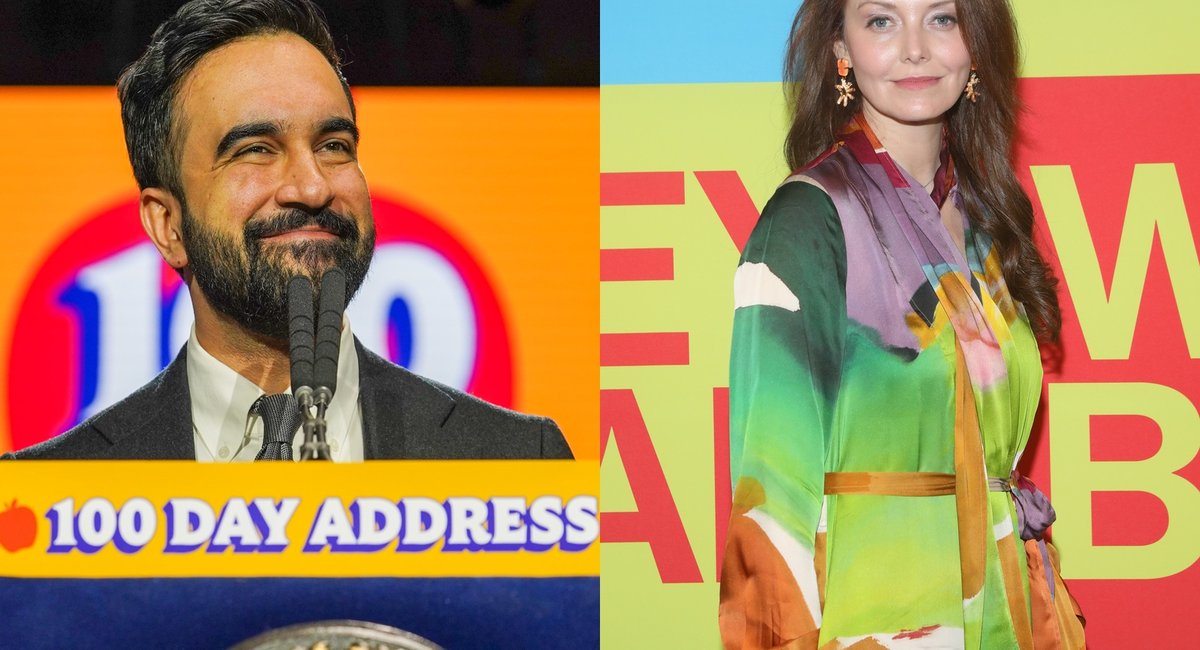
Former Councilmember Erik Bottcher won a state Senate seat last year, leaving his Council seat vacant. Mayor Zohran Mamdani called a special election for April 28, and Bottcher, along with some of the city’s most prominent gay leaders, backed his former Chief of Staff Carl Wilson, an out gay man.
Mamdani, however, endorsed Lindsey Boylan, Politico first reported this week. The decision has frustrated some of the city’s most prominent LGBTQ+ leaders, who say the mayor is ignoring the area’s hard-fought history: The district was deliberately drawn to give queer New Yorkers political representation in the West Village, Chelsea and Hell’s Kitchen. And it’s delivered for more than three decades.
With LGBTQ+ rights under attack nationally, they say, New York can’t afford to lose one of its most symbolic seats.
“History matters,” said Christine Quinn, a former City Council speaker and one of several gay politicians who has represented the district. She noted that in 1991, when the City Council was expanded, the redistricting rules explicitly shaped the 3rd Council District to be “gay-winnable.”
“[It’s] the result of decades and decades of people struggling for representation and people putting themselves forward,” Quinn said. “ Let’s go to the present. We have a president and Republican control of the House and the Senate and states all over the union where the LGBT community is under attack. Make no mistake about it.”
What happens in New York, in that context, is important, Quinn said.
”Anyone who thinks we’re in some kind of … era where representation and seats at the table don’t matter, they’re just wrong.”
The seat has been held by a succession of openly gay representatives — Tom Duane, Quinn, Corey Johnson and Bottcher — for more than 30 years. Quinn, Johnson and Bottcher have all endorsed Wilson, as have several of the district’s political clubs and other high ranking New York City politicians.
“That’s the only gay seat we have in Manhattan,” said Allen Roskoff, a veteran gay rights activist who was involved in the push to create the district in the 1990s. “So in the borough where Stonewall happened and all the historic foundings of the movement, we risk losing the seat and we risk having nobody at the table as part of the Manhattan delegation.”
Roskoff, who is supporting Wilson, described Boylan as a friend and said he’d spoken with her about the race.
“Lindsey, I love and respect you,” he recalled telling her, “but in this particular instance, it’s a gay seat. I have fought for it to be a gay seat since the ’80s and ’90s.”
Boylan is one of the first women to publicly accuse former Gov. Andrew Cuomo of sexual harassment. At least a dozen others would follow, ultimately forcing Cuomo out of office. She ran unsuccessfully for Congress and Manhattan borough president, but has drawn praise from the left for taking on Cuomo and for her focus on issues of equity and affordability. She’s been endorsed by the Working Families Party and state Sen. Julia Salazar, among others.
Boylan did not immediately respond to a request for comment.
When Cuomo tried to rehabilitate his political career with a mayoral run against Mamdani, Boylan campaigned hard for the mayor, who beat Cuomo by roughly 10 points. Now Mamdani is in a budget battle with Council Speaker Julie Menin, who has endorsed Wilson and has so far positioned herself as a more conservative Democrat than the democratic socialist mayor. In public statements about the endorsement, both Mamdani and Boylan referenced the mayor’s need for partners in the City Council.
The special election, for which early voting began Saturday, will give the Council a new member just as budget negotiations go into overdrive ahead of the city’s July 1 deadline to pass a balanced spending plan.
Since the endorsement, though, some have suggested Mamdani either didn’t fully know or care about the LGBTQ+ history.
“I don’t think the fact that it was an LGBTQ seat for decades even crossed his mind,” Roskoff said. City & State reported concerns over Mamdani sidelining gay candidates.
State Assembly candidate Brian Romero, who was among the candidates mentioned, pushed back against that framing on social media. In an interview with Gothamist, he said the characterization was “so unfair” and “so disingenuous.” Romero noted that Mamdani had twice supported him in races for state committee and had endorsed Tiffany Cabán, another candidate mentioned, for City Council.
A spokesperson for the mayor declined to comment.
As for the 3rd Council District, Romero said identity politics only goes so far.
“ Not every sibling is a sibling,” he said. “Just because someone shares an identity doesn’t mean that they will go to bat for that community and their priorities and their needs.”
Mamdani has also pursued pro-LGBTQ+ policies early in his administration. Last month, he signed an executive order establishing the Mayor’s office of LGBTQIA+ Affairs and appointed Taylor Brown as its director, making her the first out trans woman to lead a New York City office.
Quinn also rebuffed the idea that the mayor was dismissing the LGBTQ+ community.
“Any attempt to portray Mayor Mamdani as anything less than a super ally to the LGBTQ+ community is just inaccurate,” she said. “That said, I disagree with his endorsement.”
Roskoff was harsher in his assessment.
“I don’t think he knows anything about our history,” Roskoff said. “I don’t know any gay activists involved in Democratic Party politics he has spoken to.”
He added: “Either he wasn’t aware or he didn’t care. Either one is unacceptable.”
David Giambusso contributed reporting.
