

An outbreak of Legionnaires’ disease on Manhattan’s Upper East Side more than doubled in size last week as Health Department investigators raced to pinpoint the source.
The health authorities said that 59 people had been diagnosed with the disease, a severe form of bacterial pneumonia. More than 33 patients had recovered enough to be discharged from hospitals while 15 remained hospitalized, but no deaths had been reported, they said.
As of Monday, health officials had not identified the source of the ongoing outbreak but said that they expected the number of new infections to begin to drop this week.
What causes a Legionnaires’ disease outbreak?
In New York City, the source of the disease usually exists on the rooftops of large buildings. The Legionella bacteria, which cause the disease, can thrive in the rooftop structures — called cooling towers — that are full of warm water and are part of the system used to cool the buildings.
Fans blow air across the warm water to increase evaporation. This can send bacteria-laden water vapor drifting across a neighborhood, posing a risk to people who inhale it.
The first cases of the ongoing outbreak were identified on July 2. Since then, Health Department investigators have been testing the water in cooling towers across a stretch of the Upper East Side that includes three ZIP codes: 10028, 10128 and 10075.
How do health authorities identify the source?
On Friday, officials announced that they had collected water samples from more than 180 cooling towers across the Upper East Side. It was a much more orderly process than in the past.
After a 2015 Legionnaires’ outbreak in the South Bronx — the deadliest in New York history, sickening 120 people and killing 12 — the city required property owners to register their cooling towers. This allowed health inspectors to know exactly how many cooling towers were near an outbreak and which ones needed to be tested.
“It eliminated the guessing game,” said Daniel Kass, an environmental health expert and former deputy commissioner in the Health Department.
Last year, more than 100 people were sickened and seven died during an outbreak in Central Harlem. The outbreak was ultimately traced to two city-owned sites, including Harlem Hospital and a nearby construction site.
On Friday, health officials said cooling towers in 31 buildings had positive results for a type of Legionella bacteria that can cause pneumonia.
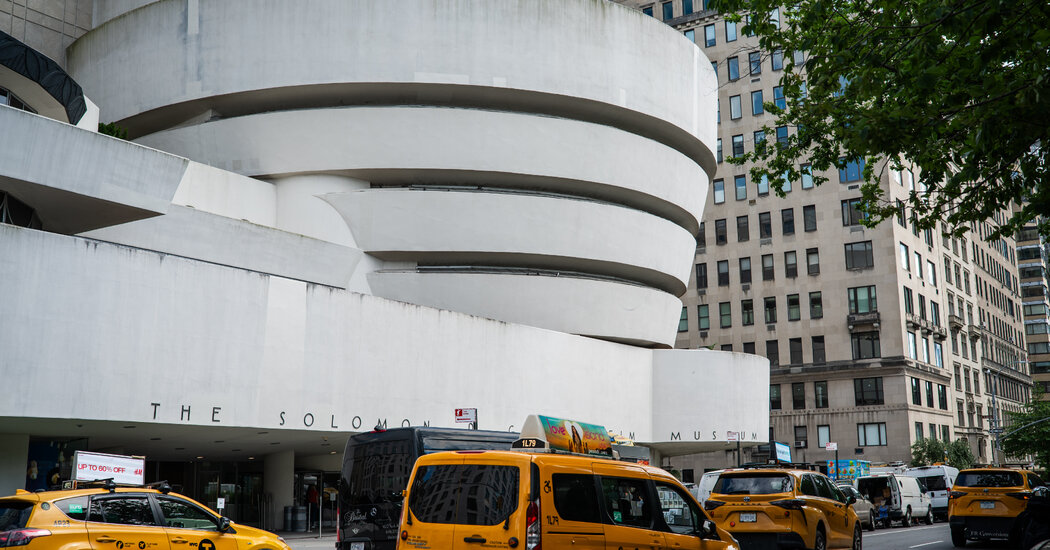
The city released addresses associated with the positive tests. One was for the Guggenheim Museum on Fifth Avenue.
What does it mean when a building tests positive for Legionella?
Health officials stress that a positive test alone isn’t proof of a problem. The initial testing can detect dead and live Legionella bacteria. Because the bacteria are common and because building owners regularly disinfect the cooling towers, the presence of dead Legionella bacteria isn’t unusual. As many as half of cooling towers are likely to test positive for Legionella, according to the state Health Department.
Building owners must quickly drain and disinfect their cooling towers if there’s a positive test — part of an aggressive push by the administration of Mayor Zohran Mamdani to accelerate the city’s response to Legionnaires’ outbreaks.
Health officials said they were optimistic that one of the 31 buildings that tested positive could prove to be the source of the outbreak.
“When the offending tower that is potentially causing this cluster is taken off the map, we will see the gradual resolution,” Dr. Alister Martin, the city’s health commissioner, said on Friday.
It’s possible that the outbreak peaked early last week. On July 6 and 7, at least 10 people per day were diagnosed with Legionnaires’ — the only days when the count of new cases reached double digits.
The incubation period for Legionnaires’ can be 10 days or longer, but most people develop symptoms five or six days after exposure, said Dr. Celia Quinn, a top city health department official. She said that new cases might keep popping up for a few days even after the outbreak’s source is disinfected.
How will officials identify the outbreak’s source?
The health authorities have begun trying, in petri dishes, to grow Legionella bacteria from samples taken from the buildings that had initially tested positive. Eventually, scientists will compare those petri dish bacteria to samples that were provided by patients who had been hospitalized with Legionnaires’. Scientists can use genomic sequencing to determine if they have a match, allowing disease trackers to determine the outbreak’s source.
It can take up to two weeks to grow petri dish samples of Legionella bacteria. So it may be a little longer before the health authorities can identify the outbreak’s source.
If a building’s cooling tower tests positive, are the people inside at particular risk?
Not necessarily. The mist evaporating from rooftop cooling towers is not supposed to mix with the air inside the building. And when it evaporates, it disperses throughout the area. Some research indicates that people can be infected even thousands of feet away from the source.
