

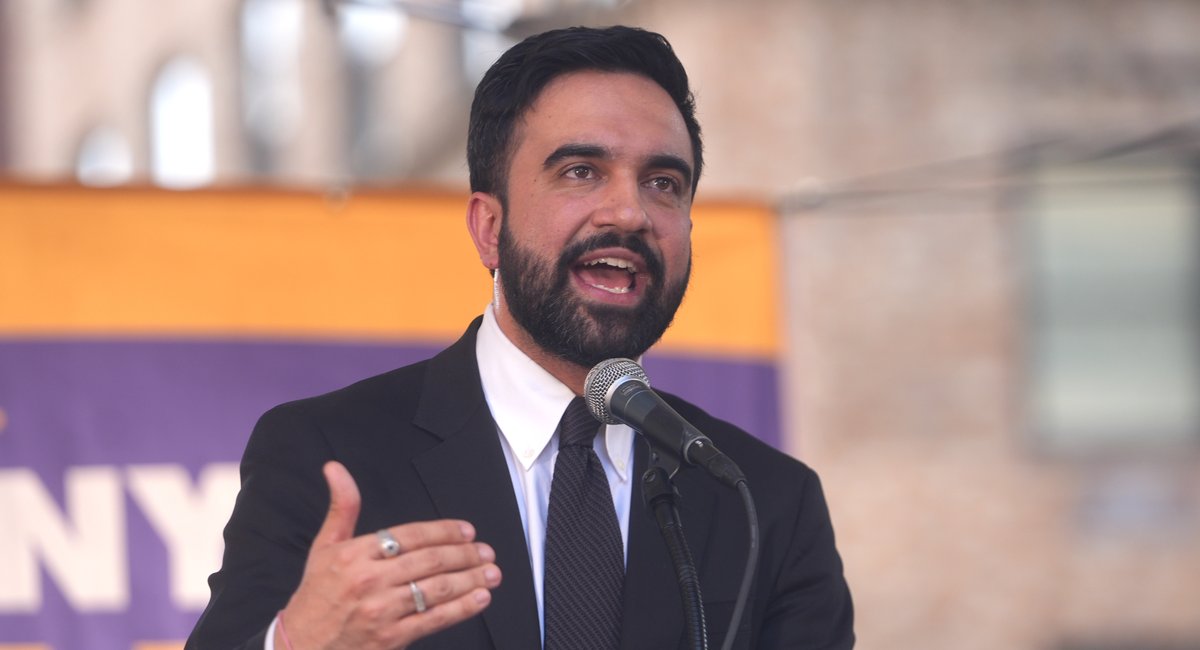
The New York City board that sets the rent for roughly 1 million regulated apartments voted to consider a rent freeze on Thursday in a move that, if enacted, would fulfill a key campaign pledge of Mayor Zohran Mamdani.
New York City’s Rent Guidelines Board convened for an annual hearing that establishes the parameters for the panel’s final binding vote. It will consider a range of 0% to 2% on one-year leases and 0% to 4% on two-year leases. Board members voted 7 to 1 in favor of the range, with one abstention.
The board has only considered a 0% increase for one-year leases on two other occasions in the past decade. It’s also the first time board members have considered freezing rent on two-year leases.
Two tenant representatives on the board proposed taking the unprecedented step of decreasing rent by 3% on new one-year leases and by 4.5% on two-year leases, essentially nullifying the board’s rent increase last year. Their landlord-sided counterparts proposed raising rents by 3% to 5.5% on one-year leases and 6% to 8% on two-year leases.
The nine-member panel will hear public testimony at a series of upcoming hearings before casting a final vote on June 25, but board data shows members typically use the preliminary figures as a framework ahead of an ultimate decision.
The divisive annual event Thursday at LaGuardia Community College drew hundreds of tenants and advocates, but took on a more subdued atmosphere than in past years, when attendees banged noisemakers, drowned out board members and, in one instance, even stormed the stage.
The night marked the first test of Mamdani’s now-famous campaign promise to “freeze the rent” for tenants in rent-stabilized apartments — a slogan that galvanized many renters confronting a deep affordability crisis, but infuriated landlords who say they need a rent hike to offset their own rising maintenance and operating costs.
On the campaign trail, Mamdani took specific aim at the board under his predecessor, Mayor Eric Adams, which voted to raise rents by a combined 12% over four years, including the 3% increase last year.
“New Yorkers are being crushed by the cost of living, and they need real relief,” Mamdani said in a statement on Thursday night. “I’m encouraged to see the Board taking seriously the data around affordability, operating expenses, and the pressures facing both tenants and small property owners as it sets this preliminary range.”
But the mayor does not have the power to set rent levels on stabilized apartments. That’s up to the board, whose members are appointed by the mayor but are supposed to function as an independent body.
In February, Mamdani named five new members and reappointed a sixth, saying only that he expected them to “take a clear-eyed look at the complex housing landscape and the realities facing our city’s 2 million rent-stabilized tenants, and help us move closer to a fairer, more affordable New York.”
“Politics has pitted the two groups against each other as if they’re not all New Yorkers who are investing in their communities and seeking the same thing: the means to live,” New York Apartment Association CEO Kenny Burgos said in a statement after the vote. “This threat of a rent freeze nearly guarantees our owners and tenants will live in declining conditions for years to come.”
The mayor has stopped publicly voicing his support for a rent freeze since taking office in January amid legal questions around mayoral intervention in the board’s process.
He has instead created a new City Hall office tasked with mobilizing New Yorkers to testify at upcoming Rent Guidelines Board hearings, an effort he said will engage tenants and landlords alike and isn’t intended to encourage a specific outcome, though landlord groups are skeptical of the new office’s mission.
Joanne Grell, a hospital legal assistant and tenant activist, said regulated apartments provide stability and opportunity for low- and middle-income renters who might otherwise be subject to dramatic hikes they could not afford.
She said she was able to raise two children in a two-bedroom Pelham Bay apartment for which she pays $1,800 a month.
“I could have never let them dream as big as they did unless it was for our affordable apartment,” Grell said before the vote.
She said she hoped the board would consider keeping current rent levels flat for the next two years.
The nuances of New York City’s rent regulations, established by the state more than half a century ago, reveal the complexity and diversity of the housing stock in a city of more than 8 million.
Most rent-stabilized apartments are located in buildings with six or more units constructed before 1974 — though tens of thousands of units that meet those criteria were lifted out of rent stabilization, often legally, before new laws ended the practice in 2019.
Apartments in newer buildings, many of them considered luxury accommodations, are also subject to rent regulations if their owners receive government financing or property tax breaks.
Tenants in rent-stabilized apartments have a median household income of $60,000 a year, while tenants in market-rate units earned a median income of $90,800, according to a 2023 city housing survey. But rent-stabilized apartments are not income-targeted and about 30% of households earn at least $100,000 a year – an amount approaching the area median income for single adults.
The city housing survey also revealed the depths of the city’s affordable housing shortage, with less than 1% of units priced below $2,400 available to rent.
Other recent data considered by the board shows an increase in the city’s unemployment rate and number of residents receiving cash assistance benefits — two indicators of deep economic trouble.
But landlords say they too are hurting financially and are struggling to keep up with their own rising costs for insurance, materials for maintenance and fuel without a significant increase in revenue from rent.
Board data shows owners of buildings with at least one rent-stabilized apartment have enjoyed a roughly 6% increase overall in their net operating income, but landlord advocates say the rosy picture citywide obscures financial distress in places like the Bronx and in older buildings where all units are rent-stabilized.
Ahead of the vote Thursday, groups representing owners of rent-stabilized units began calling on the board to approve a larger increase for apartments in older buildings than in newer complexes due to their rising maintenance and insurance costs.
The board has in the past approved such split increases based on how long a tenant has held a lease, but not based on the age of the building.
Small Property Owners of New York Board President Ann Korchak said such a move is necessary to stave off worsening financial problems.
“The disparate operational realities between aging and newer buildings call for separate rent adjustments for older, majority rent-stabilized properties,” Korchak said in a written statement.
