
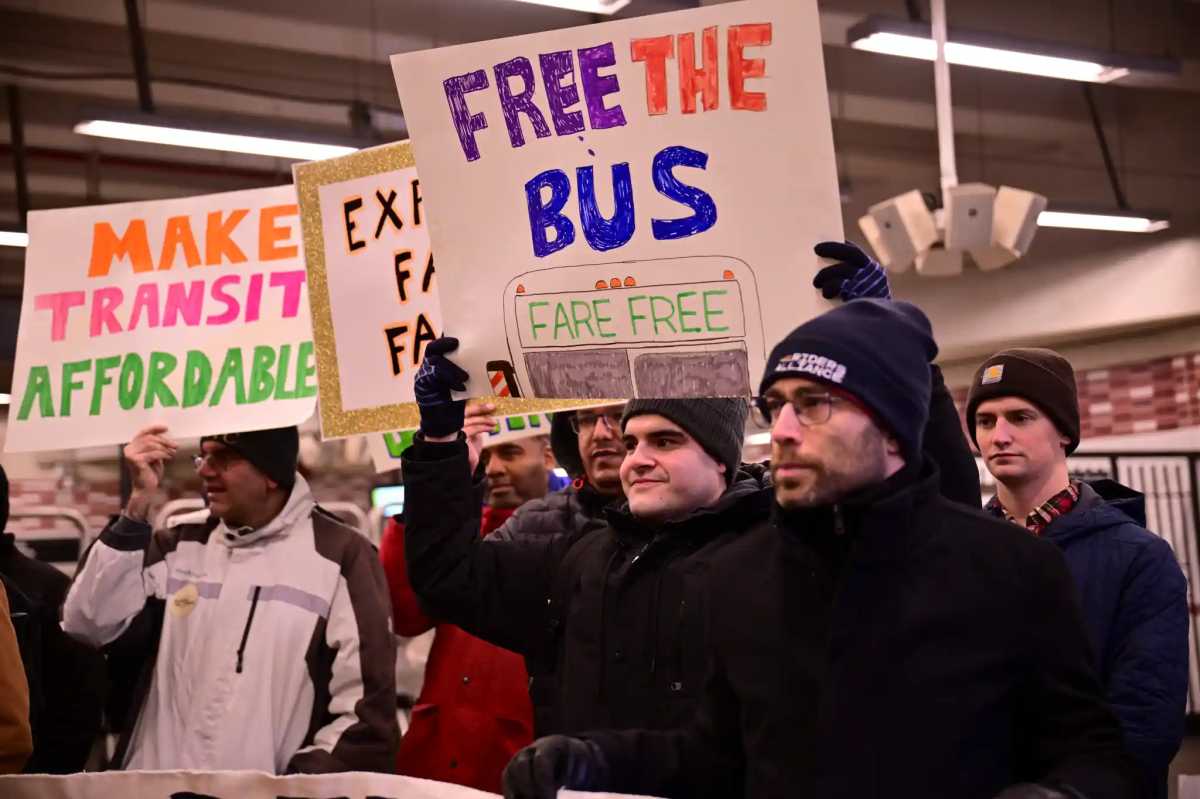
Mayor Zohran Mamdani should embrace expanding the city’s half-priced fare program instead of pursuing his signature campaign proposal for free buses, as the latter would do little to make transit more affordable, a fiscal watchdog group found in a new report released Wednesday.
The group, the Citizens Budget Commission (CBC), published its report ahead of a May 6 City Council hearing on the existing program, Fair Fares. The hearing will see council members question the Mamdani administration and MTA officials about legislation that would require them to develop a system for automatically enrolling eligible individuals who qualify for other city-administered benefits.
Fair Fares currently offers half-priced subway, bus, and paratransit rides to those aged 18 to 64 earning at or below 150% of the federal poverty level. The commission is advocating for increasing eligibility to 250% of that threshold.
Leaders of the City Council’s Democratic majority and transit advocates similarly want to expand the program, while Mamdani has remained mum on it amid city budget negotiations.
Fair Fares expansion more efficient than fare-free buses: CBC
CBC President Andrew Rein said the report found that expanding Fair Fares would make transit affordable for far more of the lowest-income New Yorkers than eliminating bus fares would and at a fraction of the cost.
Rein said they found that nearly three-quarters of commuters earning under 250% of the federal poverty level use the subway, not the bus, to get to work, according to U.S. Census data they analyzed.
“We looked at Fair Fares expansion to 250% of the poverty level, and said that that’s actually a very cost-effective smart choice, because we end up giving one in four New York City workers half-price transit fares at the mode of their choice so that they can commute every day,” he said.
Moreover, Rein said the proposed expansion would cost the city just $146 million annually — far less than the $900 million yearly price tag that free buses would bear. He said the lower cost is critical at a time when the Mamdani administration is staring down an estimated $5.4 billion budget hole.
“We think, at 18% of the cost of free buses, that this actually gets you a lot of benefit for the people who need it most, which are the people who are using subways to commute every day,” he said. “The city has to be really, really careful right now. The mayor is trying to close this $5.5 billion budget gap right now; every dollar has to be used to its highest value.”
Rein said the lower cost was part of the reason CBC chose to expand half-priced fare eligibility to 250% of the federal poverty level rather than another threshold. He said they also chose that level because it includes two-member households who work full-time and earn approximately 20% above the minimum wage.
By contrast, the City Council pitched a different expansion in its city budget response last month. The city legislature pitched making transit rides free, rather than half-priced, for all of those currently eligible, while pursuing automatic enrollment through legislation.
Rein said that because it would include more working people, the threshold CBC chose could also help to address the program’s low uptake, where just between 30% and 40% of those currently eligible are enrolled.
“Obviously, the challenge with the current program is that many people below 150% of the poverty level aren’t working and commuting to work every day, so they have less need for the program,” he said. “That’s why we think when you go up the income level, you get more workers who are going to get more benefit from the program.”
