

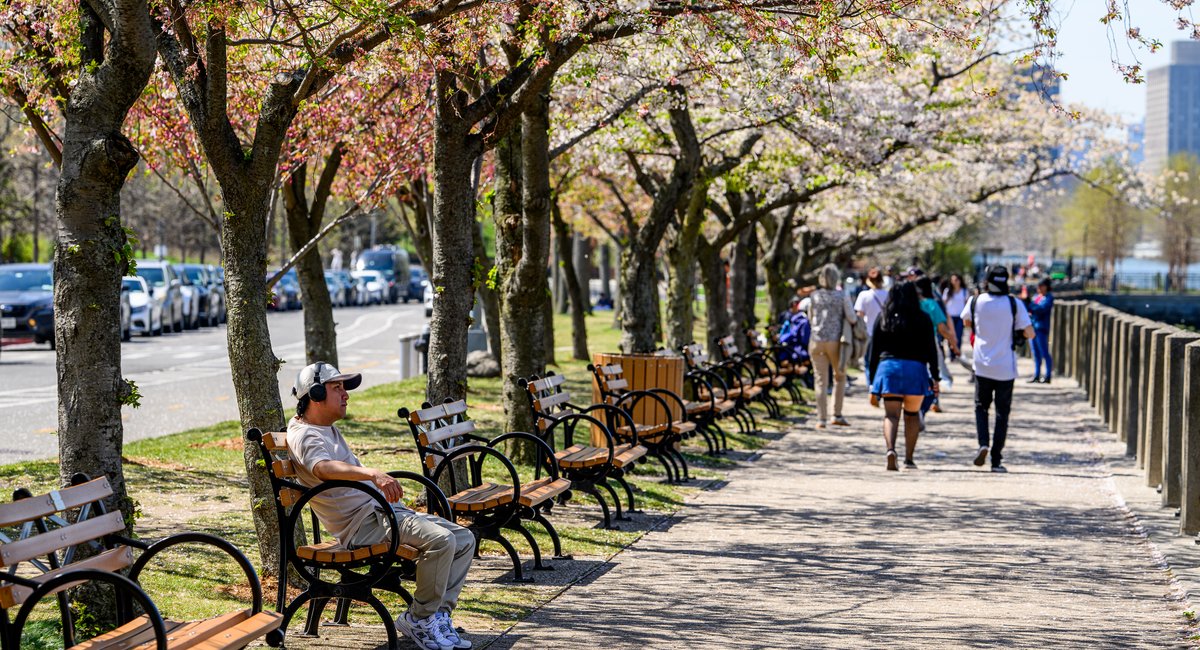
New York City is about to get more shade.
City officials released a new plan this week to shroud 30% of the five boroughs in tree canopy by 2040. The city’s current tree canopy cover is is 23.4% — or about 45,000 acres, equal to the size of Brooklyn.
Officials said the benefits of trees go beyond cool shade. More tree cover also mitigates flooding and increases habitat for wildlife.
“New York has always been defined by the dreams we dare to build together. Today, we’re planting those dreams in the soil itself,” Mayor Zohran Mamdani said in a statement. “The Urban Forest Plan is a commitment that no matter your neighborhood, you deserve clean air, shade in the heat of summer, and streets that reflect the possibility of our great city.”
New York City currently has around 7 million trees that absorb just 51,000 tons of carbon and a little more than 500 million gallons of stormwater runoff per year.
The report identified one-and-two unit properties, such as residential brownstones, as having the greatest potential for new tree canopy. Homes in low-density neighborhoods could expand the tree canopy by up to 19,200 acres, it found.
The report noted those smaller properties were also the site of the most significant loss of tree canopy over the last decade. An estimated 26 acres of trees were felled between 2017 and 2021 at those homes, according to the report. Commons reasons were storm damage, new construction or renovations on the properties.
The report highlighted streets and sidewalks as the potential sites of more than 6,000 acres of new plantings.
The forest plan prioritizes neighborhoods with fewer trees compared to the rest of the city. As one extreme example, Hunts Point in the Bronx has only 6% tree cover, compared to the boroughwide average of 27%.
Low-income minority neighborhoods are about 19% canopy-covered, in contrast with 26% in wealthier areas, according to the report.
“No matter where you live, work, or spend time outside, all New Yorkers know the immediate relief that comes from standing under the shade of a tree on a hot day,” said Louise Yeung, the city’s chief climate officer. “What may be less obvious is that trees are one of the most affordable and accessible ways to help adapt to a changing climate.”
Achieving the forest plan’s goals aren’t a given. In a separate report released Thursday, City Comptroller Mark Levine said inconsistent maintenance is “undermining the health and longevity of the urban forest.”
The comptroller’s report found underfunding and staff cuts across several agencies have hindered best tree practices like pruning and soil management.
“Chronic underfunding and staffing reductions have limited the City’s ability to provide consistent care,” the report stated. “Backlogs in pruning and inspection requests, as well as elevated early tree mortality rates, indicate that current maintenance capacity is insufficient to sustain canopy growth.”
