
City Hall officials met last week with union and labor leaders who are pushing Mayor Zohran Mamdani to veto a controversial City Council bill that would establish anti-protest “buffer zones” around schools and educational facilities.
A representative of Deputy Mayor for Economic Justice Julie Su met via video call with leaders of more than a half a dozen unions and the New York City Central Labor Council, according to multiple sources who were at the meeting or briefed on the talks.
Su’s representative gave no indication whether Mamdani would issue a veto, according to multiple sources. Last month the Council approved two bills creating protest “buffer zones,” one affecting houses of worship and the other targeting schools and “educational facilities.”
“Mayor Mamdani is aware of the concerns raised regarding the potential for 175-B to limit the constitutional and labor rights of New Yorkers,” City Hall press secretary Joe Calvello said in a statement on Thursday, referring to the bill’s formal designation. “The Mayor will weigh these concerns seriously as he makes a final decision on this legislation.”
The meeting came amid a growing pressure campaign from labor and other allies of Mamdani to veto the bill. Last week, several labor and community groups sent a letter urging him to veto the bill, describing it as a “radical overreach” that limits free speech and endangers New Yorkers.
Mamdani Faces Saturday Deadline
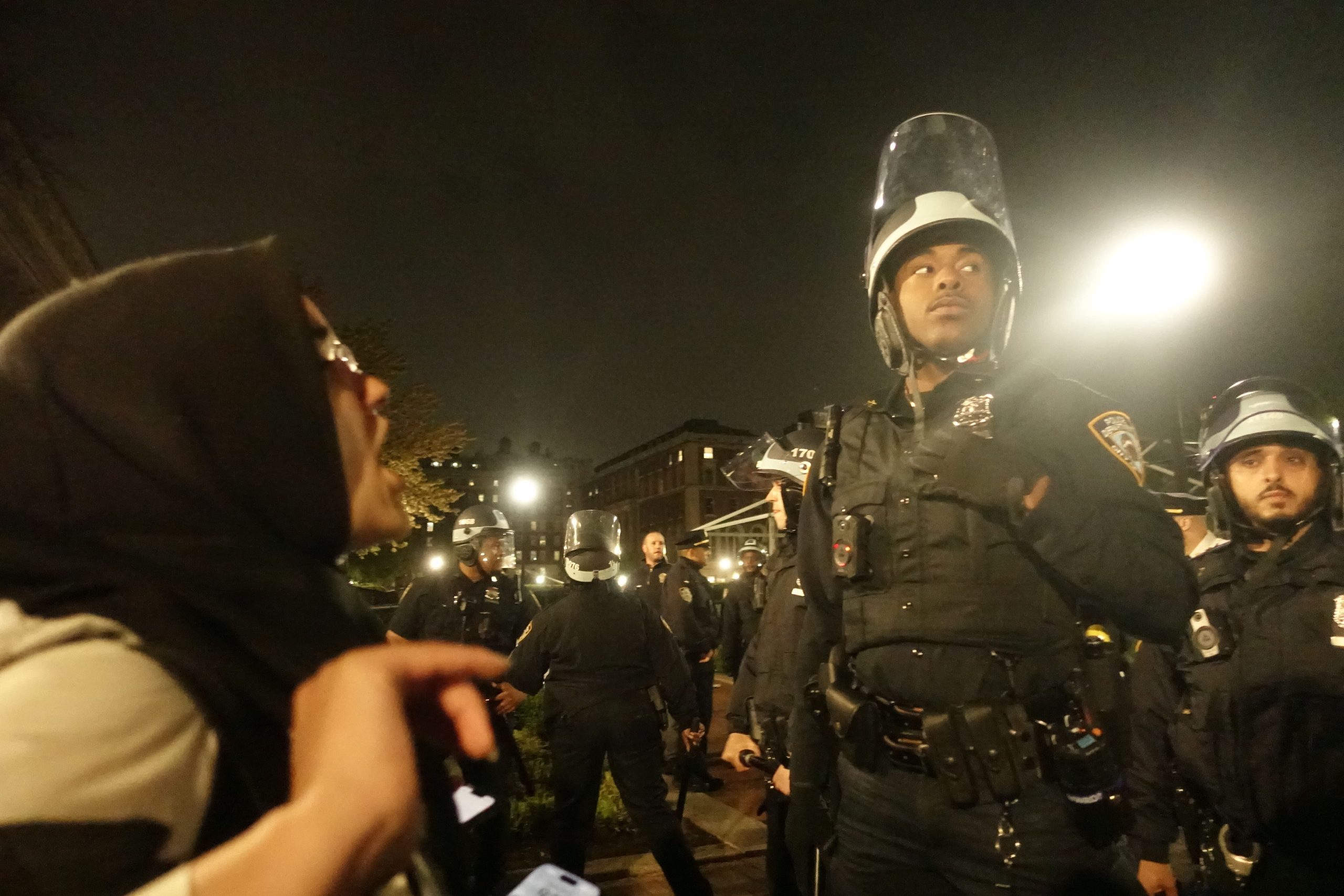
The two so-called “buffer zone” bills passed March 26 with the goal of targeting hate crimes across the city, with one bill related to religious sites and the other for schools and education facilities. The bills require the police department to create security perimeters during protests – instructing the NYPD to establish how far away the buffer zones would place demonstrators.
Two unions that represent large numbers of college and university teaching staff — United Auto Workers Region 9A and Professional Staff Congress/CUNY — are leading the opposition to the bills, claiming that they would restrict their rights to strike or protest in their workplace.
The religious sites bill passed 44 to 5, a veto-proof majority, but the schools buffer-zone bill passed by a 30 to 19 margin — which the mayor could more likely successfully veto.

Under the city charter, Mamdani has until Saturday to veto the bill or officially sign it into law. If he does neither, it automatically becomes law.
A spokesperson, Dora Pekec, said Wednesday there was no update to what the mayor would do.
Council Speaker Julie Menin, a moderate Democrat, pushed for the legislation as part of her efforts to combat antisemitism. She and her allies have maintained that the so-called “buffer zone” proposals are meant to provide greater accountability to the police department’s protest protocols, not to infringe on free speech rights.
Her proposals came as a response to the police’s widely-criticized response to protesters who picketed the Park East Synagogue, which had rented space to an organization that helps Jews move to Israel and to settlements on the occupied West Bank, as well as the 2024 pro-Palestine encampments on college campuses.
The New York Civil Liberties Union and other legal organizations say the bills are Constitutionally dubious.
Menin, speaking at the 92Y in Manhattan on Wednesday evening at an event on “the future of being Jewish in New York,” defended the bills and warned of a potential mayoral veto, City & State reported.
“I really hope that there is not a veto of that legislation, because I think that will lead to more divisiveness when we need less divisiveness,” Menin said.
Labor and community group leaders told THE CITY they were lobbying Council members who voted for the schools bill to change sides in a future vote to override a veto, sending nearly 11,000 emails to the mayor and Council members.
Representatives from multiple unions who met with Su’s team on April 17 expressed a variety of concerns about the bill, including the vagueness around what could be considered an “educational facility,” sources told THE CITY.
THE CITY reached out to several unions who attended the virtual meeting with the deputy mayor’s team. None of them agreed to comment on the meeting, citing the confidential nature of the conversations. The New York City Central Labor Council also declined to comment.
But several unions, in addition to the UAW and PSC-CUNY, have gone public with their opposition.
Representatives from healthcare unions, including CIR-SEIU and 1199 SEIU, are among those calling on the mayor to veto the schools bill. They say many teaching hospitals where their members work could technically fall under the bill’s scope — meaning members would be barred from rallying outside in the case of a strike or other union action.
Teamsters Local 804, which represents UPS and Amazon truck drivers, has also called on a veto.
However there is no consensus among labor.
Kevin Elkins, political director of the carpenters’ union, told THE CITY that his union does not oppose the buffer-zone bills. He said the bills allow the Mamdani administration the ability to implement the buffer zones as it sees fit, and that the union trusts the mayor’s commitment to protect worker and free speech rights.
“I think the mayor has demonstrated his commitment to labor several times over at this point, so I have full confidence in his administration’s ability to do that justly,” Elkins said.
Jewish and Catholic Leaders Voice Support
Religious organizations who favor buffer zones around schools also send their own letters to Mamdani.
“Schools are not just buildings, they are spaces where children should feel safe, supported, and ready to learn,” the letter said. “When access to those spaces is compromised, the impact is immediate and serious.”
The letter was signed by Jewish school leaders as well as the superintendents of schools within the Catholic Archdiocese of New York and the Diocese of Brooklyn, which covers nearly 150 schools across the five boroughs.
Disclosure: Irizarry Aponte is a PSC-CUNY member in her role as an adjunct instructor at the Craig Newmark School of Journalism at CUNY.
