

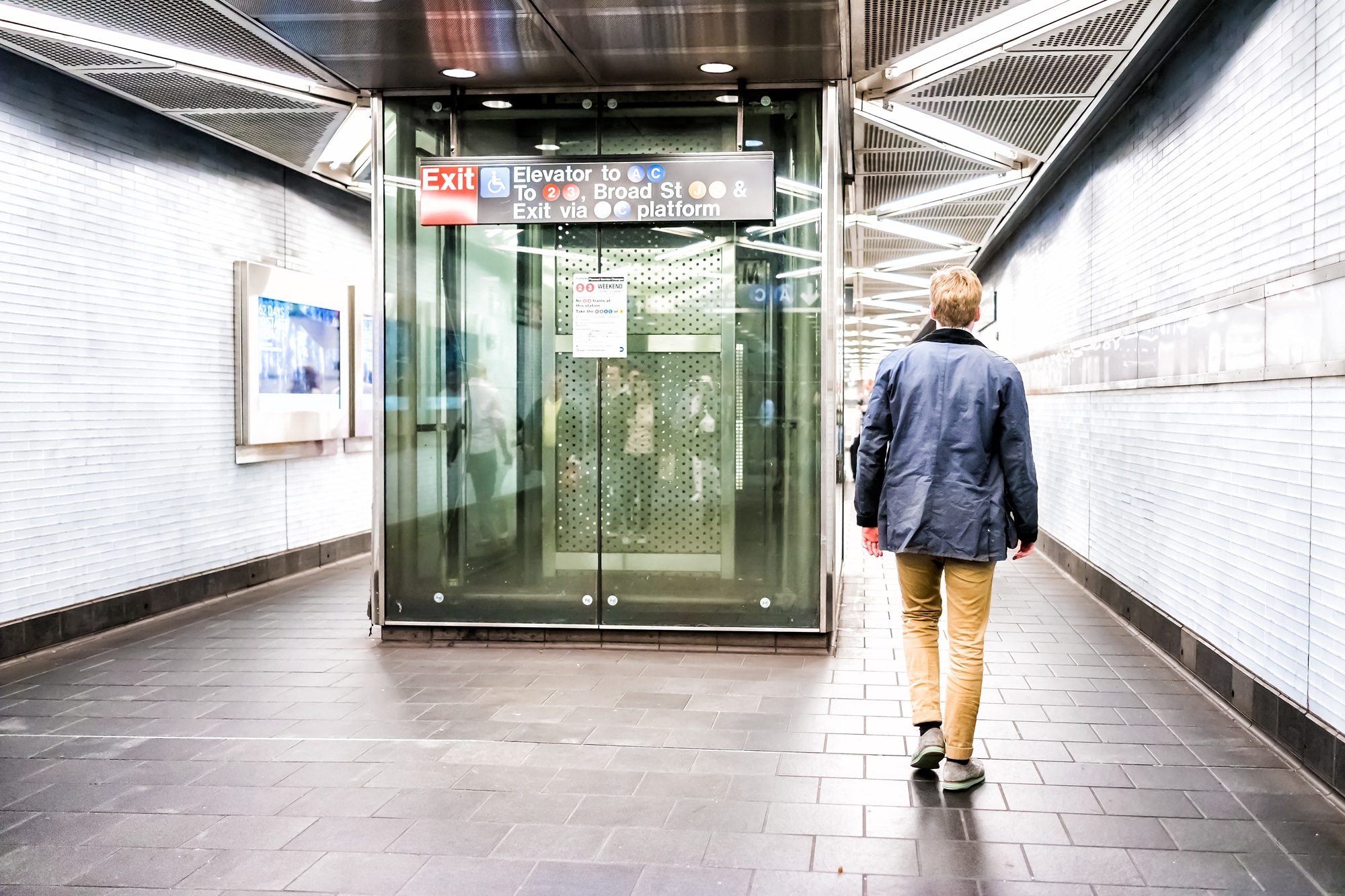
If you’ve ever planned your commute around a working elevator (and then watched that plan fall apart in real time), the MTA has some cautiously good news: a wave of accessibility upgrades is rolling out across 11 subway lines this spring.
The agency says newly modernized elevators and escalators are already back in service at major stations across Manhattan and Brooklyn, with more replacements underway systemwide. The goal is simple, if long overdue: to make it easier for riders with disabilities and strollers (or maybe too many Trader Joe’s bags) to actually use the subway without a backup plan.
RECOMMENDED: This is the tallest subway station in New York City—and it’s finally getting major accessibility upgrades
Recent upgrades include elevator replacements at busy hubs like 14th Street–Union Square and DeKalb Avenue in Brooklyn, as well as escalator work at stations including 145th Street and Lexington Avenue–63rd Street. Altogether, the improvements span 11 lines, part of a larger push to chip away at one of the system’s most persistent pain points.
But before you celebrate too hard, there’s a catch: to fix the elevators, the MTA has to shut them down, sometimes for months at a time. The agency says it’s now emphasizing planned outages to avoid sudden breakdowns with zero warning. It’s a temporary inconvenience in exchange for (hopefully) fewer “out of service” signs down the line.
A full elevator replacement means gutting and rebuilding nearly everything—the cab, shaft and mechanical systems—plus upgrading cameras, fire alarms and remote monitoring tech so crews can respond faster when things go wrong. The result, the MTA says, should be smoother rides and more reliable service in the long term.
This latest round of work builds on a busy stretch for the agency. In 2025 alone, the MTA completed a record number of elevator replacements and officials say they’re not slowing down. More than 50 elevators across the system are currently in progress or planned, spanning stations in the Bronx, Brooklyn, Queens and Manhattan.
That includes major stops like Jackson Heights–Roosevelt Avenue, Flushing–Main Street and 161st Street–Yankee Stadium, which are all places where accessibility upgrades help thousands of riders every day.
It’s all part of a bigger effort to make the subway system fully ADA-accessible, a goal that’s still years away. But for now, at least, spring is bringing a small but meaningful shift: fewer broken elevators, more predictable outages—and a slightly better shot at getting where you’re going without a detour.
