

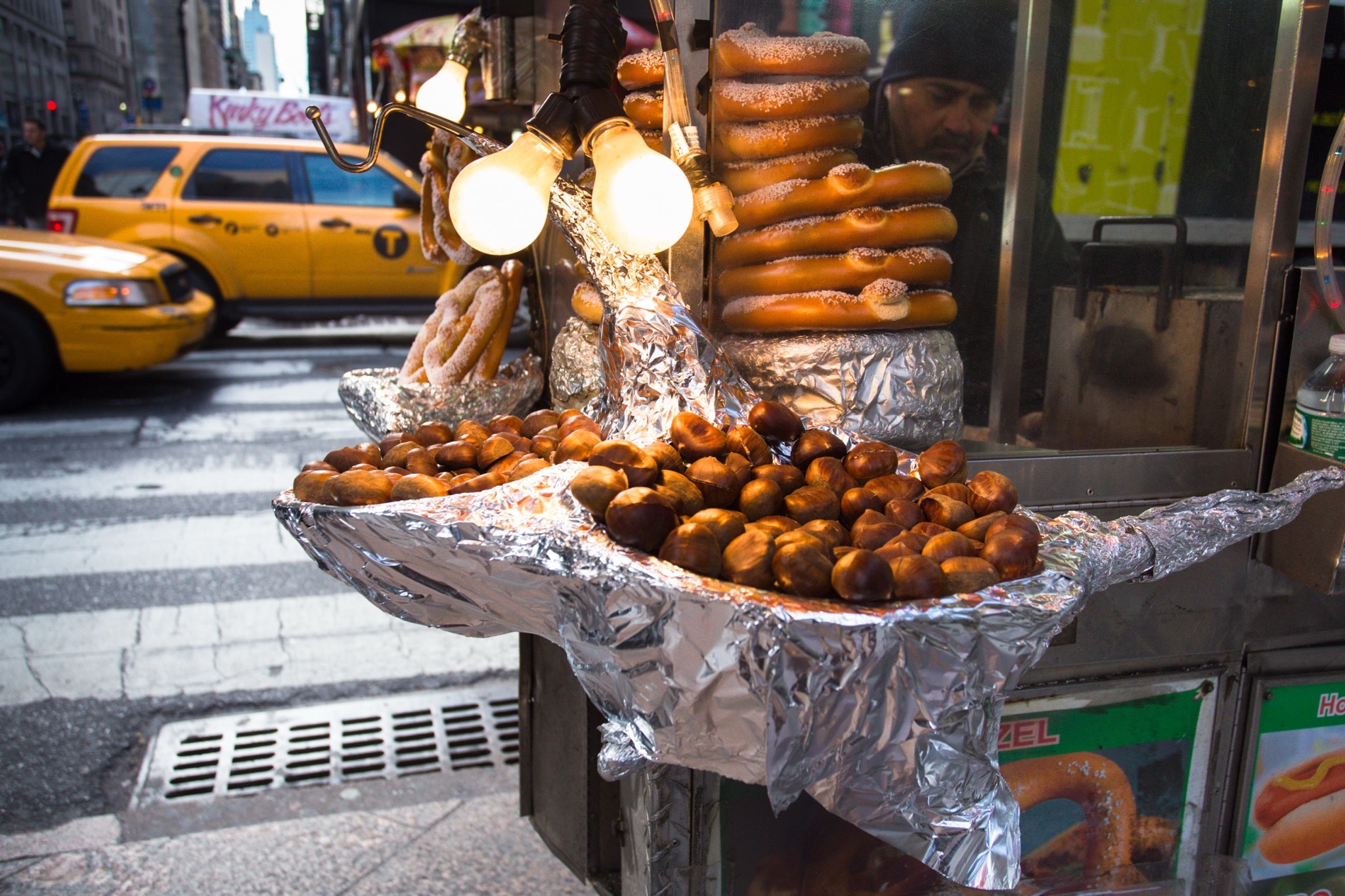
In the summer they bloom, in the fall they ripen and in the winter you can roast them on an open fire—or at least, hear Nat King Cole sing about them in his 1961 rendition of “The Christmas Song.”
Historically, chestnuts have been an integral part of the holiday season. Though harvested in the fall, their flavor peaks in the wintertime, making for a tasty seasonal treat. During the holiday season, you can find them in midtown on street corners as an annual treat for tourists and New Yorkers alike.
Yet for Michael Goergen, CEO of the American Chestnut Foundation, chestnuts are not just an annual experience, but a daily one. Goergen grew up in a suburb of Buffalo, where he spent much of his time outdoors. He remembers playing games by the chestnut tree on his grandfather’s property and fishing along Lake Erie.
“Water quality was super important to me growing up along Lake Erie,” says Goergen. “So learning about how valuable forests were to water is how I really got involved in forestry and understanding the chestnut.”
Now, at the American Chestnut Foundation, Goergen is dedicated to bringing chestnut trees back into their native ecosystems. American chestnut trees used to cover the East Coast, spanning from Georgia all the way to Maine. But in the early 20th century, the landscape of abundant forests changed when a new species of blight that posed a 90% loss of chestnut trees was discovered at (of all places) the Bronx Zoo.
“And it was worse than that,” says Goergen. “I mean, it’s almost been a 100% loss when you really look at it because the blight was just so prolific that it took out every tree across the country.”
The chestnuts found in the United States today are now grown from completely different kinds of chestnut trees, typically Chinese or European ones. While some of those chestnuts are grown in the United States, it’s estimated that the United States imports roughly 6.5 million pounds of chestnuts every year.
Chinese chestnuts, the ones typically sold by New York street vendors and found in supermarkets, were brought to the United States to be bred for orchards. Though they’re blight-resistant, Chinese chestnut trees can’t survive in forests due to their breeding.
“It’s a food that folks will gather together and then gather together to enjoy.”
Another difference between Chinese chestnuts and American chestnuts is their taste. The Chinese chestnut is bigger and starchier while the American chestnut is smaller and sweeter. And for Sasha Sherman, founder of the Great Chestnut Experiment, the taste of a chestnut matters.
As its title suggests, the Great Chestnut Experiment is, well, an experiment, with the mission to bring chestnuts back into the heart of American culinary culture. Sherman was first introduced to chestnut trees and forest-based food production when visiting a friend’s farm in upstate New York a few years ago.
“Chestnuts are a food that, across time, has brought people together,” says Sherman. “It’s a food that folks will gather together and then gather together to enjoy.”
Sherman describes the Great Chestnut Experiment as many things: part organization, part project, part company and part food brand. On the Great Chestnut Experiment’s website, users can buy everything chestnut-related, from a pound of chestnuts to chestnut scoring knives and corporate gifts.
In 2024, the Great Chestnut Experiment had a booth at the Bryant Park Winter Village, a holiday market in midtown. The booth sold chestnut pastries, roasted chestnuts and even had a bell for first-time-chestnut tasters. The most popular item was ches-nog, a holiday drink and mix of cardamon, cinnamon and other spices.
“That was a big, exciting win from our experiment, where people really fell in love with the flavor of chestnut,” says Sherman.
Chestnut isn’t a popular flavor in modern-day American cooking culture. They’re difficult to work with in their raw form and their scarcity after the blight has made them less common in the culinary world. One of the Great Chestnut Experiment’s goals is to help make chestnuts a common household ingredient.
To make the flavor more accessible, Sherman makes chestnut products, like chestnut cream and chestnut flour. Since the Great Chestnut Experiment booth at Bryant Park, Sherman has partnered with various culinary institutions across New York City to popularize the flavor.
“I see the need to enroll and enlist the culture creators,” says Shjerman. “And I think that the bakers, the baristas and the restaurants are really an epicenter of culinary culture in this moment.”
“Chestnuts are continuing to garner a wider and wider community of admirers.”
This year, the Great Chestnut Experiment partnered with Lisbonata, a bakery in Brooklyn to create Chestnut Pasteis de Nata. Another recent partnership was a Chest-nog ice cream at Glace on the Upper East Side.
“It feels that chestnuts are continuing to garner a wider and wider community of admirers,” says Sherman. “And with good reason.”
In a different way, a community of chestnut admirers is also backing the American Chestnut Foundation with one of its biggest initiatives: Recurrent Genome Selection, which breeds parents of chestnut trees that show strong resistance to blight. The hope is that RGS breeding will eventually bring the American chestnut tree back into the forest.
The process will take time, but it’s promising. It involves sustained engagement and regular volunteers for efforts like pollination, harvesting and mowing orchards. But for Goergen, the volunteer efforts and passionate community surrounding the chestnut is one of the most rewarding parts about his job.
“Do you know how fun it is to work on a species that brings hope to people and lights people up?” asks Goergen.
If you’re looking for a little holiday hope in the form of a chestnut, you can try some of the Great Chestnut Experiment’s collaborations with Gotcha Focaccia or As You Like. To get involved in restoration efforts, visit the American Chestnut Foundation’s website to volunteer locally, attend a workshop or event or even purchase your own chestnut seedling.
