
It’s one of the most expensive congressional races, in one of the wealthiest districts in the country, with more than half a dozen candidates vying for the seat. Tens of millions of dollars have been spent – sometimes from the candidates’ own pockets – to overcome voter apathy.
But in NY-12, which covers a wide stretch of Manhattan, most polled voters still have no idea who they’re voting for in the Democratic primary to replace outgoing Rep. Jerry Nadler, who’s retiring from Congress after more than 30 years.
That includes Mayor Zohran Mamdani, one of the district’s newest residents, thanks to his perch at Gracie Mansion on the Upper East Side.
“Like most New Yorkers I’m one of those classic, ‘yet to make a decision’ voters that frustrate campaigns so dearly,” he said last week at an unrelated press conference.
Mamdani didn’t tune in to a spirited June 9 debate held on NY1 and WNYC, where the candidates sparred over campaign spending, AI and Donald Trump, but said he’d “try to catch some bits and pieces here and there.”
The race has had the most polling of any other congressional campaign, with surveys of varying credibility. Most had the same answer: “Undecided” leads the pack.
A poll conducted by Emerson College on May 16 and May 17, the most recent survey of voters of all ages in the district, asked 425 likely voters how they’d vote — and 32% were unsure.
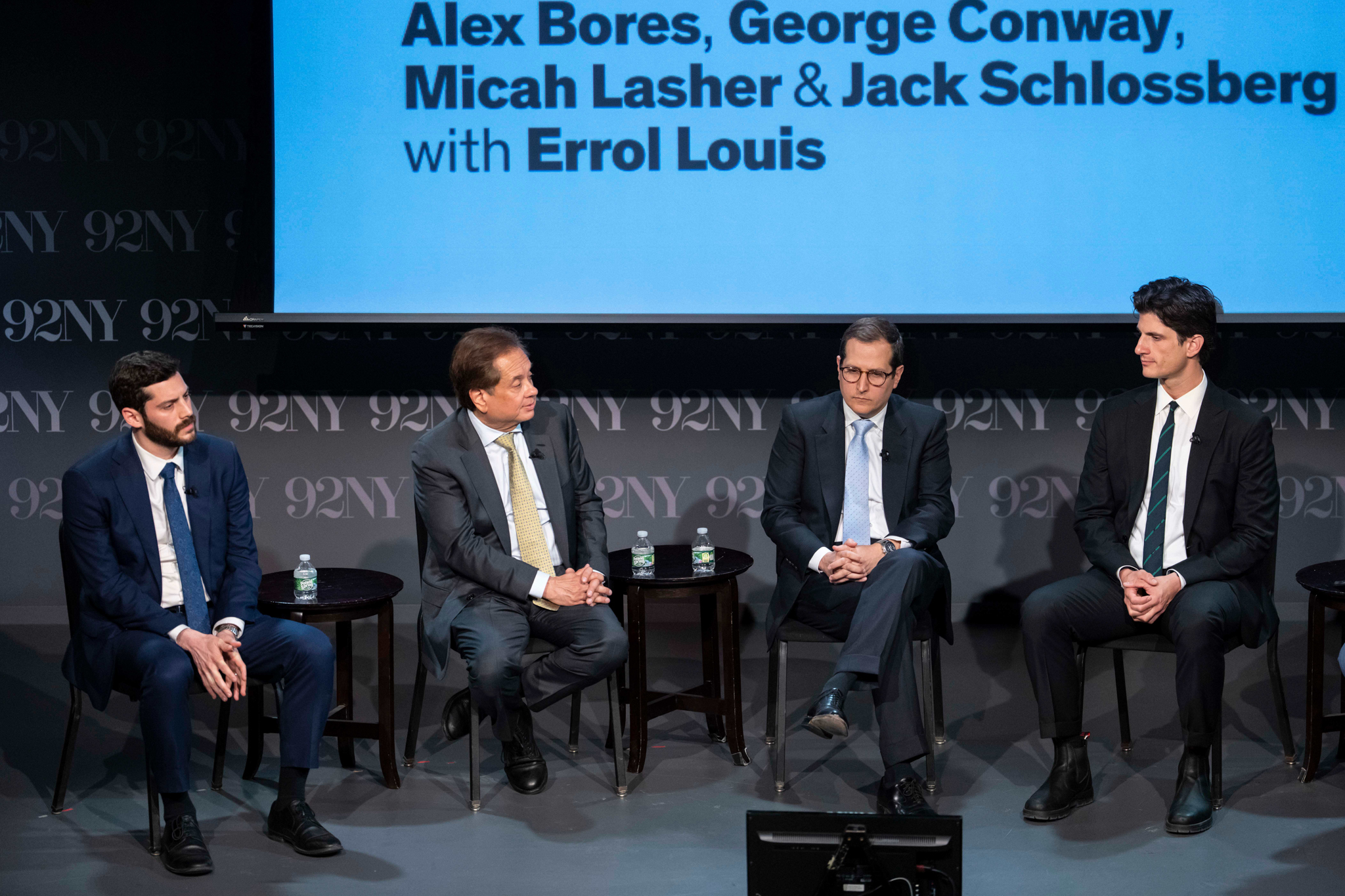
Assemblymember Micah Lasher, who has the support of Nadler and nearly two dozen other elected officials, led with 22%. Alex Bores, another assemblymember, came in next with 20%, and Jack Schlossberg, the influencer grandson of President John F. Kennedy, had 11%.
Former Republican and anti-Trump pundit George Conway had 9%, with public health expert Nina Schwalbe coming in at 3%, according to the Emerson poll.
“Whoever wins the NY-12 primary is going to represent roughly half as many people as the Manhattan borough president,” Evan Stavisky, a political consultant, told The City Reporter.
“In that context, the idea that there may be a lot of undecided voters really shouldn’t be that surprising,” he said.

The district, which includes the Upper East and Upper West sides of Manhattan, is the third wealthiest in the country, with nearly 40% of residents taking home more than $200,000 a year, according to a 2024 analysis.
The race has become a national story based in part on its wealth, location, the inclusion of a Kennedy and boatloads of money from big tech and artificial intelligence industry groups.
Despite a barrage of television and digital ads, and mailbox-bursting fliers, many of the mayor’s neighbors are also still unsure of who they want to be their next member of Congress.
A poll of voters over 50 earlier this month by the AARP found Lasher leading with 32% of the vote, and Bores and Undecided tied at 21%. Conway came in at 13%, and Schlossberg had 9%.

Records show nearly $25 million has been spent on the race, mostly for Bores and Lasher.
Early voting kicked off on June 13, the beginning of a 10-day sprint to election day. The spending is expected to continue.
On June 11, billionaire former Mayor Michael Bloomberg put another $5 million into a super PAC for Lasher, bringing his total to $10 million, according to campaign filings.
Breaking the Piggy Bank
The candidates are also spending millions of their own dollars to remind voters they exist, according to the most recent federal campaign filings.
Conway — who vowed to serve just one term in congress for the sole purpose of impeaching President Donald Trump — loaned his campaign $2 million. Schlossberg gave his campaign $1 million of his own money.
On the first weekend of early voting, the candidates campaigned outside The Metropolitan Museum of Art to speak to early voters and rallied with supporters.
Now, the homestretch is crucial, George Fontas, the founder and CEO of political firm Fontas Advisors, told The City Reporter.
Voters “are getting hammered by mail, at least nine pieces of mail per week from the campaigns and the PAC,” he said.
“I think they aren’t sure who or what to believe,” he said.
