

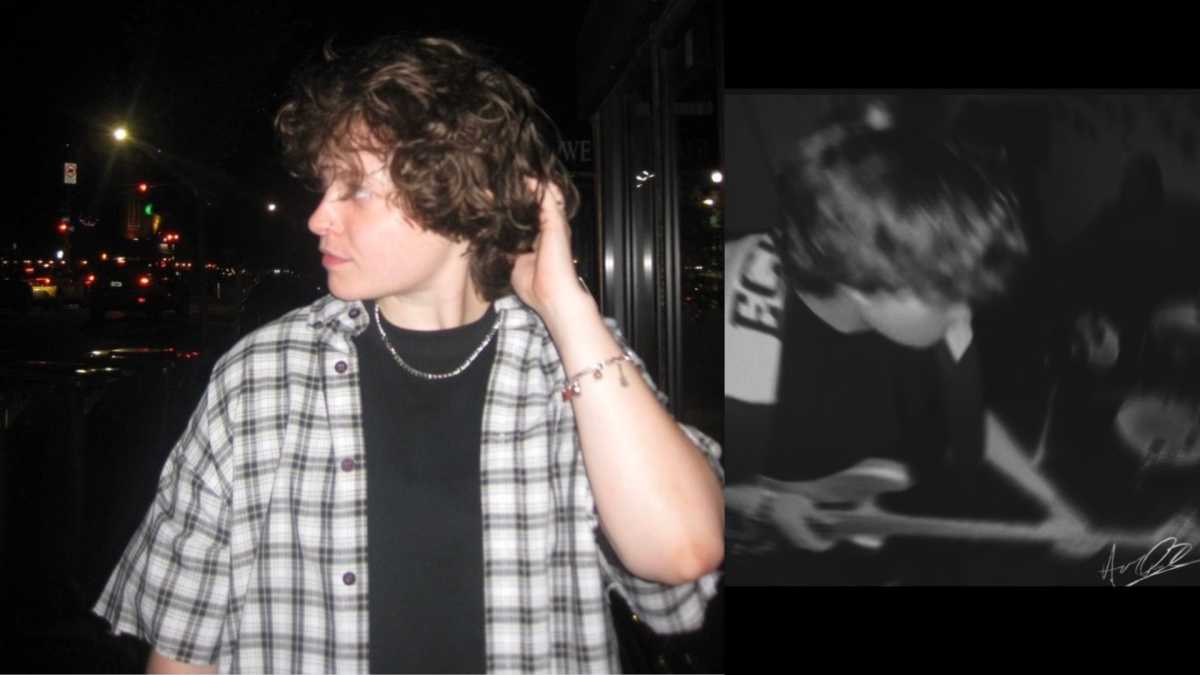
In 2015, after rounds of online auditioning, a 14-year-old Ava Quick made it to the in-person try-outs of NBC’s hit show “The Voice,” which offers young talent a chance to get discovered and break into the music industry.
While waiting in line, she took out the guitar she brought with her, and began to play “Love Yourself” by Justin Bieber. This led to a crowd of people joining in and singing along with her.
“I want to do this forever,” Quick thought at the moment. “I want people to sing my songs back at me, with me.”
Although she only made it to that first round, that didn’t stop now 23-year-old Quick from pursuing music, something she’s wanted to do from an early age. She even recalls an early memory of singing on stage at a kindergarten talent show, with a stuffed animal on the stage next to her for comfort.
“Ever since I could walk, talk, probably out of the womb, I always knew music was something that I wanted to do,” Quick said. “It was always just a feeling I had.”
In a society where marginalized voices are suppressed, Quick is making her way as a queer female independent artist. Growing up on Long Island, New York, it left an impact on how she wants to create music. “Being a young gay kid in a conservative town is a huge reason why I wanted to pursue music,” said Quick. “I felt like I could be a voice for people in similar situations.”
After attending Purchase College in Westchester – which Quick endearingly compares to Hollywood Arts High School from the show “Victorious”– she moved to Brooklyn to continue her music career.
Quick understands firsthand the struggle of independent artists trying to make their way in a society that heavily values mainstream artists. A lack of resources, accessibility, and finances can prevent indie singers from getting opportunities that more commercial artists may receive.
“Small artists are the backbone of the music industry,” Quick said. Most of the time, smaller artists are left to do the songwriting, producing and promoting alone. “It’s almost like working a full-time job that you’re not getting paid for.”
Being openly queer can add another burden. According to a USC Annenberg report, there is a strong misconception that the music industry is more inclusive than it actually is. In a report by the Musicians Union, the music industry appears more inclusive than it actually is, and in another Musicians Union report over half of women in the music industry have experienced gender based discrimination. Musicians Union states in another report that queer artists also face the same.
“What queer people bring to music is so important, I feel like even in history you see it,” said Quick. “We get noticed the least, but contribute the most in the music industry.”
Quick emphasizes the importance of supporting female and queer artists, especially in a world built against them. She highlights that female artists have to not only work twice as hard as male artists, but have to be media trained, as male artists get away with more than women can.
During college, she formed a connection with writer and journalist, Belle Martinelli, who remains one of her closest friends. Martinelli and Quick have collaborated on songwriting for some of Quick’s music, including her song “I Got a Girl,” released in 2025. Martinelli remembers them spitballing and throwing lyrics back and forth putting the song together in two hours, and being in awe of Quick’s work ethic and talent. “She’s like if Charlie Puth was a Brooklyn masc lesbian,” said Martinelli.
“We felt like that video of Taylor Swift and Jack Antonoff writing ‘Getaway Car,’ that is exactly what the process is like,” said Martinelli. That’s why it’s one of my favorite memories with her,” said Martinelli. “Just how amazing it is and how great you feel to create something, and to share that with her. I’m honored to be part of her process and part of her music.”
Outside of music, Quick considers herself to be a very loyal, loving and creative person. “I love a good laugh, I love a good espresso martini with the girls,” said Quick. Her favorite trait about herself is her personality, and she is spending her year working on her fear of being perceived, and her self-proclaimed time blindness. “I was on time today, though!” Quick laughs.
Quick also doesn’t hesitate to give her friends and family credit for the support they give her, viewing her friends as her biggest inspiration and her parents as her heroes. Martinelli describes Quick as someone who is extremely true to herself, and the type of friend you can depend on in every situation.
In the future, Quick hopes to see herself all over the Times Square billboards, selling out Madison Square Garden and having the opportunity to travel the world performing. “My motto in life is if it’s meant to be, it’ll be,” says Quick. “I just let the universe do its thing, I’ll put in the work, and what’s mine will be mine.”
“As a queer woman, as an artist, I feel like it’s so important for me to put myself out there, even if I think other people won’t like it, it doesn’t matter, I like it,” she adds. “For other artists out there, that’s the most important thing to do.”
