

New York City has won a $31 million judgment against the owners of two long-troubled Bronx apartment buildings, the largest civil penalty obtained by the city’s housing department in its history — and one that will give the city significant leverage over the buildings’ future, officials said Wednesday.
The city’s housing agency secured the judgment against Karan Singh and Rajmattie Persaud, the owners of Robert Fulton Terrace and Fordham Towers in the Bronx, where tenants and officials said roughly 500 families have lived for years with broken elevators, rat infestations, failing appliances and stretches without hot water or heat.
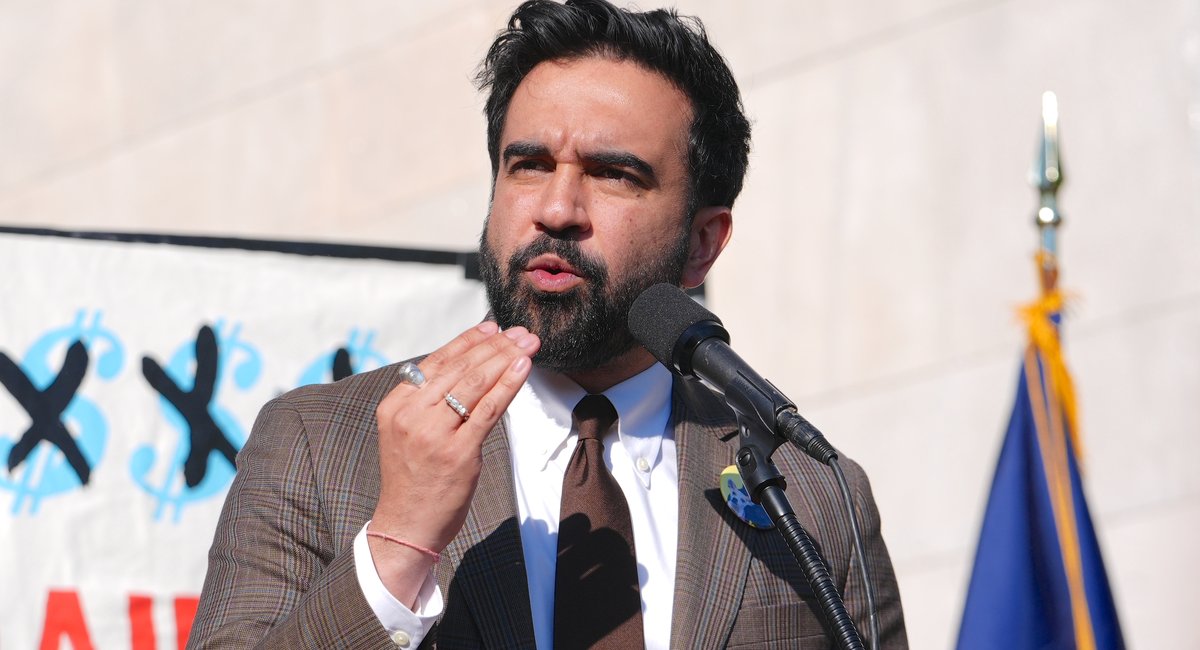
“For years, Singh and Persaud let more than 1,000 violations accumulate while they collected rent month after month,” Mayor Zohran Mamdani said at a press conference Wednesday morning at Robert Fulton Terrace. “ They are on Public Advocate Jumaane Williams’ list of worst landlords, and for good reason.”
Mamdani has made cracking down on bad landlords and steering property sales to what he calls “responsible buyers” a priority of his administration, though the litigation against the two Bronx property owners began under Mayor Eric Adams in 2024. Those efforts haven’t always been successful. Earlier this year, the Mamdani administration tried to block the bankruptcy sale of more than 5,000 rent-stabilized apartments owned by Pinnacle Group, but a federal judge approved the sale over the city’s objection in January.
As part of the judgment, an independent chief restructuring officer has been appointed to oversee the buildings, and Mamdani said that officer has already hired a property manager to begin making repairs. To help fund those repairs, the city has frozen more than $900,000 from the owners’ bank accounts.
Officials said the buildings are already in foreclosure, and Fannie Mae, which holds the mortgage for both, is moving to take them from Singh and Persaud.
Attorneys for the two landlords did not immediately respond to a request for comment Wednesday.
The $31 million judgment will be converted into liens on the properties, meaning any future buyer will have to deal with the city, said Housing Commissioner Dina Levy, who organized tenants in the same buildings in 2009.
“This judgment will make it nearly impossible for anybody to purchase the buildings without coming to deal with us first,” Levy said in an interview with Gothamist.
City officials said they are pushing Fannie Mae to find a buyer approved by the tenants and housing agency who would preserve the buildings.
Robert Fulton Terrace opened in 1967, Mamdani said during the press conference. Apartments were marketed to middle-income families as “luxury you can afford,” with rents of $29.30 per room and a quarter of units set aside for seniors.
“For working families, these apartments offered a path to a life of dignity. This is what the American dream had felt like,” the mayor said. “But as the years wore on, the dream of luxury you can afford descended into a nightmare. The two buildings were sold to a series of speculators, and soon fell into a pattern of disrepair and foreclosure.”
Mamdani described residents going without hot water for days on end and broken elevators trapping people in “17-story towers.”
“These conditions, to put it very simply, were inhumane,” he said.
Ahshaki Long, president of Fordham Towers’ tenant association, said she’s lived in the building for 25 years.
“I have lived through those violations, what they really meant, not as a list on a report, but as an everyday challenge that affected my sense of safety, comfort and dignity,” Long said during the press conference. “We are struggling with broken elevators that make it difficult just to get home; rats and roaches that turn living spaces into sources of stress; old and failing appliances that are never replaced; persistent leaks that damage our homes; and mold that threatens our health.”
The tenants’ frustration was clear. During a question-and-answer period following officials’ formal remarks, one tenant spoke up to press Mamdani on whether any of the $31 million in penalties would reach residents.
“Are we going to be reimbursed for not having a heater for the last three years and having to buy heaters? No stove? No refrigerator working?” the man asked. “ Anything going into the tenants’ pockets for all the stuff that we invested? And now y’all just coming to the table and saying, ‘OK, this needs to be done.’ But we’ve been living this way for a long time.”
Others began to speak up, too.
“Tell him,” one person said. “Yes!”
“When we going to be reimbursed for our suffering?” the man asked.
Mamdani acknowledged previous lawsuits against the owners hadn’t changed the conditions much, but said he was focused on making sure this time would be different.
“There have been a number of false dawns in this city when it comes to actually listening to tenants,” he said. “I do not begrudge any tenant their frustration. If I had to pay out of my pocket for the services that my rent were supposed to be paying for, I, too, would have to see until I actually believed it.”
