
Broadway review by Adam Feldman
Rating: ★★★★★ (five stars)
On the page devoted to Becky Shaw on Second Stage’s website, the description is vague: Gina Gionfriddo’s 2008 comedy, it says, is about a blind date that “spirals spectacularly off the rails.” That’s a misleading gloss on what happens in the play, but it’s also basically true. We never even see the blind date in question, which takes place over intermission; but it is nonetheless the pivot point of Gionfriddo’s piercingly funny and well-observed parable of romance, finance, honesty and ethics. Becky Shaw is a romcom with teeth, and the unseen scene is when those teeth start getting bared, whether as smiles or threats or both.
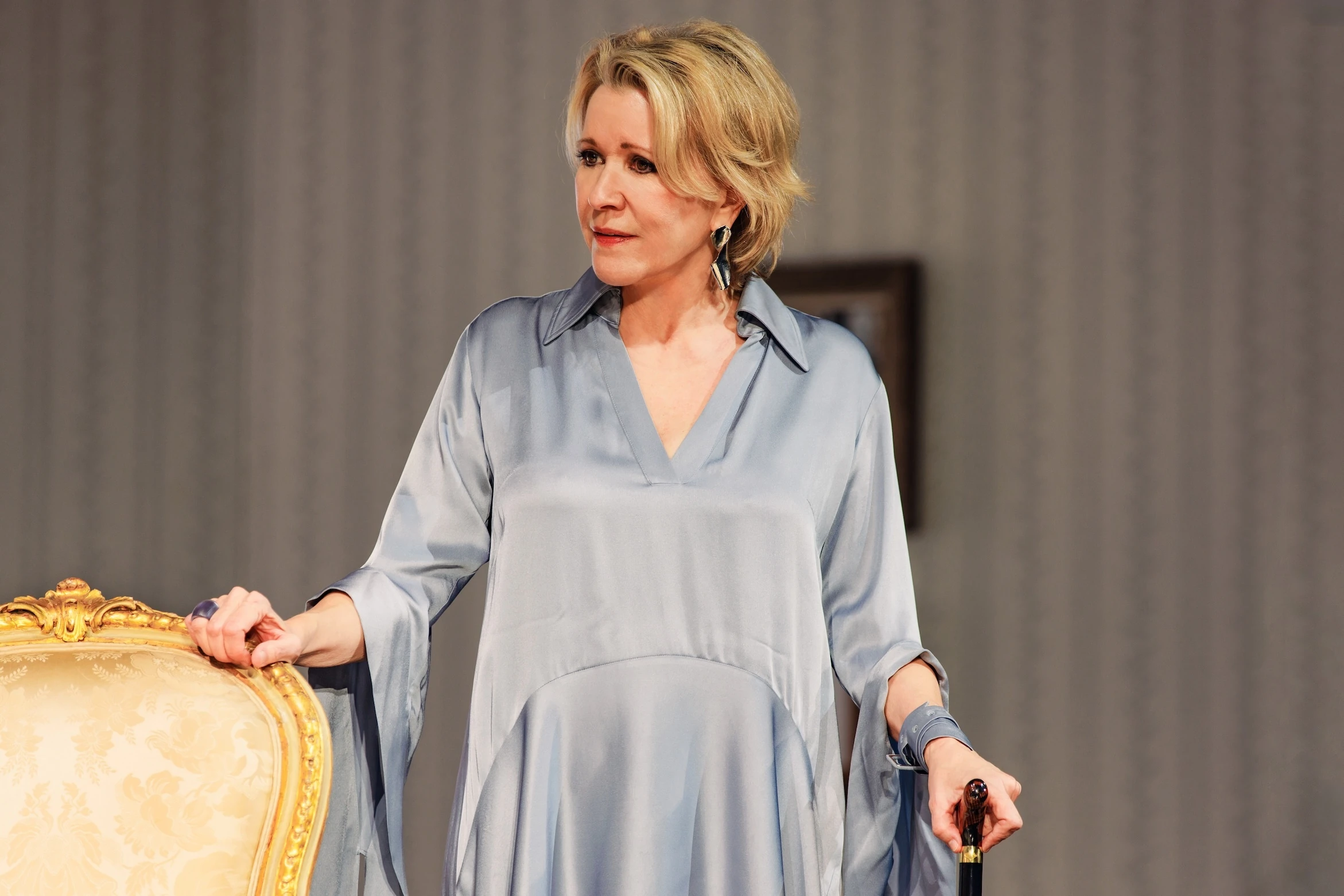
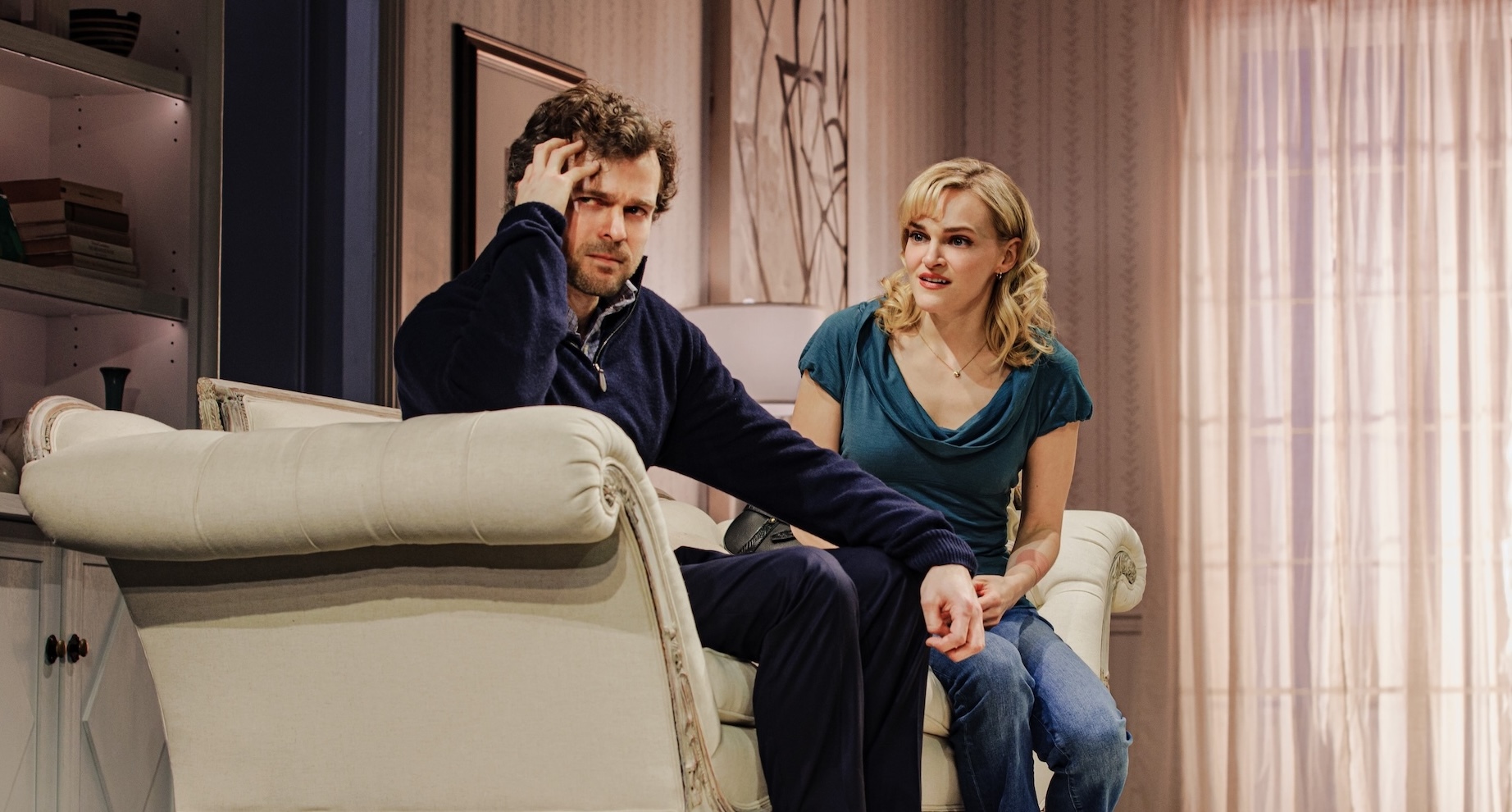
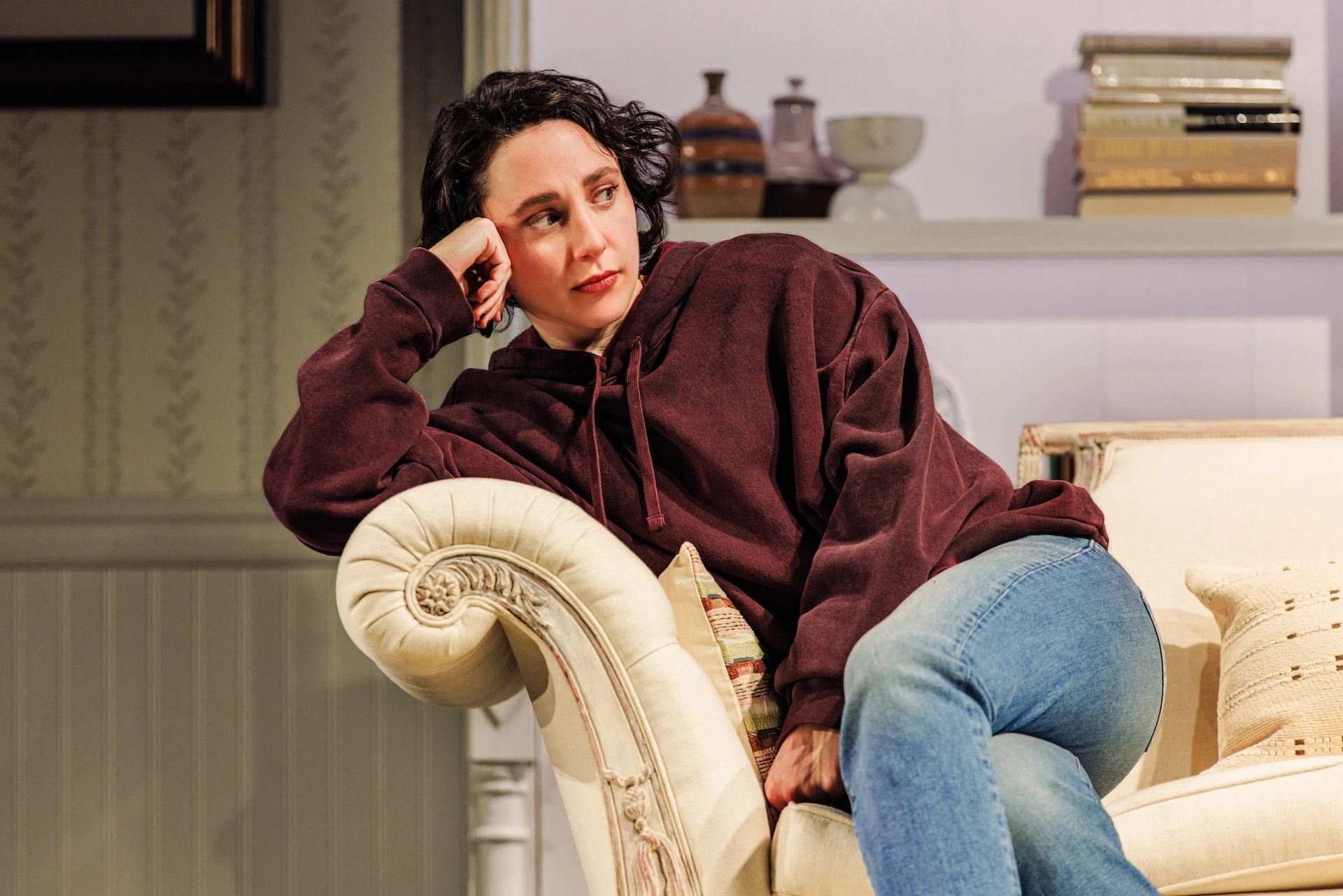
Love is never blind in Becky Shaw, but it is often, by choice, blindfolded. It might harm the many small surprises of Gionfriddo’s plot—which emerge like the natural twists of enmeshed vegetation, its flowers protected by thorns—to reveal too much about what that means, so I’ll endeavor to tread with discretion. The play’s central character is not Becky but Susie (Lauren Patten, with an appealing Bebe Neuwirth wryness): a thirtysomething graduate student in psychology who, in the opening scene, is coping with the recent death of her father, who has left his family less rich than they had supposed. Her responsible sort-of-brother Max (Solo star Alden Ehrenreich, fronting superbly), who was taken in by her parents as a child, is on hand to pick up the pieces as always: He’s a bluntly supercilious money manager with a take-charge attitude and tough-love advice at the ready. Although there is clearly romantic tension between them, he encourages her to take a mountain trip to take her mind off her mourning; that’s where she meets Andrew (Patrick Ball), a sensitive and dimple-chinned male-feminist writer who sweeps her off her skis.
RELATED: Buy tickets to Becky Shaw
Becky (Madeline Brewer)—whose name intentionally evokes that of Becky Sharp, the scheming Regency social climber of William Makespeace Thackeray’s 1848 novel Vanity Fair—doesn’t enter the picture until about a third of the way through the play. She’s an attractive but seemingly lost young woman who has been temping, and possibly tempting, at Andrew’s office. (He describes her as “delicate,” which is also the word he uses to describe the wounded Susie he fell in love with.) At Andrew’s do-gooder behest, Susie agrees to set her up with Max, or perhaps to set them up to fail. From the moment Becky appears—overdressed for the date, knock-kneed and teetering in her heels like Bambi on the ice—she’s like a Soviet parade: one red flag after another.

“She’s a thirty-five year old office temp with no money, no friends, no relationship, no family,” Max later complains. But there’s a glint of grit in her attitude—a defiance behind the desperation—that he finds appealing, at least briefly. She has possibilities. Director Trip Cullman excels at highlighting fleeting moments of sexual spark: the slight overcloseness, the lingering glance or touch. Max’s attitude toward relationships is overtly pragmatic. (“Prostitution, marriage…Same thing. It’s two people coming together because each has something the other wants.”) But who is Becky, and what is she after?
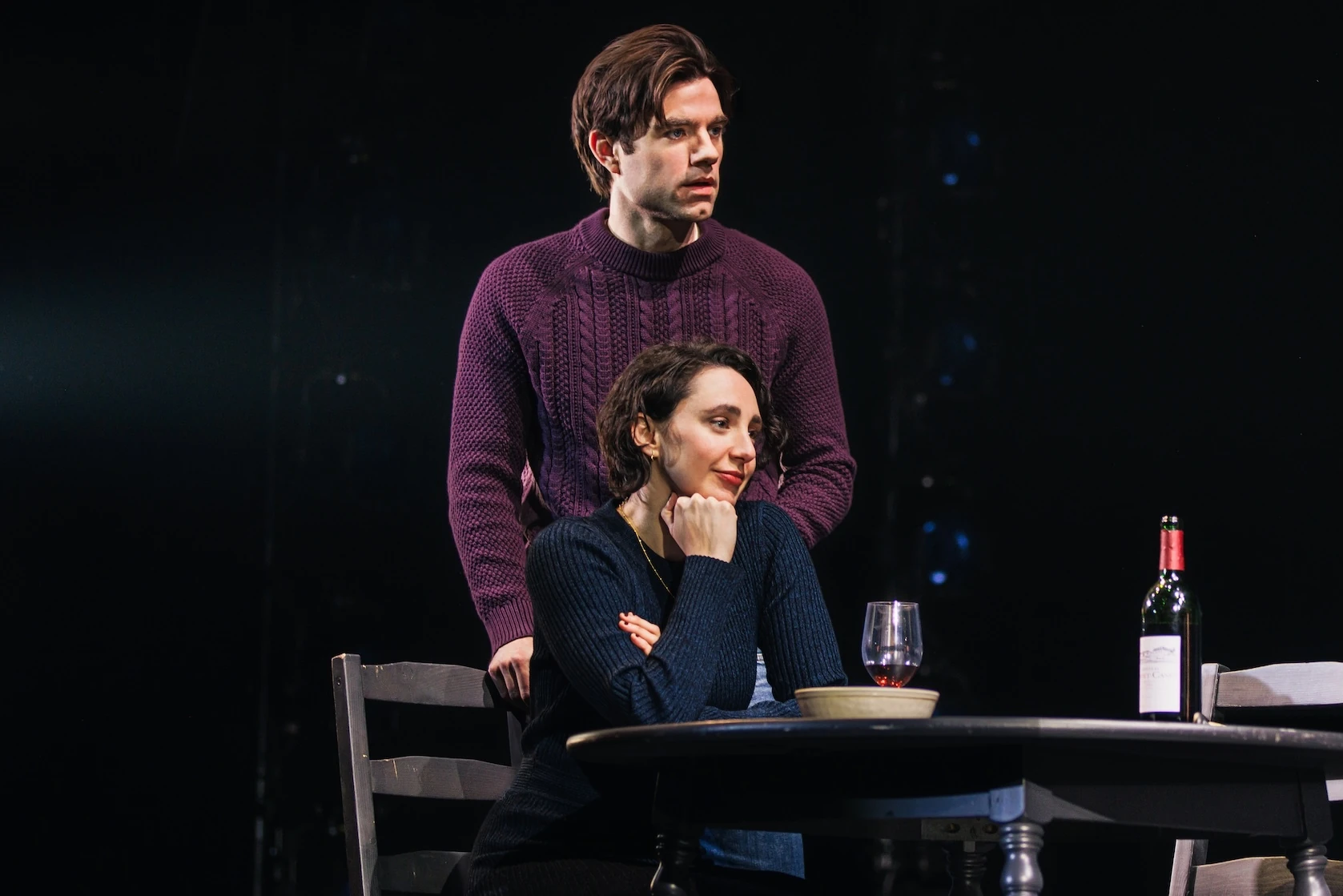
Becky Shaw is highly entertaining: a laugh-a-minute play whose comedic concerns are refreshingly up to date. What bumps it to the next level—it was a Pulitzer Prize finalist in 2009—are the philosophical questions behind the banter. Can love be bought? When does support become manipulation? How might what seems more or less like a one-night stand come to mean more, or mean less? Like Bertolt Brecht’s The Good Person of Szechwan, albeit much less didactically, Becky Shaw dramatizes the conflict between different kinds of virtue: the practical and self-serving ones that Max espouses (such as thrift, hard work, efficiency, duty) and the idealistic and altruistic ones that Andrew represents (such as compassion, fairness, truth). As in Brecht’s play, the latter rely on the former far more than they like to acknowledge. “Unless you’re Gandhi or Jesus, you have a limited sphere of responsibility,” Max says. “You have a plot of land and the definition of a moral life is tending that plot of land.”
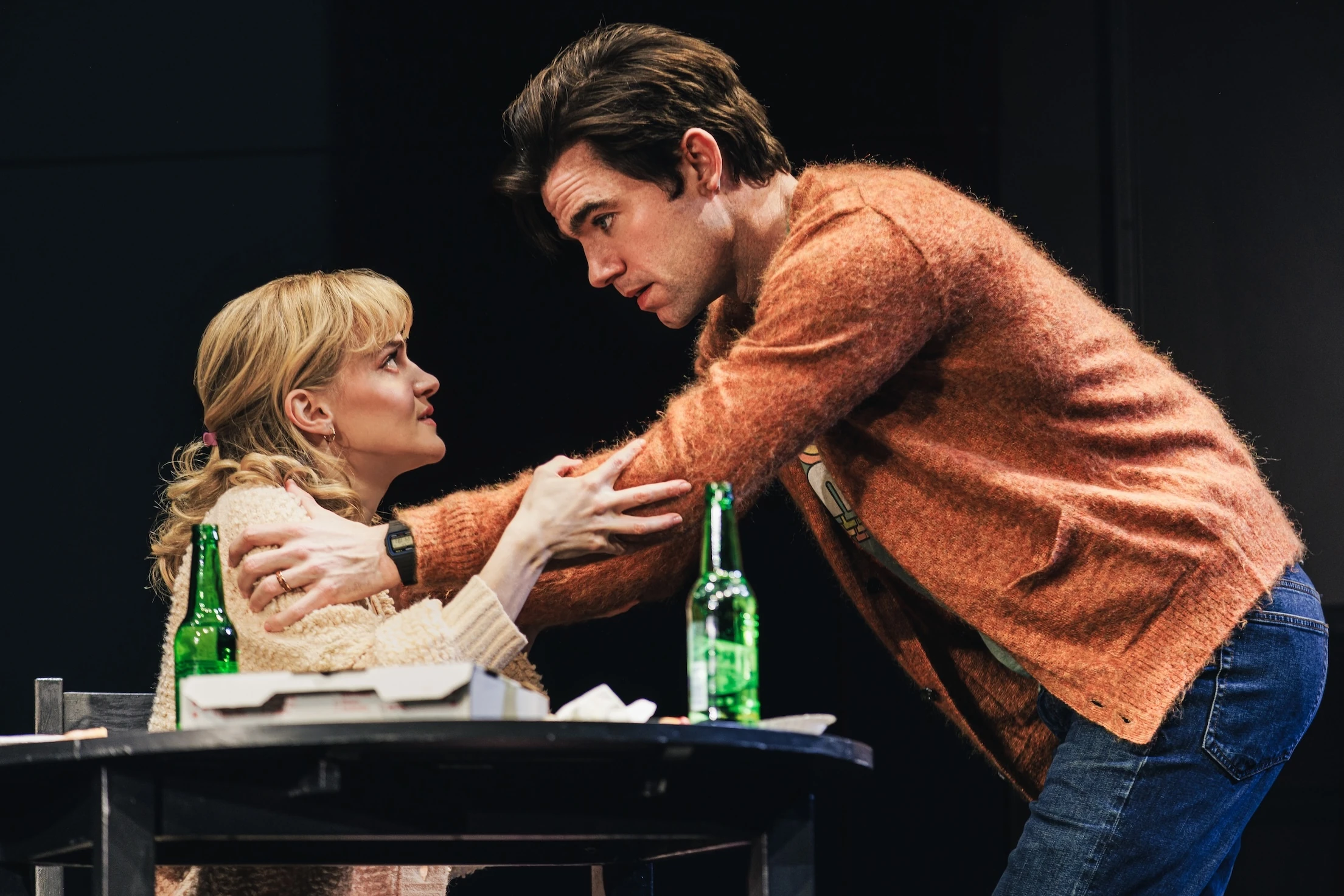
Cullman’s revival, which marks Becky Shaw’s Broadway debut, serves its plot very well. The production moves fast—even the set changes (to David Zinn’s fine set) have humor and purpose, and Kaye Voyce’s costume design is perfection—and all five actors are first-class, including the scene-stealing Linda Emond as Susie’s acidic mother, Susan, who is prone to Lucille Bluth–esque judgments from on high. Which characters you root for in the play’s romantic rectangle may reveal something about your own character, but it speaks to the strength of the writing and performances that a credible argument is possible for all of them. As dark as it sometimes gets, the play encourages all of us to see the good inside damaged goods.
Becky Shaw. Helen Hayes Theater (Broadway). By Gina Gionfriddo. Directed by Trip Cullman. With Alden Ehrenreich, Lauren Patten, Madeline Brewer, Patrick Ball, Linda Emond. Running time: 2hrs 25mins. One intermission.
Buy tickets to Becky Shaw: Broadway.com
Follow Adam Feldman on X: @FeldmanAdam
Follow Adam Feldman on Bluesky: @FeldmanAdam
Follow Adam Feldman on Threads: @adfeldman
Watch Adam Feldman’s theater podcast on YouTube: Sitting Ovations
Follow Time Out Theater on Instagram: @timeout_theater
Follow Time Out Theater on X: @TimeOutTheater
Keep up with the latest news and reviews on our Time Out Theater Facebook page