
The City Council released its own plan for filling the city’s $5.4 billion budget deficit over the next two fiscal years, mostly through reestimating the city’s revenues and spending – a proposal Mayor Zohran Mamdani said would require cutting city services instead of bringing in new revenue.
The savings plan cobbles together $6 billion as an alternative to Mayor Zohran Mamdani’s “last-resort” proposal to raise the city’s property tax rate by 9.5% across the board.
The city is required by law to balance its budget each year, and Mamdani said his plan was made in an effort to balance the budget while drawing down reserves from the city’s savings and reducing services.
The property tax is the one major revenue source the city directly controls, and can increase without the state’s sign-off. Doing so is politically unpopular, however, with property owners of all kinds, so that the last hike came more than two decades ago.
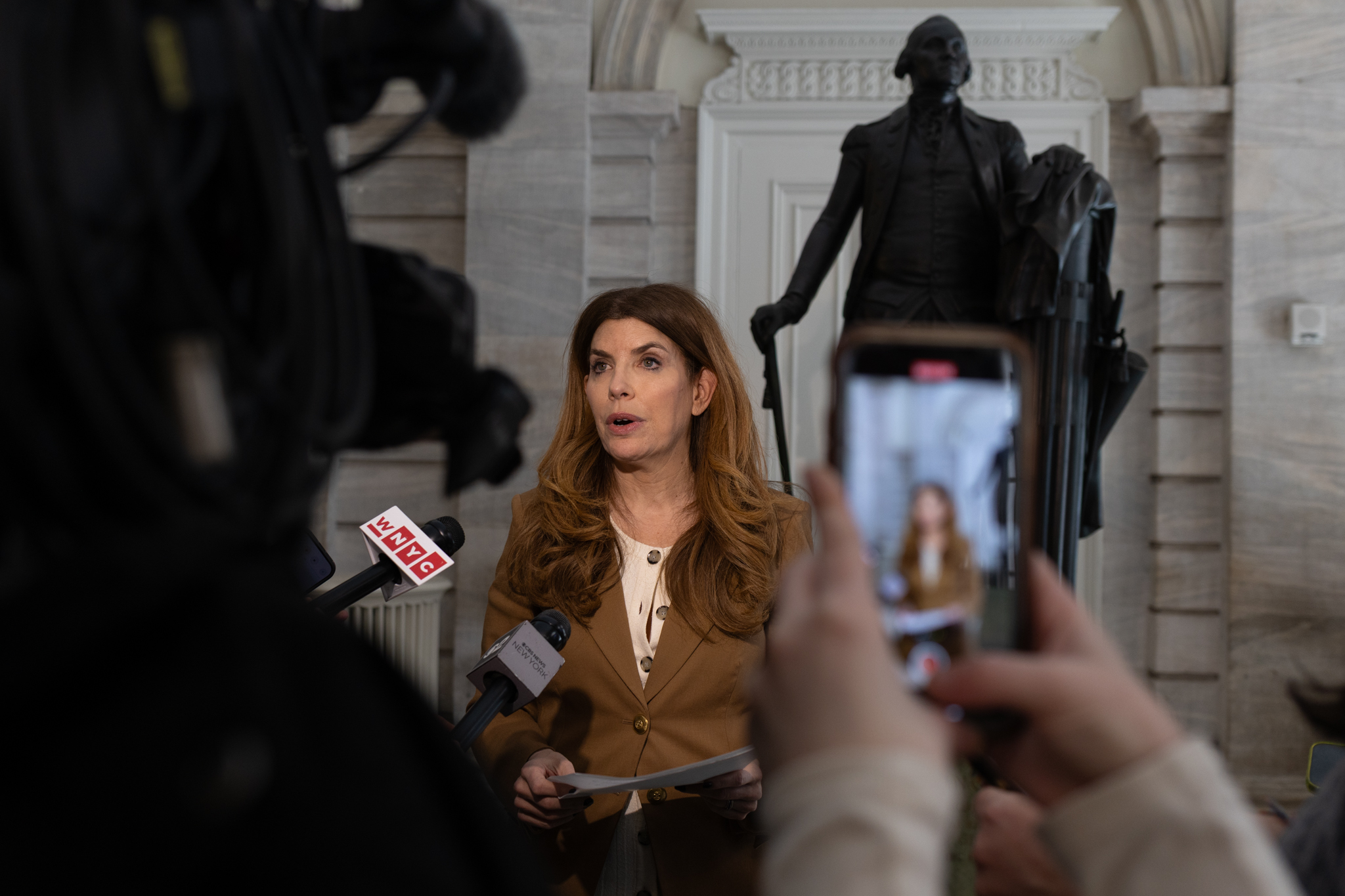
“We cannot in good conscience fund the city’s needs on the backs of homeowners or renters, by digging into emergency reserves, or by cutting essential programs,” City Council Speaker Julie Menin said in a statement.
In the midst of budget negotiations, Mamdani replied on Wednesday that Menin’s preliminary budget proposal was “unrealistic.”
“Double counting previously identified savings, overestimating revenues, and exaggerating debt service savings does nothing to close a deficit,” he said in a statement.
“This $6 billion proposal asks Albany for just one action – class size mandate relief. It refuses to address the deeper structural imbalance between the City and the State, or to increase taxes on the wealthiest New Yorkers and most profitable corporations. It effectively ensures this structural deficit will continue indefinitely.”
The council responded on its X account that while it may be April Fools’ Day, the legislature “wasn’t kidding when we said NO CUTS to any services or staff.
“We continue to expect and demand additional revenue from Albany, which our plan makes clear,” the account said.
The largest chunk of the City Council’s proposed savings come from reestimating $3.5 billion in anticipated expenditures and revenues. That includes $80 million more in construction permit and late-fee revenue from the buildings department, and $860 million in savings from reestimating salaries in city agencies.
The council is also calling on the city to recognize $42 million more in rent from the Port Authority from the city’s airports.
Another $2 billion could be saved through a more robust audit of Department of Education contracts — which the council says could save $175 million over two fiscal years — and more than $200 million through debt service savings. They did not identify how the remaining $2 billion could be saved.
Some of the council’s suggestions were minor, or more creative.
One idea is to rent $8 million by renting spaces inside the Brooklyn Bridge that were used for art exhibitions and events but have been closed since the Sept. 11 attacks and are now used to store city cars.
They also proposed charging more to dock boats at the 15 marinas run by the Parks Department, which they project could bring in $1 million, and, inspired by a recent Center for an Urban Future report, adding 20 more concessions on Parks properties.
The city’s budget director, Sherif Soliman, testified in front of the City Council last week about New York City’s finances, blaming the deficit mostly on former Mayor Eric Adams’ administration for not fully capturing spending in previous budgets.
He was grilled on the mayor’s threat to increase property taxes and take money out of reserves, which was criticized by both the city and state comptroller and led the four major bond rating agencies to warn that they may reduce their grades on the bonds the city sells to finance its debt.
Experts, however, say it’s not clear that a potential downgrade would immediately increase the interest rate the city would pay.
