
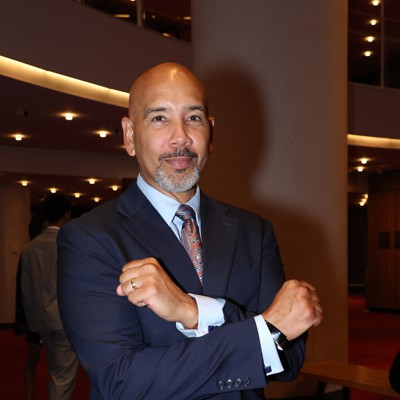
Ruben Diaz Jr. has been around politics in the Bronx for a long time, seeing the changing borough through the course of the 21st century. The former Bronx borough president surprised many when he declined to seek the mayoralty in 2021 and made a pivot to private life, becoming a senior vice president at Montefiore Einstein in the Bronx. In light of City & State’s 20th anniversary, Diaz talked about the changes in Bronx politics since 2006, including the rise of Rep. Alexandria Ocasio-Cortez, the overhaul of the borough’s roster of elected officials and when a Latino will get elected to citywide or statewide office. This interview has been edited for length and clarity.
How would you characterize just how Bronx politics has changed over the past 20 years?
Dramatically, in one word. If you look at every single elected official in the Bronx right now, I want to say, in the last 20 years, since 2006, I think it’s only Carl Heastie, Jeff Dinowitz and maybe (Jose M.) Serrano who are the only ones that are still elected. So I think if you look at all of the elected officials in the Bronx, I think less than a handful were elected then. Demographically speaking, you look at the area in Throggs Neck, Morris Park, once upon a time, you had all white men who represented that area, from Jeff Klein, Jimmy Vacca, and now it’s all Latino women. So the demographic is changing in that part of the Bronx. You have a growing Latino population, especially with Dominicans. You have more Dominicans elected than ever before. I think in 2006 there wasn’t one single elected Dominican in the Bronx. And of course, you didn’t have a female borough president (in 2006), didn’t have a Black borough president, so I would say, dramatically.
How has this demographic shift impacted Bronx politics?
I would say that what we have now is the majority of the electeds in the Bronx are female. What we see now is there is a certain level of thought and sophistication, and they’re all professionals. Taking nothing away from those whose shoulders we stand on, but I think that we started to see a Bronx elected official, I think, taken much more seriously than ever in the past because of that sophistication, that professionalism.
New York City has a large Latino population, but there have been very few Latino major party nominees for citywide or statewide office, and no Latinos elected citywide or statewide. Will that change?
I was one of the people who wanted to change that, but it didn’t work out for me, because of my family. I made a decision to walk away from running for mayor. I think I would have had a pretty good chance of being the mayor back in 2021. I do think, however, that’s a conversation that the Latino leadership needs to have within itself. So what happens is a lot of times people try to blame other folks and other communities, but we have a lot of elected officials. We have a lot of people who are talented, but for many different reasons, we haven’t been able to accomplish that.
So whether it’s that we’re not monolithic in terms of political philosophies and people want to put us all in one box, whether people feel like they rather walk away and become entrepreneurs, whether or not, quite frankly, we see elected people who are either already elected or have something to offer, who don’t have the discipline to stay on course or may not want to put in the work. Or even worse, sometimes being undermined – I’m giving you some juicy stuff here – or whether there’s undermining happening within our community. Those are all things that maybe one day there’s got to be a Latino conference so that we can get all of that in order. What I’m telling you right now is extremely controversial.
Because you know what they’ll say? For instance, someone will say, ‘Well, why we couldn’t have a lieutenant governor?” Well, the governor tried. The governor interviewed many Latinos, and for whatever reason, for many different reasons, people said “no.” Or other people undermine it. Undermined some of the would-be candidates or, you know, because of people’s political differences or philosophies. We could have a Latino run for mayor again. Why don’t Latinos coalesce around one candidate? We’ll get it together at some point, and I’m going to hear it from folks when they read about this one, but that’s good because the conversation needs to happen, and somebody has to call it out for what it is. If we don’t have Latinos, and people are blaming me, people say, “Well, Ruben, you could have been the first Latino citywide.” OK, yes. And then I’ve had my reasons, but that’s my point. My point is that the reasons why we don’t have citywide, statewide Latinos in office is something that has to be resolved within the Latino community and leadership.
Do you think we will see a Latino elected citywide or statewide in the next four to eight years?
The solution to that lies with the Latina leaders. I think when you look at the future of city and state politics in New York, when you look at the future of Latino politics, that future lies and rests in the hands of the elected Latinas. Once they get together, the sky’s the limit for our community.
Why do you say the Latina leadership?
Because Latinos, the men, already had our turn, and they’re the ones out there. They have larger numbers in terms of elected office. They’re the feisty ones. They’re all intelligent, they’re all caring. They all have phenomenal backgrounds. So I put my bet on them.
Rep. Alexandria Ocasio-Cortez is mentioned as a potential candidate for president or for the U.S. Senate in 2028, the first time in over 30 years since a Bronxite has been a serious contender for statewide or national office. What are your thoughts?
I have absolutely no idea. But I think that the sky’s the limit for her. It’s all predicated on what she wants to do. It’s never a bad thing to have different options. A Latina from the Bronx being mentioned as a potential presidential candidate or vice presidential candidate or U.S. Senate candidate, that already says a lot about her and what she’s been able to accomplish. It’s exciting.
