

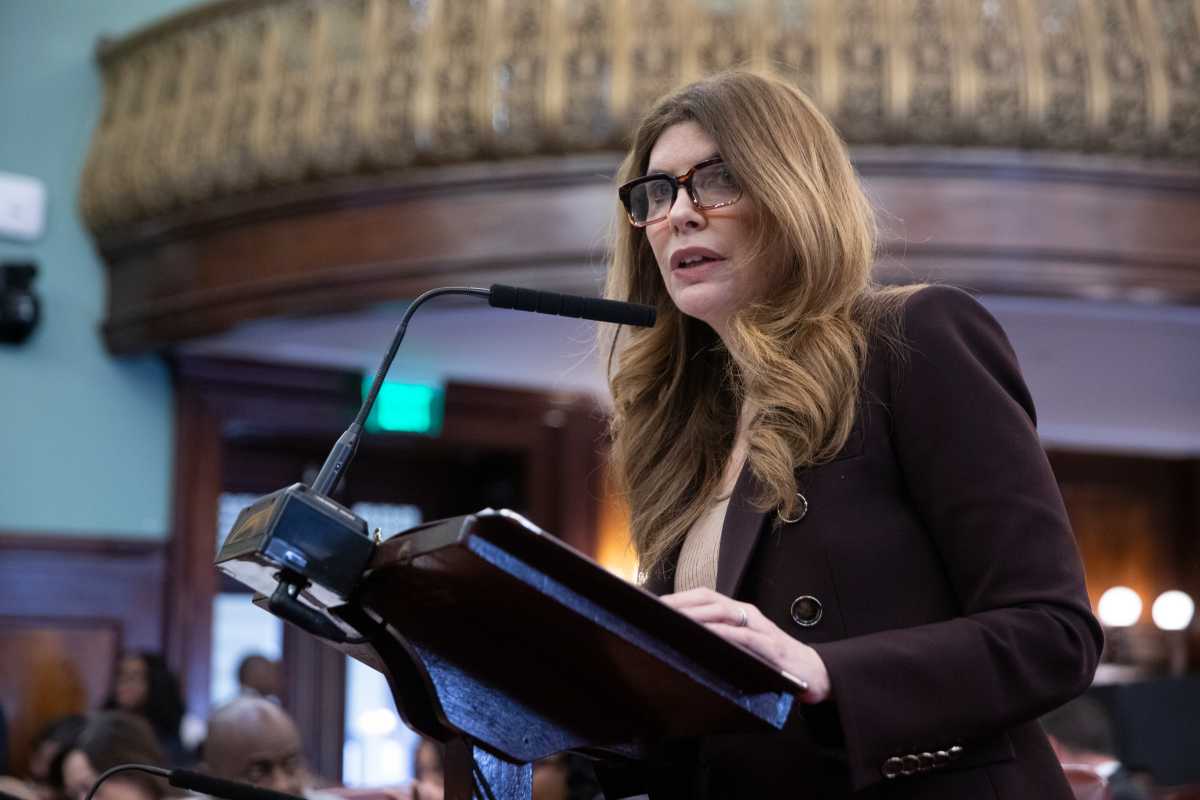
City Council Speaker Julie Menin presides over the Council’s stated meeting at City Hall on March 26, 2026.
Photo by John McCarten/NYC Council Media Unit
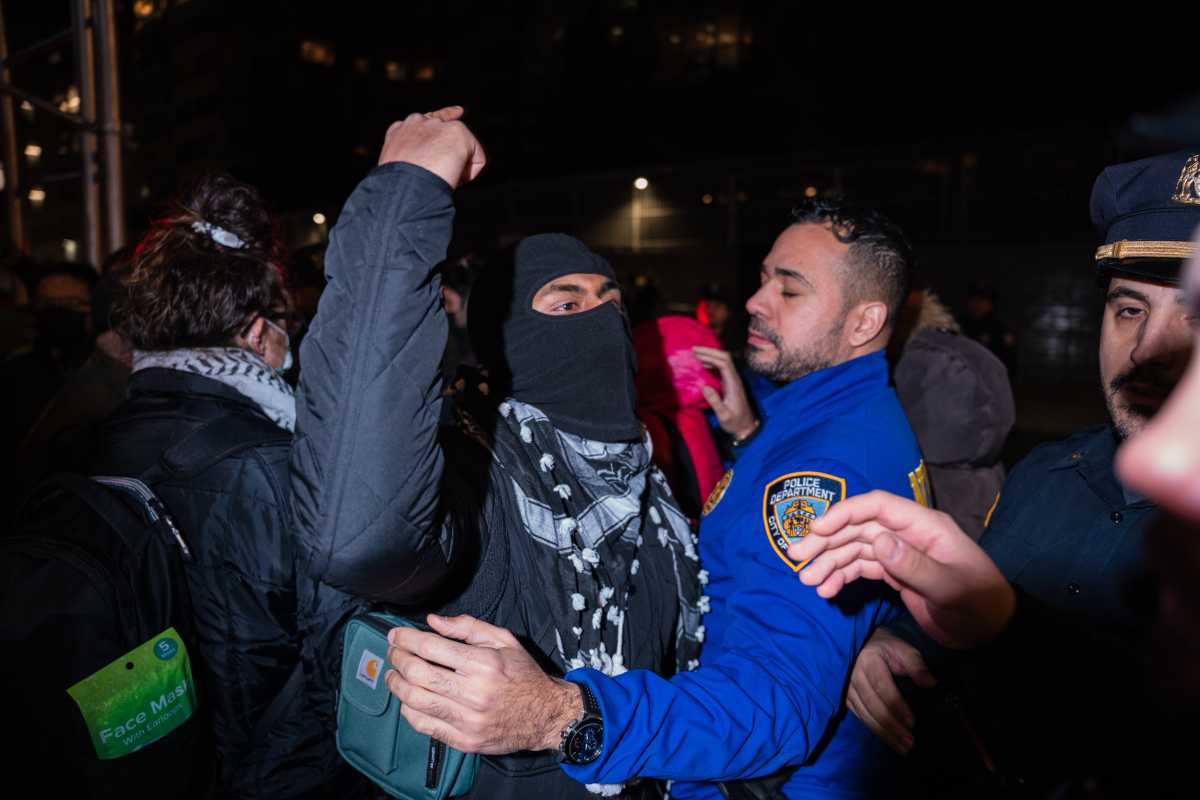
The New York City Council approved on Thursday a package of bills aimed at combating hate — including two contentious measures requiring the NYPD to develop and publicly post plans for responding to protests near schools and houses of worship when there is a risk of obstruction, injury, intimidation or interference.
The houses-of-worship measure, Intro 1-B, passed 44-5, enough to override a mayoral veto. A similar bill covering schools, Intro 175-B, passed 30-19, leaving it six votes short of a veto-proof margin and setting up a decision for Mayor Zohran Mamdani, who has not previously supported the measures outright.
City Hall did not respond to requests for comment at the time of publication as to how the mayor will act on the bills. The legislative language is similar to an executive order then-Mayor Eric Adams signed before leaving office, which Mamdani nullified through a blanket executive order issued after becoming mayor on New Year’s Day.
Supporters cast the legislation as a public safety and transparency measure, not a restriction on speech. Opponents argue it could give the NYPD too much discretion over protest activity and invite constitutional challenges.
Buffer zone bills needed for ‘safe passages’
Before the March 26 vote, Council Speaker Julie Menin said the houses-of-worship bill was meant to protect access while preserving free speech, assembly and protest rights. She said the measure would require the NYPD to create a public plan to address the risks of physical obstruction, injury, intimidation, and interference, while also providing for communication with religious leaders, the public, and protesters.
Bronx Council Member Eric Dinowitz, sponsor of the schools bill, said his measure would create a framework for “safe passages” for students and respond to reports from students who felt harassed or intimidated while entering school buildings. He said the bill would increase accountability and transparency while protecting First Amendment rights.
The vote followed weeks of revisions to the legislation. In February, Menin said the Council had softened the original proposals by dropping a mandatory 100-foot perimeter rule and a requirement for barriers at entrances and exits. The revised bills instead direct the police commissioner to produce a proposed plan within 45 days and a final plan within 90 days outlining when and how security perimeters may be used.
Menin said those changes followed discussions with the NYPD and were intended to preserve protest rights while giving police flexibility. She repeatedly described the revised legislation as content-neutral and said it created no new criminal penalties.
At a press conference before Thursday’s meeting, Menin said she had spoken with Mamdani several times about the houses-of-worship bill and that he had not indicated to her that he planned to veto it. She said he directed her to work with the city law department, and that comments from the law department and the NYPD were reflected in the current version. But she also said she had not spoken with him recently about the final amended bill.
The legislation is part of a broader Council package tied to a five-point plan to combat antisemitism and other forms of hate.
Why supporters say the bills are needed
The bills were born out of demonstrations outside Park East Synagogue in Manhattan and a synagogue in Kew Gardens Hills, Queens, as well as broader political fallout from pro-Palestinian protests on college campuses that intensified debate over antisemitism, protest rights and public safety.
Supporters of the houses-of-worship bill included Rabbi Marc Schneier, president of the Foundation for Ethnic Understanding, who praised its passage, “No one should have to be worried about protesters harassing them when entering a house of worship.”
The measures also drew organized opposition from civil liberties, clergy, education and pro-Palestinian advocacy groups. Before the vote, the New York Civil Liberties Union rallied outside City Hall with other opponents urging lawmakers to reject what they called “no-speech zones.”
Critics argued the bills were unnecessary because existing law already prohibits obstruction, harassment and assault, and said the legislation would expand police discretion over constitutionally protected protest. They also argued the measures could disproportionately affect pro-Palestinian demonstrators and other groups engaged in political advocacy.
Among the Council members voting no was Brooklyn’s Shahana Hanif, who said in prepared remarks that the bills raised serious constitutional concerns, undermined the city’s protest settlement framework and gave the NYPD too much power to police speech.
She also objected to a carveout for labor picketing, saying it could create content- or speaker-based distinctions under the law.
“At a time when our federal government is eroding civil liberties, New York City must model a different path—one that protects both safety and fundamental rights. It is imperative that we do not expand police discretion over when and where people can speak and organize,” Hanif said.
