
Broadway review by Adam Feldman
Rating: ★★★★ (four stars)
Mark Rosenblatt’s Giant hits the current historical moment like a targeted strike. The play unfolds on a single afternoon, interrupted only by intermission, at the English country home of Roald Dahl. It is the summer of 1983, and the beloved children’s author has come under fire for his review of a book about Israel’s siege of West Beirut, in which Dahl opined of the Jews that “never before has a race of people generated so much sympathy around the world and then, in the space of a lifetime, succeeded in turning that sympathy into hatred and revulsion.” Rosenblatt began writing his play in 2018, five years before the October 7 attacks that would prompt both a wave of Israeli military action and a spike in anti-Zionism that has often blurred with—or overtly embraced—antisemitism. Giant couldn’t be timelier: It arrives on Broadway in the same month as a new Israeli ground invasion of Lebanon.
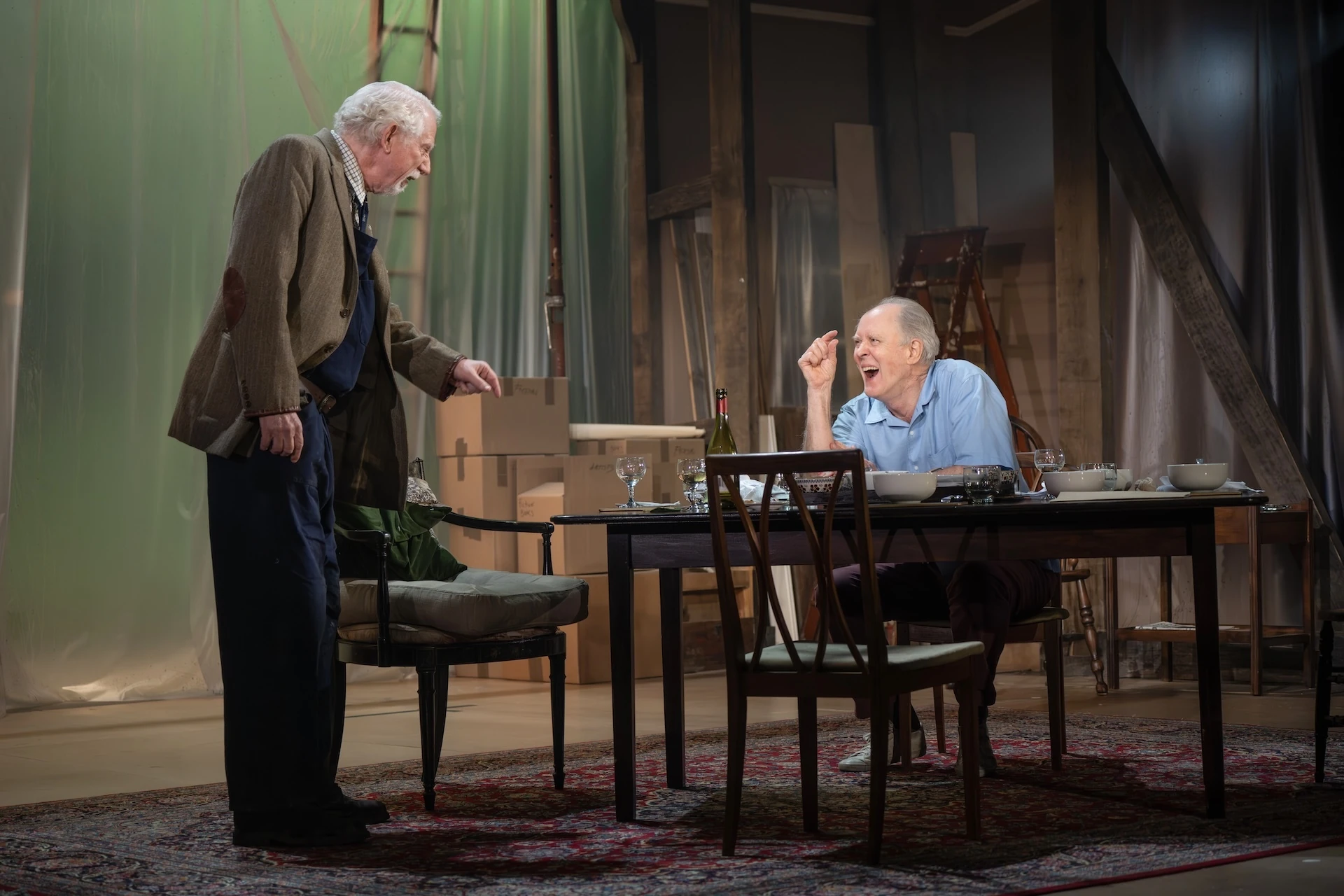
The play’s topicality is only partially anesthetized by the historical distance that separates us from its story. Back at the Dahl house, the creator of Charlie and the Chocolate Factory and James and the Giant Peach—played superbly by master thespian John Lithgow—is examining the proofs of his latest project, The Witches, as those in his orbit try to convince him to apologize for his comments about the Jews or at least walk them back a bit. These include his flinty but gracious fiancée, Liccy (Rachael Stirling), and his accommodating British publisher, Tom (Elliot Levey), plus a character that Rosenblatt has invented as a foil: Jessie Stone (Aya Cash), a sales director for Dahl’s American publisher who has come to London with concerns that his comments may harm him with U.S. bookstores and libraries. Tom and Jessie are both Jewish, which raises personal stakes as well as professional ones for them as they move through the dicey discussion.
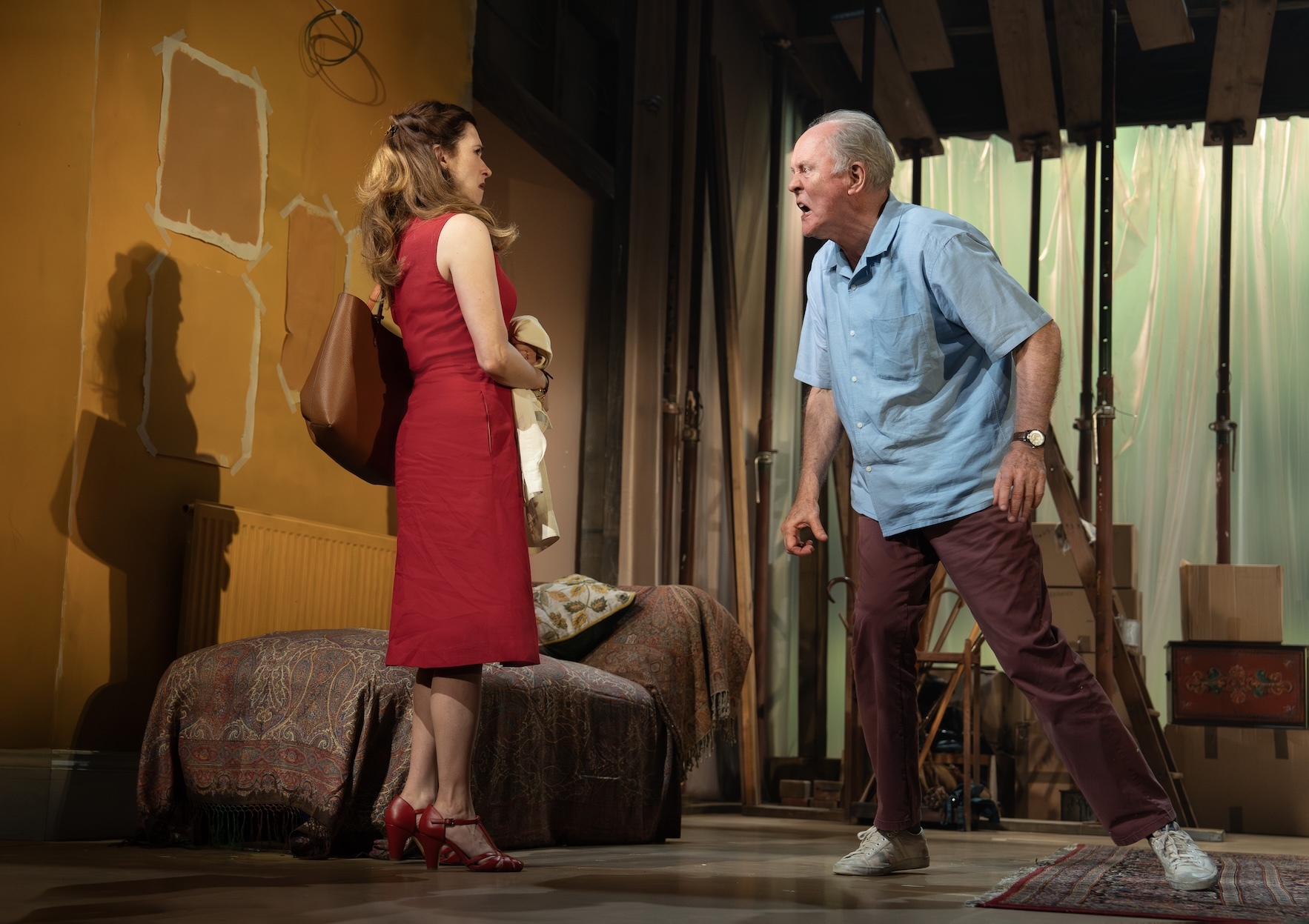
Nicholas Hytner’s bracing production ran in the West End in 2024 with the same four actors in the main roles, and they mostly work together as a smooth machine. Lithgow’s Dahl can be the soul of charm and playful wit when he’s being indulged, but the judgmental mean streak that enlivens his kids’ books (and especially his macabre short stories) can also make itself felt in real life when he feels challenged. Those in his circle know how to flatter and deflect when required, including his good-natured Kiwi housekeeper, Hallie (Stella Everett), and his hearty groundskeeper, Wally (David Manis). Cash’s performance is in a somewhat different register—it feels more strained—and this hint of formal discontinuity works to the production’s advantage. Jessie is the outsider here, ill at ease from the beginning, and Dahl treats her with annoyed contempt, homing in on her points of vulnerability (as a young person, as a woman, as an American and especially as a Jew). The marvelous nastiness in his work, Giant suggests, extends from the fact that he can be a nasty piece of work himself.
RELATED: Buy tickets to Giant on Broadway

Rosenblatt lets Jessie give Dahl some of his own, but Giant would be much less interesting if it were just about exposing a famous author’s darker side, setting him up as a Goliath to Jessie’s David. It takes Dahl’s talent and his morality seriously; both are rooted in a love of underdogs and fury at those who would do them harm, a sensibility shaped by his experiences being bullied at school. “In his books, he picks a glorious, playful path through the chaos of childhood,” Tom says. “It’s the rarest of gifts. To show its cruelty but take you out the other side.” His outrage about Israel, at least in his own mind, reflects that. “Roald has spent years, long before I knew him, supporting destitute people, children especially, around the world,” Liccy says. “Lebanon broke his heart. Truly.”
The irony is that in standing up for victims, Dahl becomes a bully himself. He is high-minded, high-handed, highly confident in his own correction. He is also just plain high: Lithgow is 6’4”, and his Dahl has the slight forward hunch at the shoulders that is common to very tall people. That implies a certain compromise with the world below him, but it also creates the impression of looming. There’s a subtle menace in it: He stoops to conquer. (The housekeeper, Hallie, is also tall, but she stands with the impeccable straightness of a dancer—a different kind of rectitude.) Dahl knows the power that he wields; he revels in it, and the pride he takes in his inflexibility blinds him to the ugliness of where it leads him. Although his passionate anti-Zionism is not necessarily initially rooted in antisemitism, his example shows how easily principled opposition can sour into hatred.
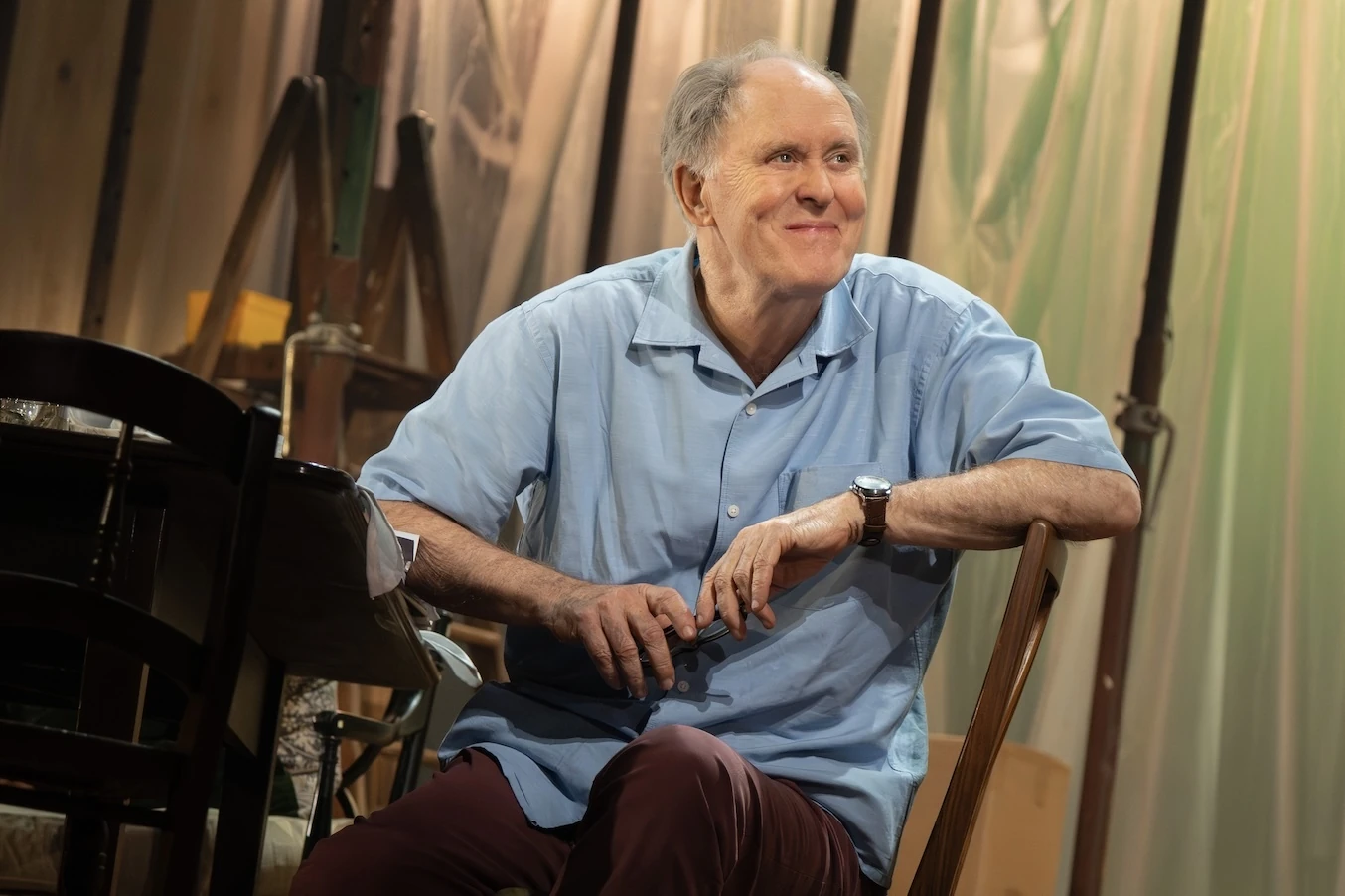
But Giant is not just about Dahl’s rigidity; it is also about the allowances and compromises made by those around him, who forgive him his trespasses because they want to or need to. If Dahl is an antisemite, should that be a dealbreaker for Liccy—or for Tom and Jessie, who admire his work and whose businesses have significant interests in his success? And, relatedly: Tom and Jessie have reservations about Israel’s military actions but won’t condemn it in public, which, Dahl claims, demonstrates their indifference to the Palestinians: “You sit here, in my home, as my publishers, insisting I bow to a public clamour, utterly blind to how despicably racist you are yourself.” Lithgow’s portrayal of Dahl is ultimately fearsome, but the play’s moral complexity marks it as more than a portrait of the artist as a difficult man. It’s a provocative study in the ongoing challenge of asking giants to watch their step.
Giant. Music Box Theatre (Broadway). By Mark Rosenblatt. Directed by Nicholas Hytner. With John Lithgow, Aya Cash, Elliot Levey, Rachael Stirling, Stella Everett, David Manis. Running time: 2hrs 20mins. One intermission.
Buy tickets to Giant on Broadway: Broadway.com
Follow Adam Feldman on X: @FeldmanAdam
Follow Adam Feldman on Bluesky: @FeldmanAdam
Follow Adam Feldman on Threads: @adfeldman
Watch Adam Feldman’s theater podcast on YouTube: Sitting Ovations