
On the campaign trail, Mayor Zohran Mamdani pledged to double the budget for the agency that would be the tip of the spear for much of his agenda to protect workers and consumers from exploitation by big business.
But in his first proposed budget since taking office, Mamdani has outlined an 8% funding reduction for that office, the Department of Consumer and Worker Protection.
Department leaders, council members and worker advocates say the cut would kneecap the agency’s ability to carry out the ever increasing portions of Mamdani’s affordability agenda work it’s tasked with — and risks defanging many of the worker protection laws recently passed by the New York City Council.
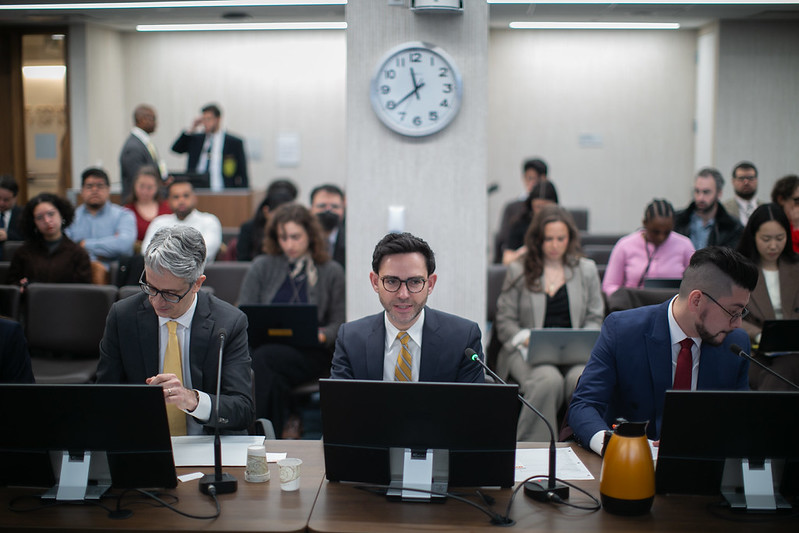
“We need lawyers who can go into court and can take on big companies,” said Sam Levine, the department’s chair in Thursday testimony before a council committee “We’re scratching the surface when it comes to how many New Yorkers are being defrauded every day. We’re trying to get money back to people as quickly as we can, but that requires resources.”
Mamdani’s preliminary FY27 budget allocates $74.7 million to the department, 8% less than its 2026 budget of $81.6 million and over $60 million less than the mayor’s campaign trail promise of $135 million, a number he got from doubling the agency’s 2025 budget of $67.5 million.
The city has recently enacted ordinances to ban real estate broker fees, license thousands of new street vendors, prohibit food delivery and rideshare companies from deactivating employee accounts without stated reasons, and crack down on the city’s largely unregulated self-storage industry.
Council members Thursday expressed concern that the agency wouldn’t be able to handle its growing mandate with less money. Estimates from the Mayor’s Office of Management and Budget say the department needs just over 300 additional staff members, many being attorneys, to beef up enforcement.
“It feels to me that when we have 8.5 million New Yorkers and we see hundreds of thousands of potential complaints [against companies breaking the law], we’re putting your agency in an incredibly difficult position,” said Council Member Harvey Epstein, who chairs the Council’s committee on DCWP.
When asked for comment, a City Hall spokesperson told amNewYork Mamdani was “working closely” with Levine to ensure the agency could carry out its responsibilities and was “committed to increasing DCWP’s funding so it can hire more attorneys,” but declined to clarify whether that meant an increase would be coming this in year’s budget or how much it might be
Underfunding has been a perennial problem for the agency, said Lorelei Salas, who served as its head under ex-Mayor Bill de Blasio. If it’s forced to take on the responsibility of enforcing roughly a dozen new laws with less money, she said the city risks the legislation it spent so much time passing being “beautiful to read in the books,” but “meaning nothing” in reality.
“There’s only so much you can do to stretch the resources of a small agency like this … Even before the new laws were passed, they didn’t have sufficient staff members,” Salas told amNewYork Law. “New Yorkers are not going to see the benefit of these new laws unless the agency has the staff to actually enforce them.”
Taking on new responsibilities without new staff will mean the agency won’t be able to be as proactive, investigations into misconduct will take longer — already, there’s a six month waiting period from when a complaint is filed to when DCWP begins investigating it — and corporations, emboldened by the federal government shying away from industry regulation, will take advantage of more New Yorkers, she said.
“I’m hoping that there’s still a chance that there will be an investment in the agency, because I just don’t know how they will be able to enforce the laws at a time when we know the federal government is completely absent,” Salas said. “I’m very concerned that without the resources they need to do the work … industries will be depriving workers of their rights.”
Worker advocates, like Ligia Guallpa, executive director of the Workers Justice Project (WJP), echoed Salas’ concerns to amNewYork Law, emphasizing that the agency frequently enforced laws that mean the most to New Yorkers’ daily lives, like ensuring people are paid properly.
A group of 12 unions and advocacy groups, including WJP, the United Auto Workers union and National Employment Law Project, sent the Mamdani administration a letter last week, calling on City Hall to give the department the $135 million budget it initially promised, citing the increase in responsibility the department’s been given and the importance of City Council laws having the teeth they’re supposed to.
“The scope of DCWP’s enforcement responsibilities has grown dramatically in recent years — including in just the past few months as the City Council has passed urgently needed and nationally significant new protections for security guards, delivery workers, ride-hail drivers and construction workers on affordable housing projects,” the letter, shared with amNewYork Law, reads. “These laws all require robust enforcement and regulatory efforts. And New York’s success or failure will have national implications.”
On carrying out Mamdani’s affordability agenda, the agency plans to keep filing suits against companies it believes are taking advantage of consumers to ensure people aren’t charged junk fees, scammed by deceptive marketing or fall victim to price gauging — something which also brings in money to the city through penalties — but can only do so if it has enough attorneys to keep up.
For example, Levine said the department’s January lawsuit against solar power company Radiant Solar has just two attorneys on it, but aims to recover $1.7 million for the city.
“We would love to do more work here if we had more resources,” Levine told council members.
In recent months, DCWP has filed suit against self-storage company Extra Space, multiple predatory employment agencies and Instant Recovery Corp, a tow truck company in The Bronx, for taking advantage of consumers, actions that could bring in millions.
The Council will send budget recommendations to City Hall in the coming weeks, after hearing testimony from all department heads. The mayor will send an updated budget proposal back to the City Council by late April.
