
Across our city, tens of thousands of New Yorkers are forced to live in hazardous, undignified conditions. This is a crisis: neighbors who have no choice but to raise their families in apartments where mold, rats, roaches, leaks, lack of heat and collapsed ceilings have become part of daily life.
That is unacceptable.
My legislation, the SAFER Homes Act (Int. 657), is clear: hold bad actors accountable and deliver the safe, stable housing that every New Yorker deserves.
Most building owners are trying their best to do right by their tenants and property. But a small subset of owners are chronically, if not criminally, negligent. They use the New York City’s Emergency Repair Program as a piggy bank for repairs, laugh at fines they receive but never pay and fall far behind on their property taxes and water charges – all while tenants suffer without recourse.
No longer.
Since the 1970s, when we faced a dire financial crisis, the city has had broad authority to foreclose upon properties like these to stabilize communities. But the power of municipal foreclosure has not been active in nearly a decade.
Why? Because the original “Third Party Transfer” program was deeply flawed. A broken system swept up buildings that never should have been included: homes with little debt and few physical problems. Outreach was ineffective, leaving homeowners in the dark until it was too late. After widespread outcry, the city rightly froze that program.
But we can reinvent this tool. We can repurpose city foreclosure to focus only on the worst of the worst properties – an enforcement action of last resort that turns over chronically mismanaged buildings to new, responsible ownership after a revamped, fair process.
This bill is directly responsive to all that went wrong with the former program. It transforms the power of municipal foreclosure into a targeted solution that will serve those who need it most. By drawing from the recommendations of the Third Party Transfer Working Group – a group of tenants, co-op shareholders, advocates and experts that convened with the city to discuss reforms to the old program – as well as multiple public hearings and extensive feedback, SAFER Homes charts a new path forward.
The legislation has five key provisions. First, it replaces an excessively broad methodology with an approach that selects only the most distressed buildings. Second, it eliminates the “block pick-up” provision that led homeowners with only minor debt – but who were located near problematic buildings – to face unjust foreclosure. Third, it enhances notice, outreach and targeted support to ensure owners receive a fair process. Fourth, it creates a process whereby owners can claim any surplus value to which they are entitled if a transfer occurs. And fifth, it creates new opportunities for resident ownership, so that New Yorkers who have endured years of neglect have a pathway to become owners of their apartments.
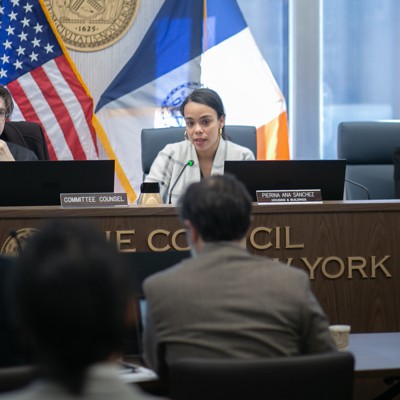
We have a broad coalition standing with us, calling for this urgently needed reform: a strong majority of more than 30 Council members, tenants living in distressed buildings across the city, homeowners who will receive new protections and support and affordable housing providers who stand ready to take on the daunting but necessary task of repairing these buildings. During Monday’s public hearing and all the way until a final vote, I will continue to bring every stakeholder to the table.
After years of deliberation, now is the time to enact real change – to move beyond band-aid solutions and finally deliver housing with dignity. New Yorkers can’t wait any longer.
