

How can people possibly afford to live in one of the most expensive cities on the planet? It’s a question New Yorkers hear a lot, often delivered with a mix of awe, pity and confusion.
We surveyed hundreds of New Yorkers about how they spend, splurge and save. We found that many people — rich, poor or somewhere in between — live life as a series of small calculations that add up to one big question: What makes living in New York worth it?
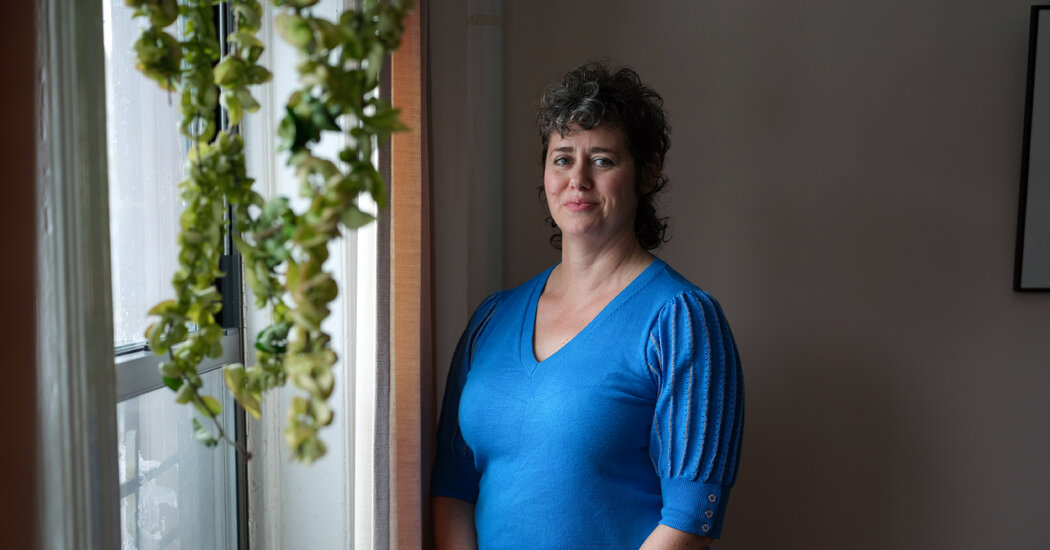
It is a perennial question: Can artists still afford to live in New York? For Carrie Ahern, a choreographer and dancer who has lived and worked in the city for 30 years, the answer is yes — but it takes a couple of day jobs, a friendly landlord and a willingness sometimes to tell friends, “I can’t tonight, I’m too broke.”
Ms. Ahern moved to New York from Wisconsin in 1995, at age 19, with a dream to become a professional dancer. She had the drive and some contacts. But just as important, she had a nose for cheap real estate. She scored an apartment in Park Slope, Brooklyn, for $850 a month, split with a roommate. Supporting herself through a series of waitress jobs, she began pursuing her dream.
Now 50, Ms. Ahern runs her own nonprofit dance company, staging performances in private homes or unusual spaces, including a butcher shop, where she butchered a lamb as part of the show, then sold the meat at the end.
“I kept expanding that dream,” she said of her years in New York. The city, in turn, “continued to let me bring out some skills that I didn’t even know I had.”
Those skills include creativity, resourcefulness and agility — in finance as well as dance.
A Landlord to Cook and Garden With
The dance company pays Ms. Ahern a stipend of $4,800 a year, which she augments by teaching Pilates and movement therapy — sometimes in clients’ homes, sometimes in a rental studio, for which she pays $30 an hour.
A third income stream comes from a family company that manufactures industrial parts, which she has helped run since her father’s death in 2018. Her income from those three sources came to about $55,000 last year — about 10 percent higher than usual.
The key to making it work, she said, is her apartment, one floor of a townhouse in the Kensington section of Flatbush, Brooklyn. After 16 years there, her rent is $1,350 a month, about half the median asking price for the neighborhood, according to StreetEasy.
“It’s like a cooperative in a lot of ways,” she said. “My landlord and I are very close, and we help each other out. We cook for each other. Or she was really excited that I love to garden, because she wanted help out there. So she keeps my rent low because she likes that I’m here and that we help each other out.”
Special Expenses for a Dancer
Because Ms. Ahern’s apartment doubles as her office, she writes off part of the rent and utility bills as business expenses. She also deducts books, tickets to performances and any other expenses related to her work — including fitness and dance clothes, hair and makeup for performances, studio rentals and her Spotify subscription. It helps, she said, to have an accountant who works extensively with performing artists, and who had been one herself.
Those expenses bring Ms. Ahern’s income below $21,600, the threshold for Medicaid eligibility, which spares her from having to pay for health insurance. “It’s actually been the best insurance I’ve ever had,” she said. “You know, there’s no co-pay.”
She does, however, still have to pay for routine maintenance on her 50-year-old dancer’s body.
She pays $120 for weekly sessions with a personal trainer, plus $115 for monthly acupuncture treatments and another $160 for monthly massage therapy appointments. “Almost all these people slide their scale for me, because of my career,” she said.
Finding Deals on Apps and Online
Ms. Ahern gets free tickets to a lot of performances because she knows the people involved. Yet a free ticket can turn into an expensive night out if she isn’t careful. “Like, if someone says, ‘Oh, do you want to meet for dinner before?’” she said. “I feel like we’re good about being honest with each other, like, ‘I’m just really broke right now, and I can’t do it.’”
For meals at home, she uses the app Too Good to Go, where restaurants or stores offer deep discounts on food that would otherwise be thrown away — a new spin, she said, on dumpster diving. “This is a more refined version of that,” she said.
She does, however, find her way to occasional splurges. If she cannot afford to treat friends to dinner, she treats them to coffee. And she splurged recently on tickets to see LCD Soundsystem at Knockdown Center in Queens and Nick Cave and the Bad Seeds at Barclays Center in Brooklyn. For the latter, she waited until a few days before the concert, then looked on the ticket resale site StubHub for people trying to unload their passes. Bingo: $70 for a quality seat.
For all its financial challenges, she said, New York still offers artists chances to grow. A few years ago, for example, she needed a change, so she took a class in new way vogue, a dance style known for its sharp geometric lines and precision, and it introduced her to a different community with new energy.
“There’s all these little niches here,” she said. “So in another city, could I make the work that I make? Yeah, probably. But I don’t know if it would feed me in the same way.”
