

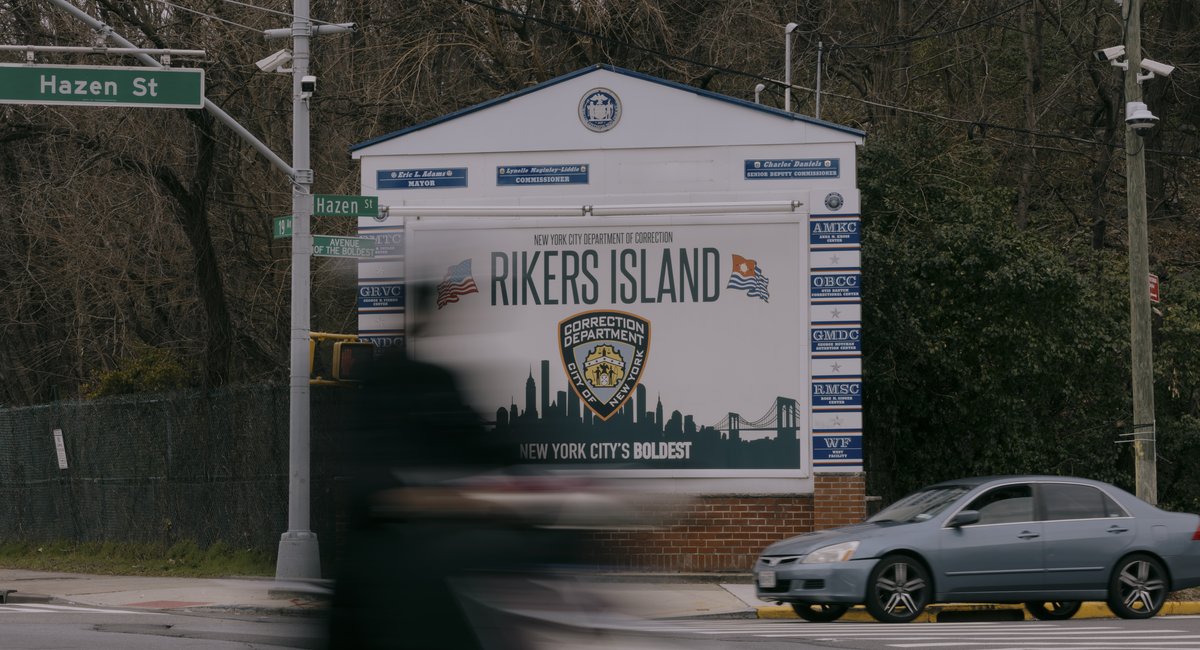
Environmental advocates are renewing the push to make Rikers Island a centerpiece of New York City’s climate strategy as Mayor Zohran Mamdani commits to closing the jail complex there.
The jails currently house nearly 7,000 people and have been steeped in controversy for decades. By law, the complex is scheduled to close by August 2027 and be replaced by four smaller borough-based jails. The city will miss this deadline due to construction delays on the new facilities, officials have said.
As part of the mandate to close Rikers, the city was required to generate feasibility studies on renewable energy and wastewater treatment options for the island. The study presented different scenarios, with a preferred option of solar, large-scale battery storage, an offshore wind connection and a new wastewater treatment plant.
While many ideas have been presented for the island, including a park and housing, no master plan has been embraced by city leaders to carry out the law’s mandates to use the island for sustainability and resiliency purposes.
Now, a new report issued Thursday by the nonprofit group New York City Environmental Justice Alliance pushes to make the island a renewable energy hub and wastewater treatment center.
The report evaluated the city’s feasibility studies for Rikers’ redevelopment, calling it a once-in-a-lifetime opportunity that could radically transform the city’s clean energy future and help manage the chronic sewer overflow during heavy rain.
According to the report, the 400-acre site can host solar, battery storage, offshore wind connection, wastewater treatment and composting all within city limits.
Such measures could improve grid reliability and accelerate the retirement of peaker plants, which are activated during high energy demand and produce a disproportionate amount of pollution.
The plan would deliver climate benefits while also fulfilling the Renewable Rikers Act, the legal mandate to close the prison and transform the land for resiliency and sustainability.
“One of the big takeaways of the report is just how important a moment this is in terms of the urgency of the administration needing to move,” said Shravanthi Kanekal, an urban planner at New York City Environmental Justice Alliance. “We’ve already seen five years since the Renewable Rikers Act passed. The last four years, we’ve seen minimal to no movement on Rikers.”
Rikers Island is built over a landfill and emits methane. Advocates said the site is not suitable for housing redevelopment, office space or even its current use as a prison.
But efforts to replace Rikers have fallen way behind schedule.
According to a progress report on the borough-based replacement jails released by the city in January, construction has begun on the Brooklyn site on Smith Street, with completion expected in 2029.
The Manhattan jail has hit major delays, pushing its finish to mid-2032. Facilities in Queens and the Bronx are expected to open in 2031 — both well past the law’s mandate to close Rikers.
Despite the delays under Adams’ administration, advocates are invigorated by Mamdani’s commitment to closing Rikers.
The report makes several key recommendations for city officials, including creating a master plan and task force for the island that incorporates climate goals.
“It takes decades for these things to come to fruition, but if we don’t start making those investments now, we may never get to the kind of build-out of this kind of infrastructure that we need,” said Eddie Bautista, executive director at New York City Environmental Justice Alliance.
Rikers as renewable energy hub
The plan recommends developing the island into a renewable energy hub in two phases. In the first phase, there would be 26 megawatts of solar power along with up to 3,582 megawatts of battery storage.
According to the Solar Energy Industries Association, the solar output is enough to power 4,000 to 6,500 homes annually.
The battery storage capacity is almost double the maximum capacity of the city’s largest power plant, Ravenswood, in Long Island City. The report said the cost to own and operate the assets is estimated at $582.2 million.
In the second phase, solar power would increase by more than 200% and battery storage would increase by about 50%.
There is also a provision for an offshore wind converter station with a capacity of 6,000 megawatts, which is 3.5 times the power of both offshore wind projects currently under construction. The report estimated phase two would cost $1.2 billion to own and operate.
“Renewable Rikers stands as one of the most powerful tools New York City has to accelerate decarbonization, retire fossil-fuel peaker plants, and improve public health,” the report stated.
Mayoral spokesperson Sam Raskin said the Renewable Rikers effort “is about transformation in the truest sense” — turning a facility known for chaos and violence into a “beacon of public investment.”
Raskin said the Mamdani administration hopes to “make the island a hub for publicly owned renewable energy and resilient infrastructure, creating union jobs, lowering emissions, and building a city that is safer, healthier, and more just for all of us.”
Rikers as a wastewater treatment center
The report recommended a second use for the site as a wastewater treatment plant. The “best-case scenario” for building out a facility would allow for the management of an average of 705 million gallons per day, with the potential to manage up to 1.4 billion gallons per day during rain events.
The facility would cost $34 billion to build and be operational by 2045, according to the city’s 2024 feasibility study. The project has the potential to become one of the city’s most significant tools for reducing sewer overflows during heavy rain events and preventing raw sewage releases in the East River, Bronx River and upper New York Bay.
The added capacity of a Rikers plant could cut the city’s sewer overflow by up to half.
The primary obstacles to fully realizing Rikers’ redevelopment are political will and administrative coordination, according to the report.
The project is considered technically feasible, but is already facing obstacles due to missing the deadline to close Rikers by next year and transferring the land. The report also identified a lack of interagency coordination and a master plan as a serious hurdle.
This story has been updated to include a statement from the mayor’s office.
