

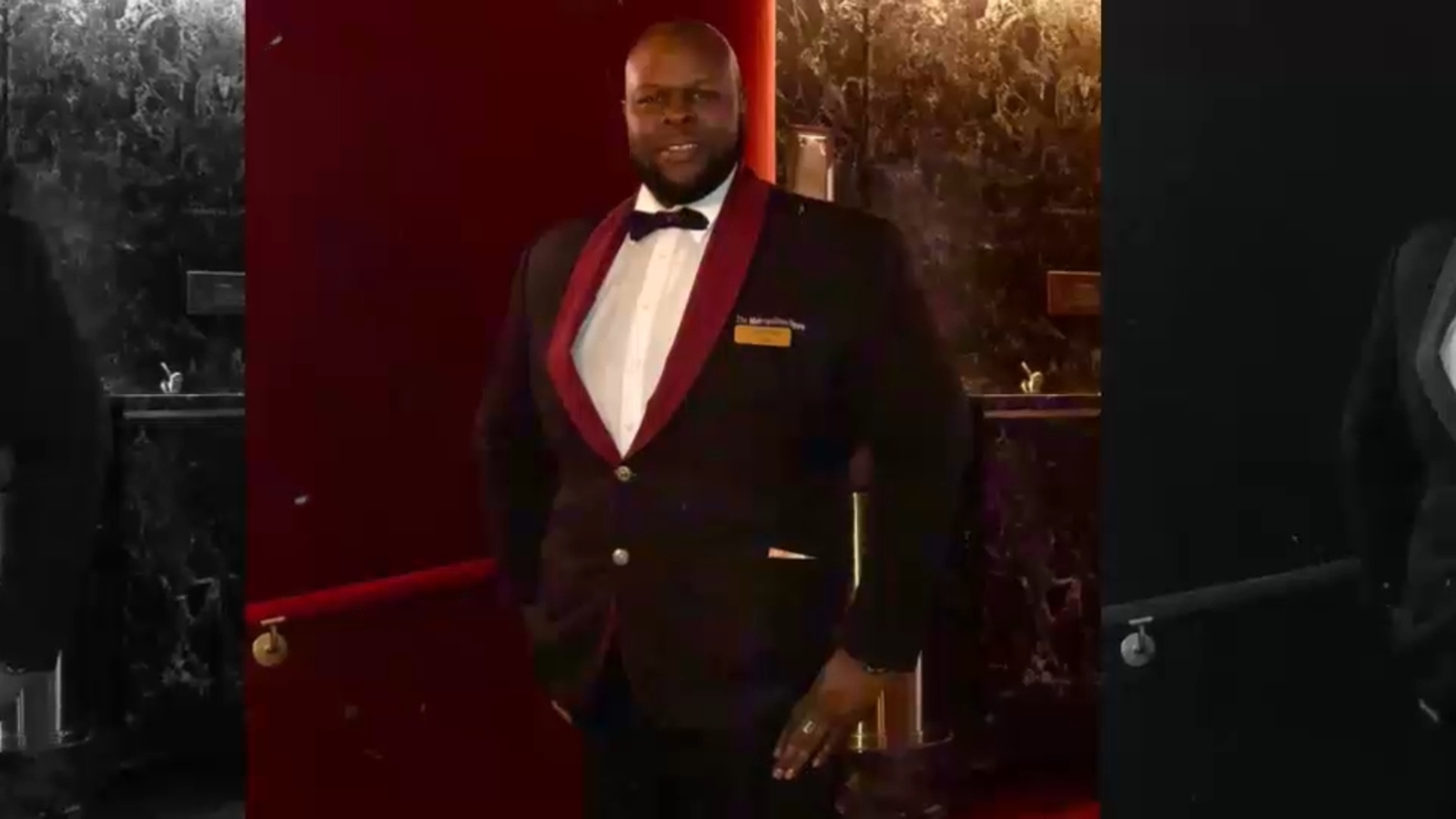
NEW YORK (WABC) — This Black History Month, we’re taking a moment to honor the trailblazers and notable performers at the iconic Metropolitan Opera House. The Met Opera has been a New York City fixture since the late 1800s.
Now we introduce you to some of the Black musicians, unsung heroes, continuing to pave the way for generations to come.
Standing center stage, Tshombe Selby lives his dream.
The tenor sings solo at the Metropolitan Opera House, considered one of the premier opera houses in the world.
“I’m on the stage where Leontyne Price opened and Pavarotti sang and all of the greats,” said Selby, a tenor.
Getting there wasn’t easy.
“I came to be an opera singer, but I also found that I’m a part of other things,” Selby said.
He started as an usher after arriving in New York City in 2013 with a oneway Megabus ticket from Manteo, North Carolina.
“The reason why I became an usher when I came to New York, I was like, well, if I want to be an opera singer, I probably want to see a lot of operas,” Selby said.
His usher job turned into many more, including chorus extra, cleaning the chandeliers, keeping the lights on as a stage electrician, and operating show titles and spotlights.
All unexpected paths leading here.
“How did it feel the first time you sang here?” Eyewitness News asked.
“It felt like going from a dream to reality,” Selby said.
Similar sentiments are shared by Billy Hunter Jr., considered a trailblazer in the classical world after becoming the first Black principal trumpet at the Met Orchestra, and at any major U.S. orchestra, in 2003.
Billy Hunter Jr., Metropolitan Opera Orchestra principal trumpet: “I think it says volumes.”
“But it’s not just music, right? I think it’s in all aspects of society, systemic racism.”
For a long time, across U.S. orchestras, the average percentage of Black musicians was less than half a percent.
But through a stroke of luck, and well-intentioned fairness, the Met Orchestra offered him a unique audition style.
“Everything is screened. The judges cannot see who is playing or performing,” Hunter, Jr. said. “But if they didn’t have that screen, I believe I would not have this job today.”
Even still, it took Billy nearly 30 tries to land his tenured position, which is for life.
“For me, it was a very special time. It was like, I can’t believe I did it,” he said.
Hunter, Jr. became one of three Black musicians out of roughly 100 Met Orchestra members. Shortly after, a fourth joined.
“This is a large number for an orchestra to have, where the average is one per orchestra, or a half a person,” he said.
Principal trombone Sasha Romero joined the Met Orchestra in 2018.
Sasha Romero, Met Orchestra principal trombone: “I had the advantage of having a Black mother who was a musician who encouraged us to do music,” Romero said.
Romero says she faced many career biases.
“Just a lack of being trusted, a lack of being believed in, both as a musician and as a person,” she said.
A group of artists carrying the torch, paving the way.
“There has to be an honest effort to try to bring more minorities here,” Hunter, Jr. said. “But maybe we can get more Black people on the board, so we can introduce more young Black folks in the schools.”
———-
* Get Eyewitness News Delivered
* More New York City news
* Download the abc7NY app for breaking news alerts
Submit a tip or story idea to Eyewitness News
Have a breaking news tip or an idea for a story we should cover? Send it to Eyewitness News using the form below. If attaching a video or photo, terms of use apply.
Copyright © 2026 WABC-TV. All Rights Reserved.
