

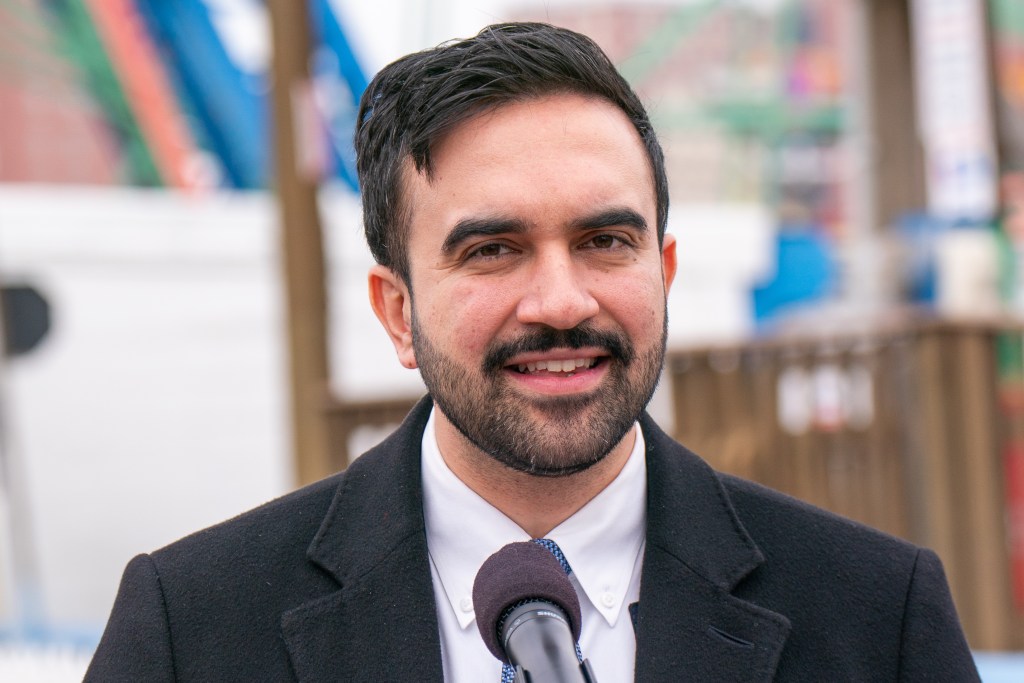
Getting serious about his key promise to increase housing and affordability in NYC, Mayor Mamdani has picked Sideya Sherman to lead the City Planning Commission.
He’s right that affordability is the No. 1 issue and the No. 1 hurdle on affordability is housing and the best way to alleviate that is to create more housing.
So Godspeed to Sherman, for her success in this role is of concern to all New Yorkers; as she herself put it, her role is now in part to ensure that “New York remains a city that’s diverse and that people can stay in and live in,” which is really the crucial point. The question of housing access has long ago reached the point where it is existential.
We hope that if there is one guiding principle she holds in this position, it is that the shortage of affordable housing is not a problem particular to any particular borough or neighborhood in the city, and by that same token, there is no part of the city that must shoulder responsibility for its solution, nor which can decline to be part of it.
Communities across the city will kick and scream about the prospect of additional housing being built there, as they long have. Local councilmembers, whose job it is in part to channel some of their local constituents’ parochial concerns, may well balk at development, as they long have.
The Mamdani administration, with its populist bent, can and should make sure that it is listening to and taking seriously community input about both specific projects and land use and regulation more generally. However, this does not mean that it should let itself get bullied out of taking the steps that have to be taken to get us out of this crisis.
For all of Mayor Adams’ foibles, one of his definite achievements was the passage of the City of Yes package of legislation, which took concrete steps in the direction of facilitating more and larger development.
Mamdani has already begun building on this by launching the first expedited land use process for a development in Morris Park, using powers approved by voters via ballot initiative to change the City Charter last year. Mamdani was too cute in playing with the pro-housing ballot questions, refusing to even state a position until the morning of Election Day, after close to a million votes had already been cast (he was a “Yes”).
The referendum was both an additional authority and a mandate: voters understand that this is a crisis and want the mayor to deal with it, and he has a good deal of political goodwill and capital to do it.
While the predominant objective is to lower the cost of housing, we think that the new mayor understands that the path there does not run exclusively through developing designated affordable housing. That is important and should remain a clear objective, but research has consistently shown that building housing of all sorts, across all income bands, even luxury housing, puts downward pressure on prices for everyone.
So, while some may find it distasteful to see additional luxury homes going up around the city, they should bear in mind that this is housing that wealthier New Yorkers will take instead of competing for the same low- and middle-income housing as everyone else, where they can use their financial heft to outbid other New Yorkers.
The only way out of this is to build all kinds of housing, everywhere — neighborhoods that are already dense and neighborhoods that are not, proportionally but across the board and with a focus on housing near transit.
