

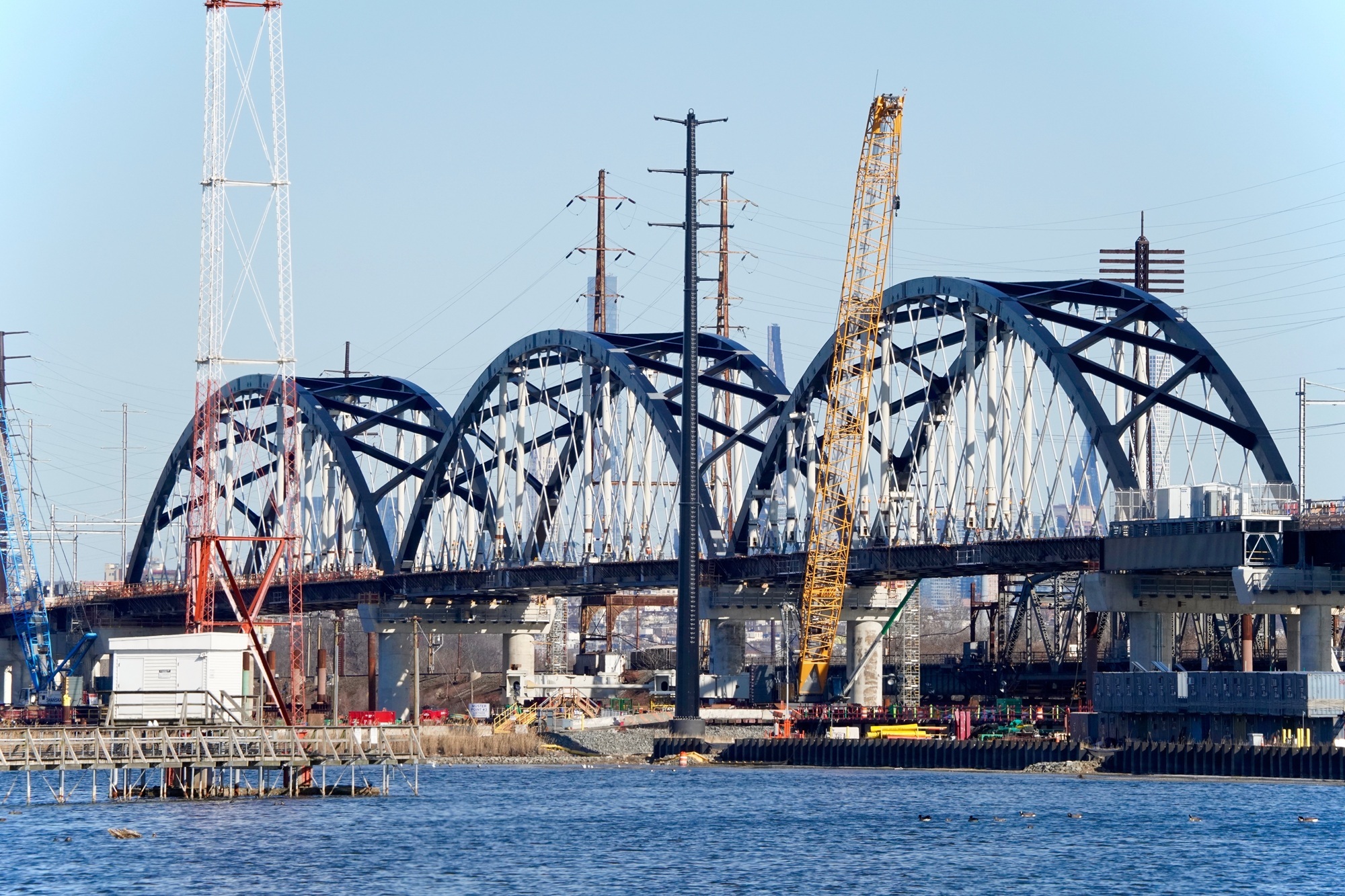
Brace yourself, Northeast Corridor commuters: the next few weeks could feel like a masterclass in patience. Amtrak and NJ Transit riders are staring down roughly a month of service disruptions as crews shift rail traffic from the notoriously cranky Portal Bridge to the brand-new Portal North Bridge, a transition that officials say will eventually make daily travel far more reliable.
RECOMMENDED: You’ll soon be able to take the train from midtown Manhattan to Albany for $40
The temporary chaos begins as Amtrak performs what engineers call a “cutover,” transferring tracks and electrical systems onto the new fixed-span bridge over the Hackensack River. The old swing bridge, which is more than a century old, has long been a commuter villain, infamous for getting stuck after opening for maritime traffic. At times, workers have even resorted to sledgehammers to force its locking mechanism back into place, which ultimately causes ripple effects across the entire Northeast Corridor.
Here’s the catch: during the transition period, trains will run on a single track between Newark and Secaucus, severely limiting capacity into Penn Station during weekday rush hours. NJ Transit riders on the Morristown Line, Gladstone Branch and Montclair-Boonton Line will temporarily lose Midtown Direct service to Manhattan on weekdays, with trains instead terminating in Hoboken. From there, riders will be cross-honored on PATH, NY Waterway ferries and the 126 bus to reach Midtown—which means Hoboken Terminal is about to get very crowded.
Amtrak customers won’t escape unscathed either. The railroad says nearly 300 trains will see schedule changes, including reductions on Acela, Northeast Regional and Keystone services. Some popular weekday departures will disappear from timetables entirely and passengers are being encouraged to adjust travel plans, allow extra time or, if possible, work from home.
The short-term inconvenience is part of a much bigger infrastructure push. The Portal North Bridge, which rises about 50 feet above the river, won’t need to swing open for boats, eliminating one of the busiest rail bottlenecks in the country. Crews are expected to log roughly 40,000 hours of work during the transition, connecting miles of new track and building new interlockings to modernize this critical stretch of rail.
Officials insist the payoff will be worth it. “In just a few short weeks, we will reward the patience of Amtrak and NJ Transit customers by helping eliminate a cause of long delays and unreliable commutes,” said Amtrak president Roger Harris in a press release.
For now, though, commuters should expect packed platforms, longer travel times and plenty of detours. The construction phase is expected to run through mid-March, with regular schedules slated to return once the new track is fully integrated—and, hopefully, one of the region’s most infamous choke points finally put to rest.
