

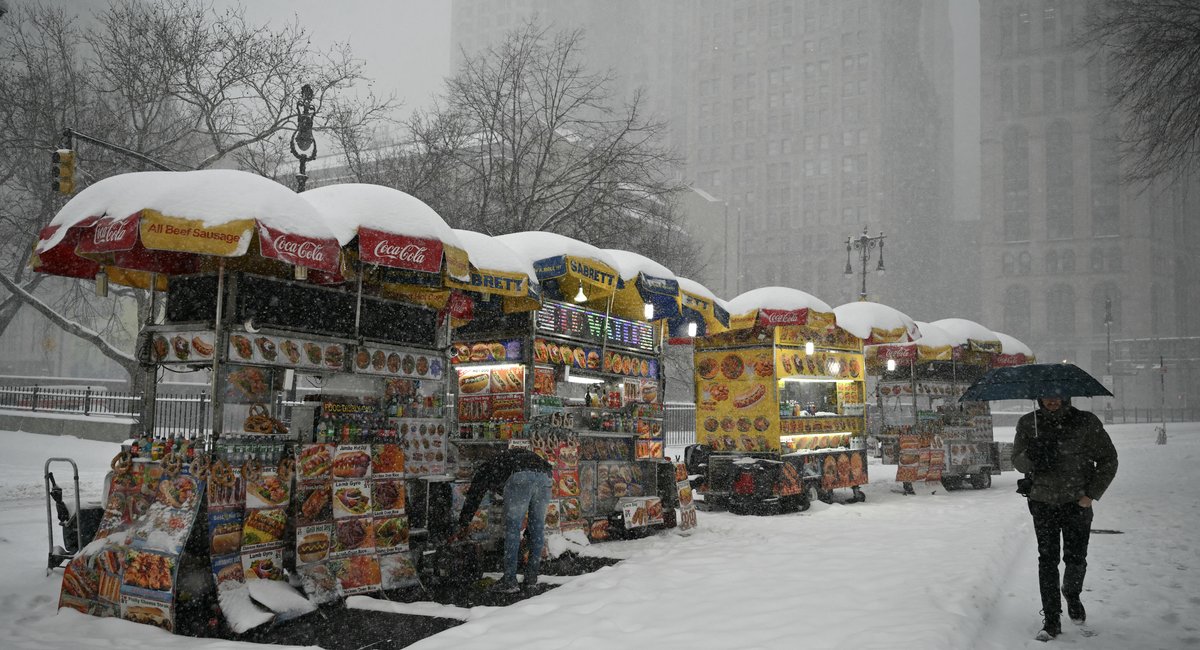
New York City is expanding licenses for thousands of street vendors after the City Council overrode a slate of end-of-term vetoes by former Mayor Eric Adams.
A supermajority of councilmembers voted this week to pass the expansion over Adams’ objections, along with two other bills aimed at boosting access to licenses and education for street vendors.
Supporters hailed the move as a long-awaited recognition of street vendors’ contributions to the city’s economy and said it will help these sellers — the vast majority of them immigrants — come into legal compliance.
“AFTER 47 YEARS, STREET VENDOR REFORM HAS PASSED!!!” the Street Vendor Project advocacy group wrote Thursday in a post on X, following the votes.
“Our city’s smallest businesses — from the tamaleras of Sunset Park to the souvenir vendors of Times Square — thank you,” the group added, praising Council Speaker Julie Menin for advancing the legislation.
The package of bills will expand licensing for both food and general vendors over the next several years, effectively clearing yearslong waitlists amid growing demand for licenses.
Under the new law, the city will make 2,200 additional supervisory license applications available to prospective mobile food vendors annually through 2031 and issue 10,500 new general vending licenses in 2027.
The legislation also increases street vendor training, inspections and cleanliness requirements.
An estimated 20,000-plus street vendors operate across the city, according to Public Advocate Jumaane Williams, who sponsored one of the bills.
Yet the number of available permits has been frozen for decades, resulting in thousands of applicants on waitlists.
The city had capped general vending licenses at 853 since 1979. And despite a 2021 city law adding hundreds of food vending licenses annually through 2032, the city health department has missed deadlines for issuing those permits, the city comptroller found.
Today, about 70% of street vendors operate without licenses, according to Councilmember Pierina Sanchez, who introduced the expansion bill.
“As the daughter and granddaughter of street vendors, this historic moment is deeply personal,” she said of the Council’s vote. “We are replacing decades of dysfunction with a system that is more just for vendors, more predictable and fair for brick-and-mortar businesses, and that delivers more orderly shared spaces for all New Yorkers.”
Street vending was a flashpoint throughout Adams’ administration, which emphasized quality-of-life enforcement even as vendors remained locked out of the permitting system.
The NYPD and Department of Sanitation issued nearly twice as many vending-related tickets in 2024 as in 2023, and roughly five times the number issued in 2019, according to the public advocate’s office.
Adams vetoed the reform package in December, on his last day in office, arguing that expanding street vending would worsen sidewalk congestion and strain city enforcement resources.
But councilmembers and advocates for street sellers countered that the lack of available licenses fueled those problems by leading vendors to operate illegally.
“Street vendors provide some of the most affordable options for New Yorkers facing an increasingly unaffordable city,” Williams said. “By vetoing the street vendor reform package on his way out the door, the former mayor denied New York City’s smallest businesses the support they need to survive and thrive.”
The street vending package was among 17 Adams vetoes the Council overrode Thursday, which Menin said was more overrides in a single day than any time in the past decade.
The other overrides included bills limiting how often Uber and Lyft can kick drivers off those apps and setting new requirements for city-financed affordable housing developments.
