

A man who long struggled with substance use. Another person who was recently discharged from a city-run hospital. A woman with dementia who wandered out into the cold and never returned.
These were three of the 10 people New York City officials said were found dead outside from Saturday to Tuesday during dangerously cold temperatures and the biggest winter storm the city has seen in years, according to authorities, family members and neighbors.
Although details about the individual circumstances were still emerging on Wednesday and city officials had yet to release the official causes of death, Gothamist found that various factors may have put the 10 people in harm’s way as the weather deteriorated into life-threatening conditions.
According to police, the eight men and two women were found in front of homes, near busy intersections, outside a hospital and next to a supermarket.
Six of them were discovered on Saturday morning, after temperatures across the city plummeted as low as the single digits overnight. The remainder were found on each of the following mornings.
Doreen Ellis, a 90-year-old Brooklyn woman who had dementia and left her apartment overnight, was found in her nightgown in the snow behind a nearby building on Monday morning, family and neighbors said.
She was the oldest of those whose ages the NYPD has released so far, while the youngest was in his mid-40s. Seven of the people were declared dead on site, while three were pronounced dead at local hospitals, police said.
City officials said it’s too soon to tell how many of the deaths were directly caused by the cold. But Mayor Zohran Mamdani said at a press conference Wednesday that officials suspected hypothermia played a role in about seven of them, and about six of the 10 people were known to the city’s Department of Homeless Services.
The Office of the Chief Medical Examiner was still investigating all of the cases, according to a spokesperson, who did not provide further details. Mamdani said it will take five to seven days after the autopsies are completed for blood and other test results to come back and for the causes of death to be determined.
A 2018 study by the city health department analyzing cold-related deaths between 2005 and 2014 found that three-quarters of those who died were exposed to the cold outdoors and about half of that group were homeless.
It also concluded that multiple other factors were often at play, including mental illness, substance use or other pre-existing medical conditions.
The city recorded an average of 19 cold-related deaths each year between 2005 and 2022, data shows.
At least one of the deaths during the current cold snap was likely caused by a drug overdose, according to the family of 44-year-old Michael Veronico. The NYPD said he was found unresponsive on a Brooklyn stairwell Saturday morning.
“This is not a case of death from exposure,” said Michael’s older sister Gia Veronico, adding that police and city medical examiners told her they had found fentanyl, crack cocaine and benzodiazepines in his system. “He was a long-term habitual drug user and it unfortunately killed him.”
Gia Veronico said her brother’s substance use started when he was in the seventh grade. By the time he started high school, she said, he was regularly taking heroin intravenously, and he did not graduate as a result.
By 2008, Michael Veronico was kicked out of the place where he was staying and ended up on the streets, according to his sister. She said he bounced between homeless shelters in Hell’s Kitchen between 2012 and 2016, and by 2019, he was still homeless and staying in the Cobble Hill-Carroll Gardens area, not far from where they grew up.
He was discovered dead outside a building on Warren and Smith streets around 9:30 a.m. on Saturday, according to police. Gia Veronico said her brother’s 45th birthday was just weeks away.
The city health department study said substance use can cause people to become incapacitated outdoors and make it harder for them to protect themselves in dangerous weather.
“Things that mess with or alter the consciousness or one’s ability to be aware of how one’s body is feeling are, I think, the things that create the greatest risk,” said Dr. David Silvestri, an emergency department physician at NYC Health and Hospitals South Brooklyn Health who also serves as the health system’s assistant chief for care delivery and oversees its emergency preparedness. “In rare cases, that could be medications, but in most situations it’s alcohol or substances, particularly the ones that create a level of drowsiness.”
At least one of the people found dead had been a patient at a public hospital just days before he died, according to state Sen. Jessica Ramos of Queens. Relatives and Ecuadorian consulate officials identified the 52-year-old man as Nolberto Jimbo-Niola.
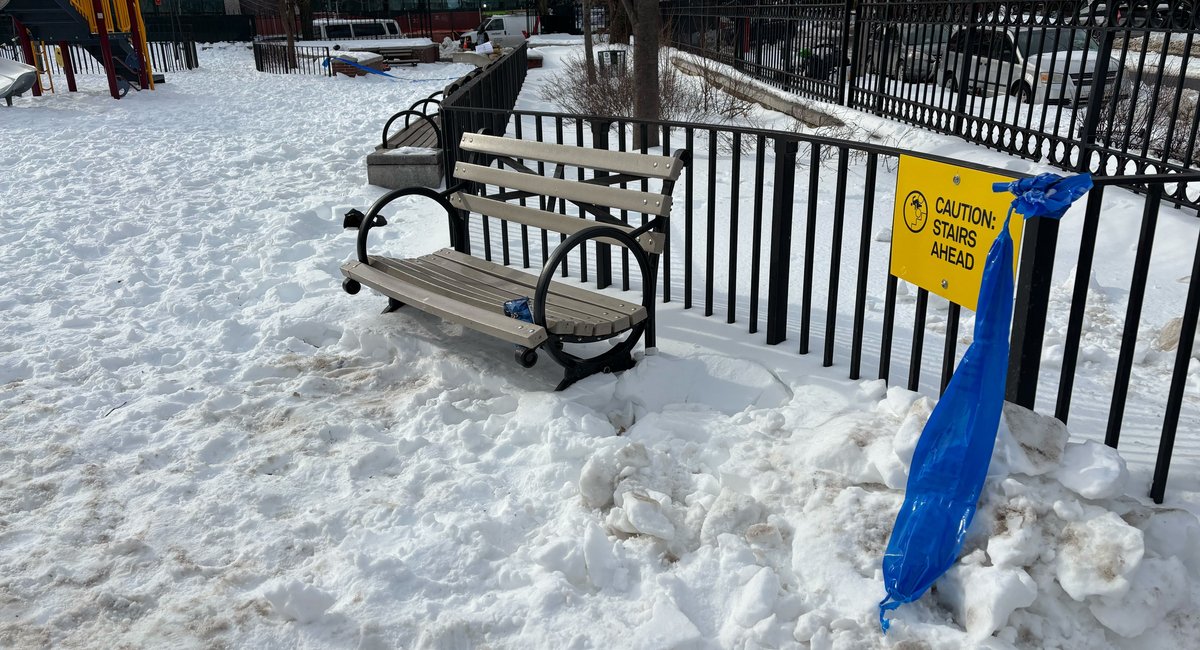
Police said he was discovered Sunday morning sitting on a bench in a small park at the corner of Junction Boulevard and 34th Avenue in North Corona.
Ramos said he had discharge papers on him from Elmhurst Hospital, which were dated to that Friday.
“It’s unclear why he was discharged from the hospital if he had nowhere to go during Code Blue,” she said in an interview, referring to the city’s emergency protocol expanding homeless outreach and shelter access when real-feel temperatures drop below freezing overnight. “ We deserve to know what happened to him so that we can not only honor his memory but ensure that this does not happen again.”
Health and Hospitals did not comment on Jimbo-Niola’s death, citing patient privacy laws. But spokespeople said the system does not discharge people into unsafe conditions, such as extreme cold, or without helping to arrange their shelter destination.
Outside the park on Wednesday, Adriana Isela, a lifelong neighborhood resident, said the benches have long been a gathering place for a small group of men who drink and spend time together, typically after work hours.
“People use it at night to sleep where nobody will bother them,” said Isela, 20. “And they don’t bother anyone.”
Police said another person who died, a 60-year-old man, was found just steps from St. Barnabas Hospital in the Bronx on Saturday morning by staff who brought him inside. St. Barnabas representatives did not immediately respond to an inquiry on Wednesday.
Officials said they have opened warming centers across the city for the present frigid spell, including at public hospitals. Temperatures are expected to remain below freezing into next week, according to the National Weather Service, and Mamdani’s administration is urging New Yorkers to keep an eye out for their neighbors. The mayor said outreach teams have placed more than 200 homeless people into shelters and other indoor locations over the past several days.
The city’s Department of Homeless Services has activated an Enhanced Code Blue, meaning outreach workers are intensifying their efforts to connect people living outside to shelter. Officials said people can call 311 about anyone outdoors who appears vulnerable, and those calls will be routed to 911 during the emergency period so that first responders can mobilize.
Gia Veronico said she did not blame the city for her brother Michael’s death, noting that while he had “self-destructive” tendencies, he always seemed able to look out for himself. She said only a “collective municipal effort” could have changed his trajectory, including workshops to create more awareness about how to help people with addiction.
“I can’t say for sure it would have led to a different ending in Michael’s case, but I think it would have changed his odds,” she said.
