
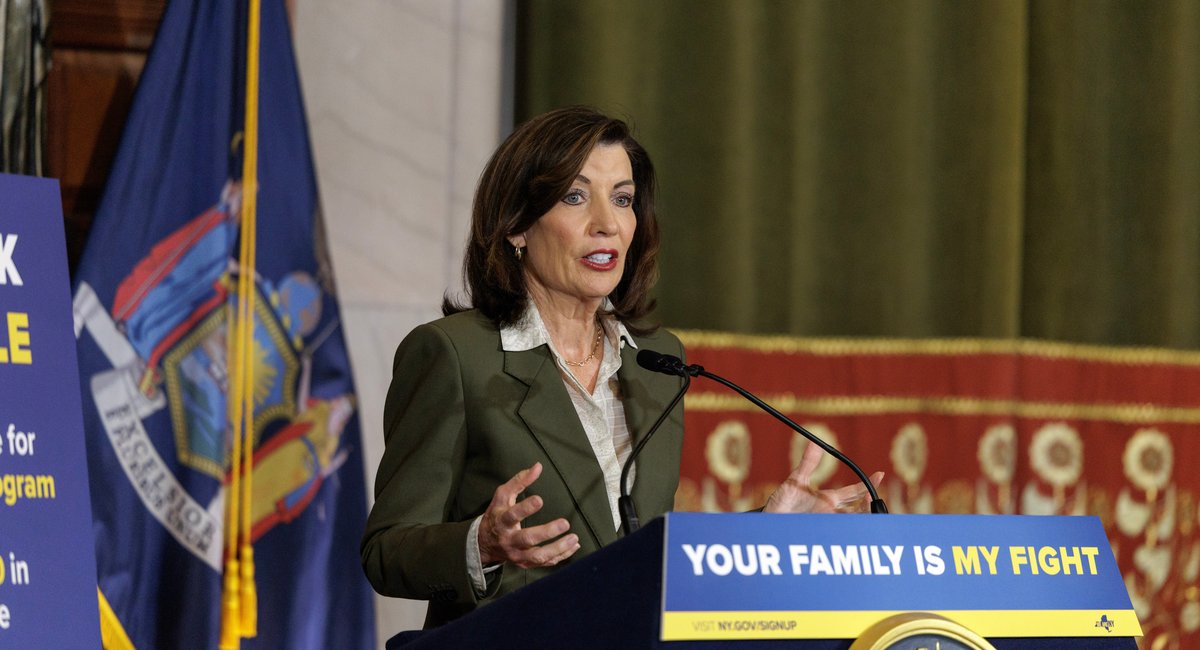
Gov. Kathy Hochul is planning to push state lawmakers to pass legislation banning political campaigns from using images made with artificial intelligence, a tactic she said can mislead and deceive voters.
Hochul said Sunday that her plan will include prohibitions on knowingly communicating false information that might deter people from voting in an upcoming election and the production of non-consensual deepfakes — editing someone’s face onto another person’s body — of an opposing candidate.
Hochul is expected to lay out the proposal during the State of the State address on Tuesday.
“With the rise of Artificial Intelligence and algorithmic social media, it’s easier than ever for bad actors to spread misinformation in critical moments, including those that can decide elections,” Hochul said in a statement. “Now is the time to take action and protect our democracy or risk a slippery slope. We’re leading the nation in setting strong and sensible standards for AI use in elections, protecting voters across the state.”
Generative AI has become commonplace in social and political life. State law already requires campaigns to disclose when they use AI during an election cycle, but does not impede its actual use, according to Jen Goodman, a spokesperson for the governor’s office.
During last year’s mayoral election, the campaign of independent candidate and former Gov. Andrew Cuomo used the technology to create a video for social media of now-Mayor Zohran Mamdani eating with rice his hands and his hypothetical supporters committing crimes. The video was quickly taken down.
Hochul’s office pointed to repeated examples of the damaging use of the technology in politics. In 2024, Keith Wright, a former state assemblyman from Harlem, was roiled in controversy when fraudsters produced an AI recording of his voice lacing profanities about a colleague.
The office also said the problem exists across the country. In New Hampshire, voters received calls from an AI-generated voice telling them to avoid voting in an upcoming primary election in 2024. A similar tactic was used in New York in 2020, when thousands of New Yorkers received calls from an automated voice falsely claiming that their mail-in votes would be sent to the police.
