
New York City’s congestion pricing toll went into effect on January 5, 2025. As the first anniversary nears, has it been a success?
The plan to charge drivers in the busiest part of Manhattan had been on and off the table since about 2007.
After years of legal wrangling, a shocking pause, a post-election resurrection, and an 11th-hour judge’s ruling, the nation’s first-ever congestion toll went into effect.
Since then, drivers who entered any area south of 60th Street, not including highways, have been charged as much as $9.
Supporters of the toll said it would have multiple benefits, including reducing traffic and pollution, in one of the most highly congested areas in the country.
The billions of dollars that were expected to be generated by the congestion pricing tolls were to be used to improve mass transit.
Critics raised concerns about further rising costs for people during a time of high inflation and safety in the transit system.
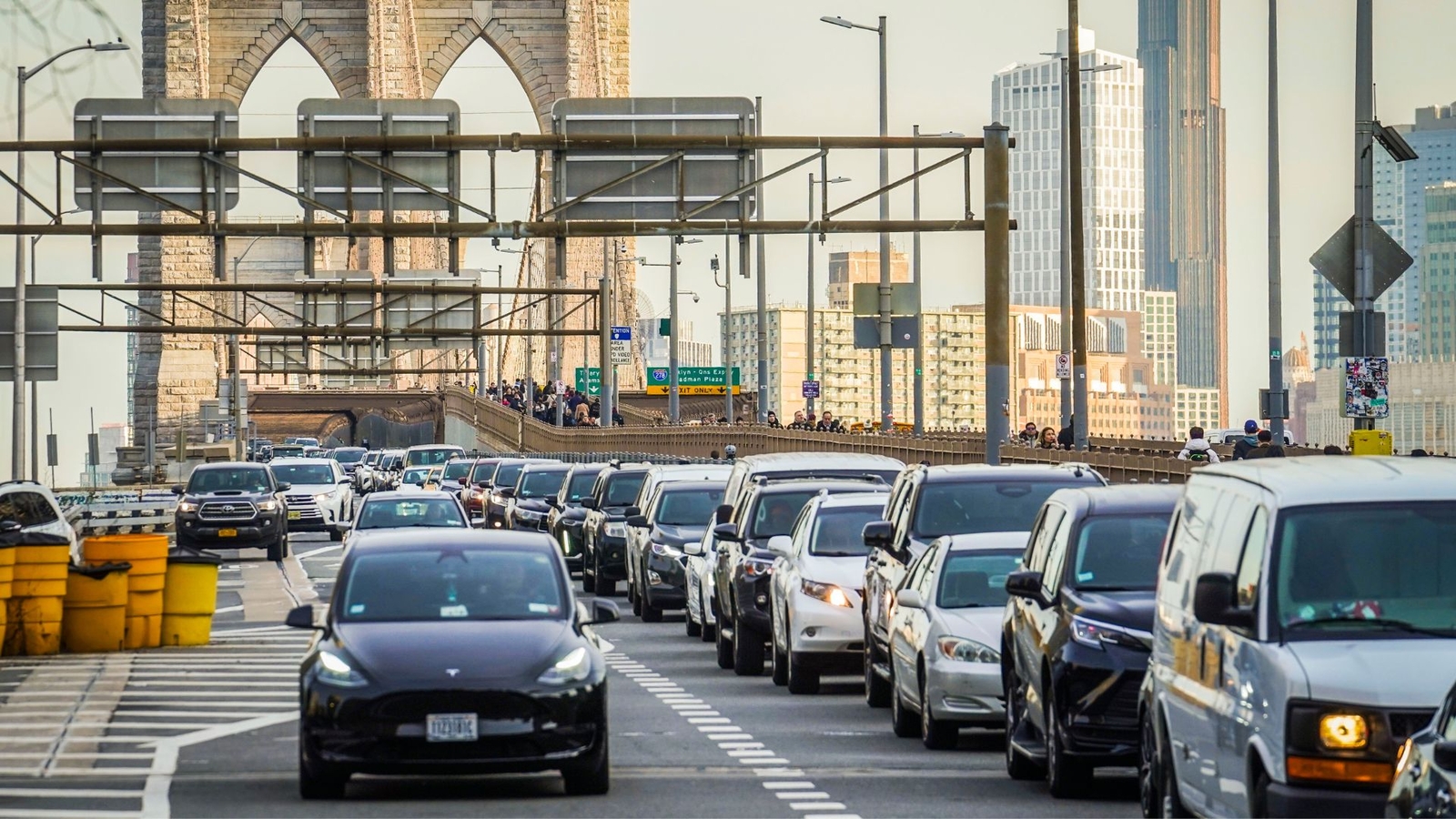
Has NYC congestion pricing reduced traffic in the Congestion Relief Zone?
According to the MTA, the number of daily vehicles entering the zone is down by 11% compared to the historical average.
Approximately 73,000 fewer vehicles entered the zone daily. Over 27 million fewer vehicles have entered the zone compared to 2024.
Additionally, the MTA says every crossing entering the zone has seen morning peak travel times reduced.
Traffic fatalities citywide are down 19.8% compared to this time last year, and the total number of crashes and traffic injuries in the zone was also down.
As for pollution, a Cornell study published in Nature found that for the first six months of congestion pricing, there was a 22% reduction in PM2.5 air pollution concentrations within the congestion relief zone.
Data also shows an uptick in people deciding to ditch their vehicles in favor of public transit.
MTA data shows the seven-day rolling average of subway ridership in early December 2024 was 3,687,967 compared to 3,885,267 in early December 2025. That’s a 5.3% increase in average daily ridership.
According to MTA data, subway trips entering the zone increased by 9 percent, with express bus trips up 7.8 percent and local bus trips up 8.4 percent.
Meanwhile, through December 21, transit crime citywide was down 4.6% compared to the same period in 2024.
Has the money led to improvements for public transit?
According to the MTA, only about 140,000 people commute daily in vehicles to the zone, but $518 million in net tolling revenue had been collected as of November 2025.
According to Gov. Kathy Hochul, more than $6 billion in projects unlocked by Congestion Relief are in construction.
According to the MTA’s new dashboard, so far 18 projects have been enabled by revenue generated from congestion pricing.
The work includes Second Avenue Subway Phase 2, ADA upgrades at nine stations, new signals serving more than 600,000 A/C riders in Brooklyn and Queens, and systemwide state of good repair work.
———-
* Get Eyewitness News Delivered
* More New York City news
* Download the abc7NY app for breaking news alerts
Submit a tip or story idea to Eyewitness News
Have a breaking news tip or an idea for a story we should cover? Send it to Eyewitness News using the form below. If attaching a video or photo, terms of use apply.
Copyright © 2026 WABC-TV. All Rights Reserved.
