

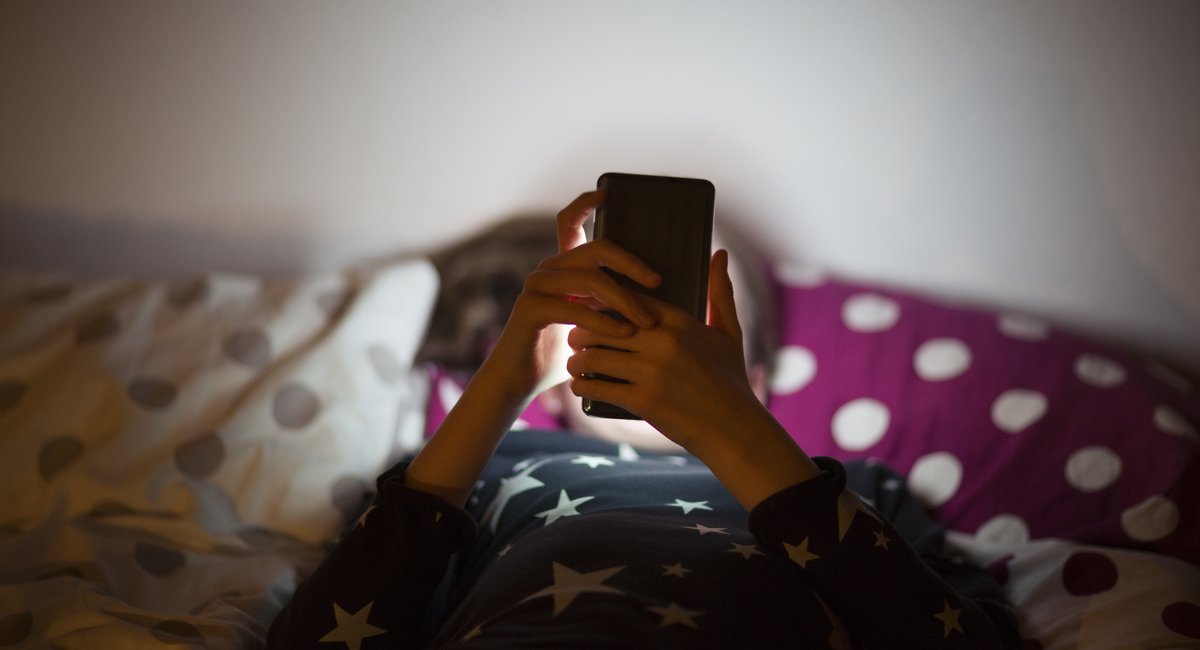
You may be familiar with warning labels on products like cigarettes, alcohol and sugary or salty foods. If you live in New York state, get ready for warning labels aimed at young people using social media.
Gov. Kathy Hochul recently signed legislation requiring such labels for young users on social media platforms that allow auto-play and infinite scrolling. The labels warn young people of hazards they face while on these platforms, such as Instagram and TikTok. The law will be enforced by the state attorney general.
Dr. Shannon Bennett, associate director of the Center for Youth Mental Health at NewYork-Presbyterian and psychologist at Weill Cornell Medicine, recently discussed the new law and motivation behind it with “All Things Considered” host Sean Carlson.
Here is a transcript of their conversation, lightly edited for length and clarity.
Sean Carlson: Doctor, why are we seeing these kinds of warnings for young people, and what kinds of harm are measures like this trying to address?
Shannon Bennett: We know more passive use of social media, that kind of mindless scrolling, is more associated with the risks of anxiety and depression. If we use social media as a tool to connect with networks, communities and people in our life, that can actually promote our well-being in some respects. Also important is paying attention to the things we’re not doing when we’re spending too much time on social media — like sleep, in-person social interaction, work, homework.
For youth in general, their brains are developing, they may be more vulnerable to the addictive properties of social media. They also may more easily fall prey to things like online bullying, hits to one’s self-esteem, and maybe predators and not knowing who it is they’re communicating with.
So we certainly need to be protective of our most vulnerable youth.
Let’s talk a little more about the legislation. Can you talk about the kinds of warning labels people will see, on what kinds of platforms and what the aim is?
My understanding is we will see warning labels, particularly for platforms that use those elements that can be more addicting, like auto-scrolling, endless scrolling. You’ll see a warning that this may be associated with risk for anxiety and depression, and my understanding is you won’t be able to bypass that warning.
My hope is it may promote even just a moment of consideration, thoughtfulness or mindfulness of how or why we’re beginning to scroll. It is that mindless scrolling, that habitual element, that can become so problematic and start to make us feel like we’re not necessarily in control but more like the algorithm is controlling us.
Do these kinds of warnings make a difference? What do we know from research or experience, and are there lessons to be learned from those alcohol and tobacco warnings?
One thing to consider is we all now recognize that, right? When you think about a package of cigarettes or alcohol or signs about drunk driving, we can all envision those warnings. And so we’ve made this association between those products that they can be potentially harmful. So even if we are just sort of scrolling past the warning, another possibility is the repeated presentation of that warning will start to make that association in our brain. If I’m feeling bad afterward, if I feel down, if I feel lonely, if I feel anxious or I’m comparing myself to other people in a negative way, we may start to make that association: ‘Hmm, maybe this isn’t so good for me.’
Again, all of this is yet to be seen and more research is needed to be done, but that is one potential benefit.
Is there any scenario where social media is positive for you?
Absolutely. Kids can easily articulate the benefits for their creativity, for their learning, for their ability to connect with other people, to understand what’s going on around the world. For youth who may be more isolated or feel more isolated within their communities, they can find people who are like them, or maybe they don’t know anyone in their immediate community. When children are asked about kids in general or society as a whole, they’re more likely to say the harms may outweigh the benefits for other people, but for themselves, they still say this is a positive thing in my life.
Are there any other interventions you think would have protective effects on young people’s mental health when it comes to social media, and what do you think lawmakers or parents should know?
For parents in particular, I think it’s a lot about communication. We know just kicking kids off social media altogether is probably not going to work. It’s probably going to lead to a lot of arguments. But having open dialogue with kids, learning what sites they’re on, is really important. Utilizing parental control so kids are not exposed to things they’re not ready for that may not be safe for them, asking them what it is about the site they like, asking what is it about this TikTok creator that makes you feel excited, these are important — so they can feel comfortable coming to us as parents if they encounter something that doesn’t make them feel good, or they’re concerned maybe this wasn’t the right site for them to be on.
We want them to feel like, as with anything new or potentially risky, they have safe people they can talk to about it.
