

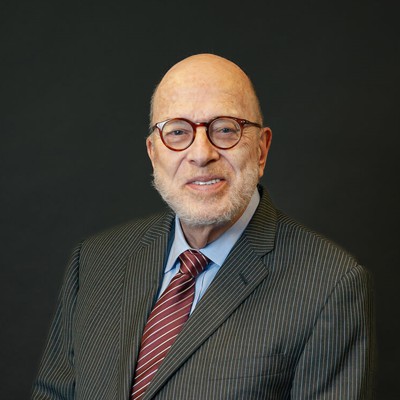
A breakfast with George Arzt is a lesson in decades of New York City political history. He’s now wrapping up his decades-long career running a top political communications firm, but he can still recall the days when he took home a drunk Vincent Impellitteri – mayor from 1950 to 1953.
The Inner Circle Show, the annual parody musical staged by City Hall journalists, used to rehearse at a club on 23rd Street, “and Impellitteri was always there, snookered,” Arzt explained.
“Owen Fitzgerald of the Daily News would say, ‘We can’t let the mayor sit here all night.’ So one of us would go with him in a cab to Brooklyn to drop him off. And he would tell me about what they did,” Arzt said. “Did you know that he started parking meters?”
Arzt has known all the mayors since, too, as he moved from jobs reporting at the New York Post, to a stint as Mayor Ed Koch’s press secretary, to starting his own firm. City & State talked through it all over coffee at The Beekman hotel, down the street from City Hall. This interview has been edited for length and clarity.
You just retired, after a 58-year career in New York politics.
I was hoping to go quietly into the sunset. And people wanted to do stories on me. And I said, “not yet, not yet.” Hopefully they forget about it.
So why now?
I will be 79 on April 8. And I decided that it’s time to start a new chapter. I’ve been working in politics since 1968, when I went to the (New York) Post. A year as a copy boy and clerk at the Post, and then City Hall bureau chief for 19 years. And I decided that I want to do something other than lobbying and running campaigns. The fact that I could get off the subway now and not worry about clients, and not worry about a job. It’s just so refreshing. I could smell the fresh air outside, and I’m not rushing anywhere. People bump into me going to work. And I said, “What are they rushing for? Where are they going?” I think, boy, that used to be me. Not anymore.
When was the peak of City Hall reporting?
Room 9 was very competitive, extremely competitive. One day, I was at Longchamps bar across the street from City Hall, which is now, the last time I looked, a drug store. Everyone went to Longchamps late at night, in the days when I drank. And one day, me and the Long Island Press reporter George Douris saw the lights on at City Hall at 10 o’clock. So I went back to Room 9 to get my coat, and I walk into the mayor’s press office, and I said, “What’s going on?” It was the Beame administration. And they said, “We’re doing the first layoff since the Depression.” I said, “Wow.” And I said, “Give me the story.” Well, all the reporters were told to come in early. The papers are delivered to Room 9, and it says, “1,700 to be laid off.” The AP reporter had a heart attack, truly a heart attack in Room 9, because I had the story in the paper. And I was home at that time because I had written my story until 5 o’clock in the morning.
So in 1986, you were City Hall bureau chief at the Post. You’d already covered Koch for two terms. Why’d you join him as press secretary?
There was a scandal in the Koch administration. It was (the late Queens Borough President) Donald Manes. I was getting bored doing the stories. And my wife convinced me that this would be good if I got out of reporting to do something else. My wife talked to Dan Wolf, one of Koch’s top aides at that time. And she came home and said, “You’re going to be asked to be press secretary. You’re going to take it.”
The way I see it, reporters’ main focus is accountability, and the press office’s main role is public perception. Sometimes there’s overlap of goals, and often there isn’t. How do you see the relationship between the City Hall press corps and the mayor’s team?
You have to gain the trust of reporters. And to do that, you’ve got to be honest and open. There’s sometimes you can’t. I remember one day, on a busy day, Marcia Kramer (formerly of the Daily News, now of CBS) came over to me and said, “I hear so and so is going to be taxi commissioner.” I said, I don’t know. “Of course, you know!” I said, there are a million things going on, I don’t know. She said, “You know!” So I walk into the deputy mayor’s office, I said, is this person going to be (taxi commissioner)? He told me no. I told her no. Turns out, he was the TLC commissioner. And she said, “You lied to me.” I said, I told you what I knew.
Who was the most powerful mayor?
(Mike) Bloomberg. Because Bloomberg had the money to back up what he wanted. He cut the budget in some places when he needed to, but he made it up. Like the culturals, he would give donations to.
You’ve had a lot of real estate clients. Have you had to do a lot of counseling over the past year, explaining Zohran Mamdani?
No, I said I don’t know! I said the best thing is to keep away from complex real estate processes that needed approvals and do as-of-right. That was the best advice I could give them, because I didn’t know which way they would go. You want to build an 80-story tower, and the city would say, OK we don’t want 25% affordable, we want 50%. And we’ve got to make sure the elevators are all together, because we don’t want a rich man, poor man elevator.
