

KBRA became the third major credit rating agency in less than two weeks to revise New York City’s financial outlook to negative, following Moody’s and S&P’s similar moves last week. The latest downgrade underscores the deepening concern surrounding Mayor Zohran Mamdani’s preliminary budget and the effort to close a $7.3 billion budget gap.
Photo by Dean Moses
Warning lights over the perilous NYC budget blinked a little harder on the City Hall dashboard Friday.
KBRA became the third major credit rating agency in less than two weeks to revise New York City’s financial outlook to negative, following Moody’s and S&P’s similar moves last week. The latest downgrade underscores the deepening concern surrounding Mayor Zohran Mamdani’s preliminary budget and the effort to close a $7.3 billion budget gap.
While KBRA kept the city’s long-term general obligation bond rating at AA+, the credit rating organization said the outlook change reflected a far larger structural imbalance in the FY 2027 preliminary budget, including weaker flexibility to rely on prepayments and other budget-management tools that had helped support balance in prior years.
City Comptroller Mark Levine wrote on X that the move was not a downgrade but a warning.
“The message from the rating agencies is unmistakable: NYC must address its structural imbalance — and do so without relying on rainy-day reserves to close recurring budget gaps,” he said. “I look forward to working with partners in City and State government to deliver a budget that restores confidence, strengthens our fiscal foundation, and puts NYC on a truly sustainable path.”
In its March 20 analysis of the city’s finances, KBRA outlined a number of outcomes that could positively impact the city’s AA+ bond rating, including lawmakers formalizing in the City Charter a policy of limiting all debt service payments to no more than 15% of tax revenues every budget, and adopting a formalized policy regarding setting annual reserves and conditions for deposits and withdrawals.
Further budget instability and a “significant depletion” of the city’s financial reserves put the city at risk of a potential bond rating downgrade, KBRA reported.
When Moody’s issued its negative fiscal outlook for New York City, a City Hall spokesperson argued that the move was premature based on the city’s anticipated receipt of $5 billion in additional state funding. That figure, however, is not yet certain; state budget negotiations are still ongoing.
Reached for comment from amNewYork on Friday about the latest negative outlook, Mamdani spokesperson Dora Pekec offered a similar, unconcerned response: “Given the $5 billion in additional funding to the City proposed in both the Senate and Assembly budgets, we find this outlook change to be premature.”
“We look forward to continued productive conversations with our partners in Albany and the City Council as we work to close the historic deficit we inherited and restore the city to firm financial footing after years of underbudgeting and mismanagement,” Pekec added.
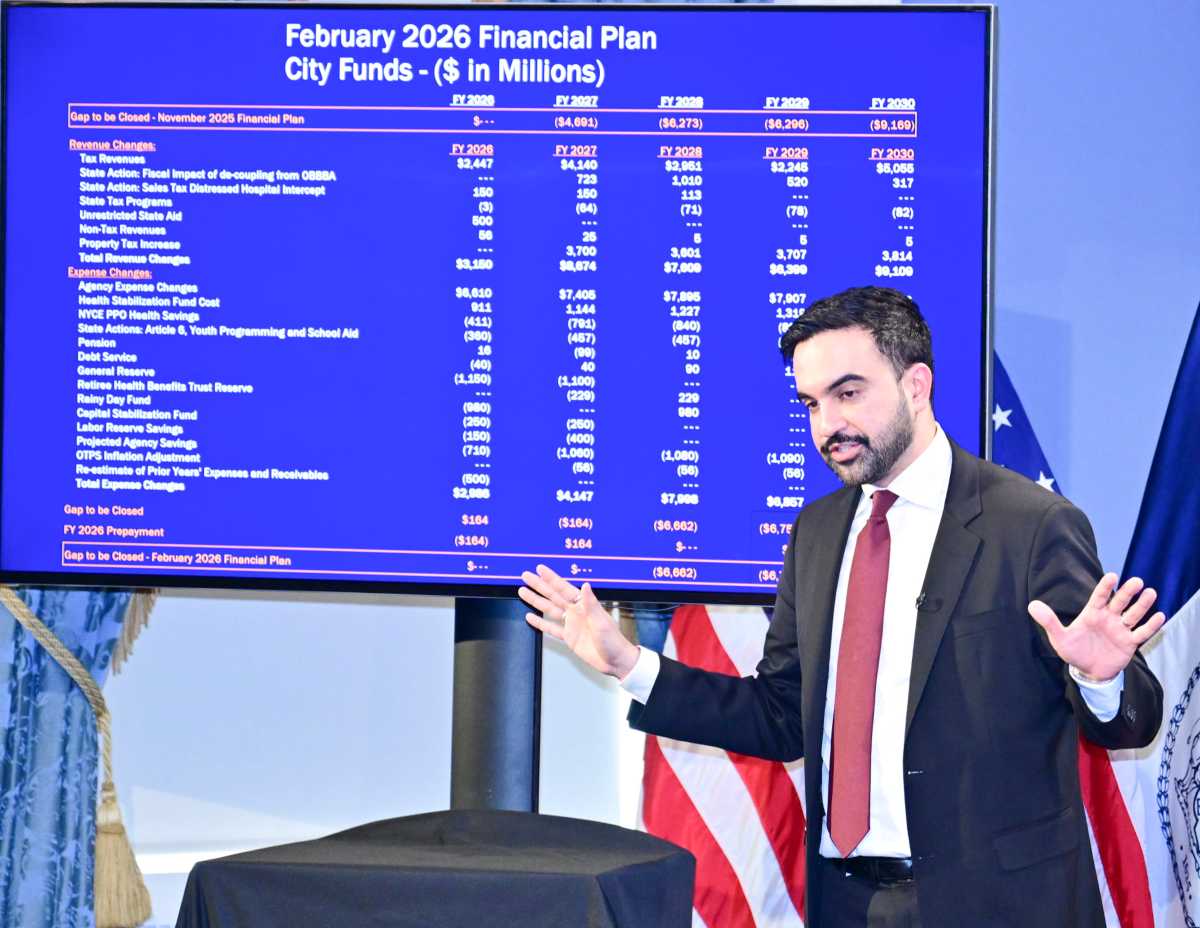
Mamdani’s preliminary budget, presented in February, increases city spending from $118 billion in the revised current fiscal year plan to $127 billion in FY 2027. He previously blamed the late Adams administration for years of underbudgeting, leading the city to now face a $7.3 billion budget gap.
The mayor seeks to close the deficit and fund the new budget through either an increase in taxes on the wealthy approved by Albany lawmakers, or with a 9.5% property tax increase on New York City homeowners. Neither solution is likely to happen.
Though state Legislative leaders have introduced tax increases on the rich in their budget plans, Gov. Kathy Hochul has repeatedly stated her opposition to any hikes. City Council Speaker Julie Menin, who will lead negotiations with Mamdani on a final budget this spring, has also called property tax increases a “non-starter.”
During testimony before a City Council committee last week, Levine said, “New York City is quite simply spending more than it takes in.” Representatives of the Independent Budget Office at the hearing agreed, arguing that current recurring spending in the city budget is growing far faster than recurring revenue.
Concerns were raised about various programs that have seen dramatic increases in spending in recent years, such as CityFHEPS (City Fighting Homelessness and Eviction Prevention Supplement). The housing voucher program for low-income New Yorkers began in 2019 with a $25 million budget; it has ballooned to more than $1.2 billion last year, about $169 million more than what had been initially budgeted for the program in FY 2026.
