

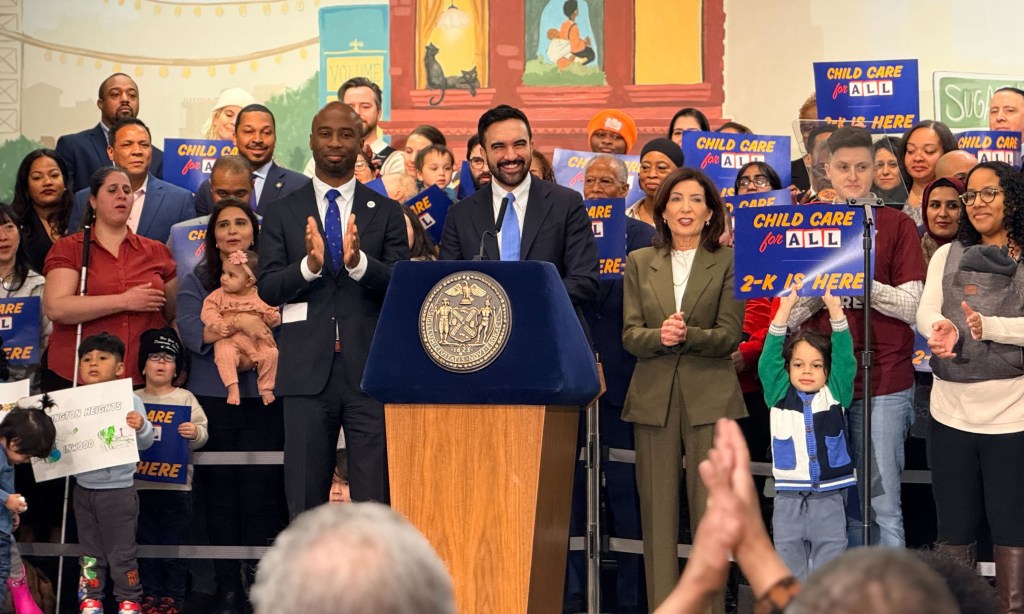
When Mayor Mamdani rolled out his preliminary budget, he made the trade‑offs painfully clear. New York is staring down a $5.5 billion shortfall. He said that we can either raise property taxes, or Gov. Hochul can finally ask the ultra‑wealthy to pay more. He’s right that taxing the rich is the only fair choice. But we shouldn’t stop at filling a budget hole. That revenue must fix what’s broken, starting with fully funding universal child care.
Universal child care is the most transformative promise in this year’s state budget. For years, parents and providers have demanded high‑quality care for every child from birth through age 13. For the first time, we have a mayor and a governor both committed to making that happen. If our leaders are serious about turning that promise into reality, we need permanent and stable funding. That means asking those who’ve gained the most from New York’s prosperity to invest more in our future.
Today, families piece together care from relatives, neighbors, and whatever program has openings. They sit on waitlists, paying staggering amounts because subsidies don’t reach everyone in need. Parents earning just a bit more than the income cutoff are left on their own. And once the school day ends, or a school break hits, school‑age care disappears. This reality forces parents, usually mothers, to cut back their hours, turn down opportunities, or leave the workforce.
Universal child care can change that. But only if it’s built on stable funding, not on short‑term grants or pilot projects that quietly expire after a few years. Families can’t plan their lives around programs that might not be funded next year.
At the heart of any real child care system are the people doing the work. Thriving wages for caregivers and educators are central to the plan. These are the people who open their doors before dawn, watch children take their first steps, help them learn to read, and keep them safe after school. Yet far too many are paid near poverty wages. There’s no “universal” child care if the workforce is underpaid and unstable.
The governor and Legislature can create a dedicated funding stream by raising taxes on the ultra-wealthy, or they can keep patching together temporary fixes that leave parents and providers scrambling. New York’s wealthiest residents have benefited from record corporate profits and sky‑high real estate values. They can afford to contribute a little more. They live in a city that only functions because other people are driving the trains, staffing the hospitals, teaching in the classrooms, and yes, caring for their children.
A modest tax increase on the richest New Yorkers could seed a lasting statewide fund to expand and stabilize the child care system for good. Our tax code should reflect the basic idea that caring for children and supporting those who do that work are priorities.
We know schools, subways, and roads are non‑negotiable public infrastructure. Child care is also a public good. When parents can work full shifts without constantly juggling who’s watching their child, they earn more and businesses benefit. When caregivers earn fair pay, turnover drops and children get the stability they need.
Mamdani’s call for a fairer tax structure is about more than a balanced budget. It’s about deciding who this city and state are built for. Families have been doing everything they can to make things work. Now, the state must step up.
Taxing the ultra‑wealthy is the only way to keep the promise of universal child care and move toward the more equitable New York we say we want to be.
Shaakir-Ansari and Marcou-O’Malley are the co-executive directors of the Alliance for Quality Education.
