

Eye on politics: Cue a Dark & Stormy Campaign
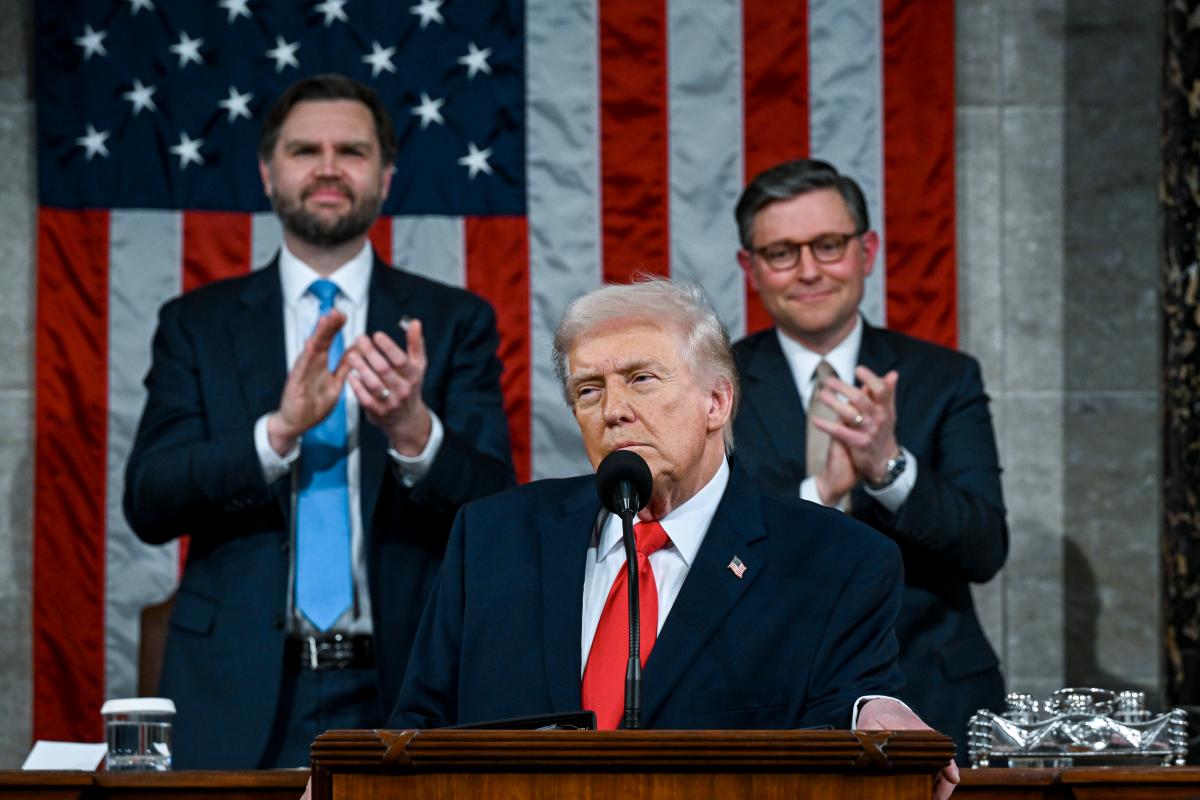
In “a statistics-heavy speech that was focused from the start on defending his economic record,” President Trump aimed his State of the Union at the many voters “stressed by high prices and pessimistic about where the economy is going,” notes USA Today’s Susan Page.
After his approval rating “sagged below 40%,” the prez “has never before been more embattled” — yet he “hasn’t lost his swagger,” remaining “on offense” as he slammed Democrats and their “stony and disapproving” silence.
On to the midterms: “A dark and stormy year ahead, indeed. Bundle up. Or maybe buckle up.”
Journalist: Dems’ ‘Fight Back’ Delusions
Sen. Tammy Duckworth’s claim that Democrats “need to start fighting back” is “the reigning sentiment” in the party, laments Real Clear Politics’ Carl M. Cannon, dreading “the collateral damage wreaked on our system by the Democrats’ hatred of Trump and his MAGA movement.”
In fact, “The notion that Democrats have been patsies in the Trump era is delusional” — including two impeachments, endless lawfare and endless rounds of “F*** Trump!”
Several “have openly vowed revenge against Trump administration officials. So is the moral of Trump’s “revenge tour” that vengeance is just dandy, provided it’s carried out against my adversaries?”
Indeed: “Democrats, if Trump offends you so deeply, why do you consistently imitate his worst behavior?”
For example, Gov. Gavin Newsom’s spokesman recently set “a new low” when it comes to “rude and petty flacks” by berating an RCP reporter as a “MAGA blogger” and “peak crazy energy lady” simply for requesting of the gov’s claim to suffer dyslexia.
Bratton: Do Cop Critics Want More Violence?
Mayor Mamdani should “check the facts” before disbanding the NYPD Strategic Response Group, which critics accused of abuse during 2020-21 protests, urges William J. Bratton at The Wall Street Journal.
“SRG officers go through extensive training” for protests, are well-versed in the First Amendment and are overseen by NYPD legal advisers. Why target the SRG? Perhaps because it’s “so effective at preventing mayhem without compromising itself. SRG doesn’t use tear gas or shoot ‘pepper balls’ or rubber bullets as seen in other cities.”
But it does give the NYPD “the flexibility to deploy officers” around the city on short notice” and adequately “cover any number of simultaneous attacks.”
Indeed, “if we abolish SRG, we will have to reinvent it later.”
Libertarian: The Real Epstein Scandal
“Andrew Mountbatten-Windsor may soon become the inmate formerly known as prince,” snarks Reason’s Matthew Petti.
“British police arrested the king’s brother” and questioned him “for 12 hours over his association with Jeffrey Epstein.”
Note that Andrew’s not in hot water over involvement “in Epstein’s sex crimes” but for “sharing sensitive information about his official trade missions to Asia and a government-sponsored investment opportunity in Afghanistan.”
Labour Party eminence “Peter Mandelson is being investigated on similar accusations of giving Epstein insider information.”
The UK probes on the true scandal: “Epstein traded in shady forms of influence, brokering secret deals and trying to convert political connections into business deals.”
The Epstein files shed light on his corrupt “underworld” with “sexual blackmail” simply a small part of the leverage Epstein collected.”
Health beat: The Limits of ‘Medical Tourism’
“Americans are increasingly traveling abroad in search of cheaper medical treatment,” observes Chris Pope at City Journal, and some “economists have been enthusiastic about medical tourism’s potential” to keep costs down.
But for all the trips to Mexico or Turkey as destinations for elective or dental procedures, “medical tourism remains a marginal phenomenon” because “emergency medical conditions clearly need to be treated close to home,” and “travel for major surgery is often a bad idea.” Plus, those “going abroad for treatment may be exposed to substantial unanticipated costs if procedures prove more complex than anticipated.”
Above all: Insurers or the government cover 97% of US hospital costs, so “patients have little need to travel further afield in search of savings.”
— Compiled by The Post Editorial Board
