

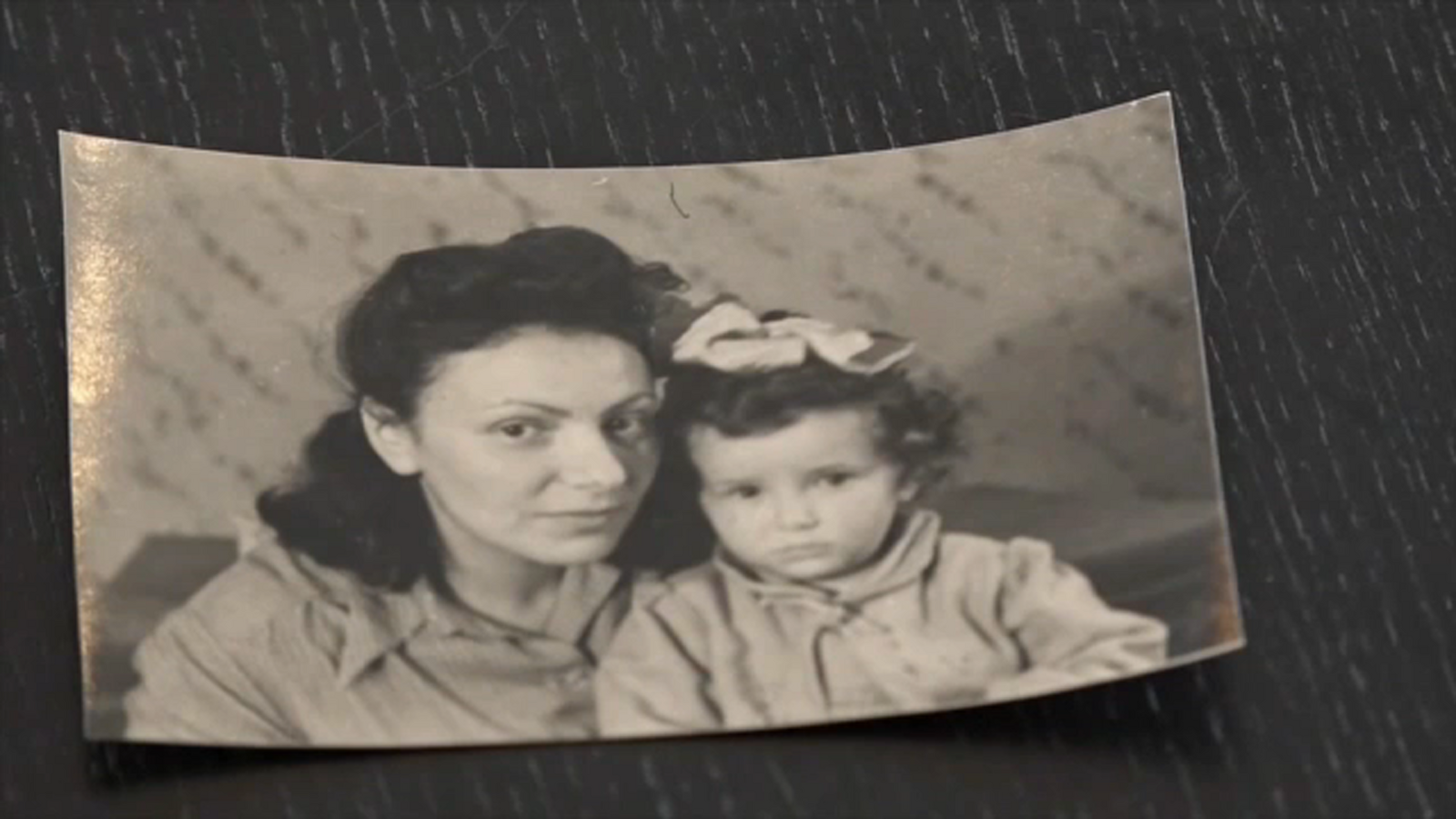
In the last months of World War II, Lola Kantorowicz tried her best to hide her pregnancy. She succeeded, up until nearly the end, because most of the prisoners at the Bergen-Belsen concentration camp had bellies that were distended and bloated from extended starvation.
As she went into labor, in March 1945, the Russians were advancing through Germany, and Bergen-Belsen was in absolute chaos. Her daughter, Ilana, was born on March 20, 29 days before the camp was liberated by the British.
Now 81, Ilana Kantorowicz Shalem is one of the youngest Holocaust survivors. She survived only because she was born towards the end of the war, when the German leadership was in disarray. Now, more than eight decades after the end of the Holocaust, Shalem is starting to share her story, realizing how few Holocaust survivors are left to bear witness.
International Holocaust Memorial Day is observed across the world on January 27, the anniversary of the liberation of Auschwitz-Birkenau, the most notorious of the death camps where some 1.1 million people, most of them Jews, were killed.
The U.N. General Assembly adopted a resolution in 2005 establishing International Holocaust Remembrance Day as an annual commemoration.
About 6 million European Jews and millions of other people, including Poles, Roma, people with disabilities, and LGBTQ+ people, were killed by the Nazis and their collaborators. Some 1.5 million were children.
Commemorations this year are taking place amid a rise of antisemitism that gained traction during the two-year-long war between Israel and Hamas in Gaza.
Shalem’s parents met as teenagers in a ghetto in Poland.
After spending several years in the ghetto under hard labor conditions, including losing family members, they were shuffled through several camps, where they were able to continue meeting clandestinely for several months.
Eventually, the couple was separated. Hersh would eventually perish in a death march just days before the war ended.
Lola spent time in Auschwitz and completed a death march to Bergen-Belsen while pregnant. “If they discovered she was pregnant, they would have killed her,” said Shalem.
“She hid her pregnancy from everyone, including her friends, because she didn’t want the extra attention or anyone to give her their food,” said Shalem.
To this day, Shalem doesn’t have any explanations for how her mother not only survived the conditions of the camp but gave birth to a healthy baby.
Mother and daughter spent a month in the Bergen-Belsen camp before it was liberated by the British, and then two years in a nearby camp for refugees.
They then moved to Israel, where her father’s parents had moved before the war. Her mother held out hope for years that her father had survived. She never married again, nor had additional children.
In the immediate months after the war, baby Ilana was constantly fussed over, one of the only children in the camp.
Black and white photos from that time show a beaming Ilana surrounded by a cadre of adults. Her mother’s friends spoke of her as “a new seed,” and a ray of hope during a dark time, Shalem recalled.
She’s not aware of any other children that were born in the Bergen-Belsen concentration camp. On a research trip, the museum at Bergen-Belsen was able to locate documentation of her birth. Babies who were born in the camps and survived are a rare phenomenon, according to Yad Vashem archivist Sima Velkovich.
Lola Kantorowicz died in 1991.
Shalem, a social worker, started asking her mother questions while she was in university, when it was still taboo in Israeli society to dig into the experiences of survivors.
Many survivors were trying to forget what had happened. Ilana’s mother often faced disbelief when she shared her story of giving birth in the camp, so she stopped sharing it widely.
Shalem had never shared her mother’s story publicly. Last year, she completed a genealogy course at Yad Vashem, and understood how there are fewer and fewer Holocaust survivors left to share their stories.
According to the Claims Conference, which handles financial claims of Holocaust victims against Germany, there are approximately 196,600 Holocaust survivors still alive, half of whom live in Israel. Nearly 25,000 Holocaust survivors died last year. The median age of Holocaust survivors is 87.
Copyright © 2026 by The Associated Press. All Rights Reserved.
