

It’s time to break out the shovels.
New York City workers are already preparing for the major snowstorm expected this weekend. The Department of Sanitation began spraying a saltwater solution on highways and major roadways early Friday morning. And Mayor Zohran Mamdani said the city is assembling the “nation’s largest snow-fighting operation,” which includes 700 salt spreaders with 700 million pounds of salt, 2,200 road plows and dozens of bike lane plows.
The sanitation department’s BladeRunner 2.0 system will oversee the response, the mayor said Friday, “to ensure that every community, every neighborhood, every part of New York City will be met with the services of the city government.”
Once the snow starts falling and at least 2 inches have piled up, you can keep track of the fleet’s progress by checking the city’s plow tracker.
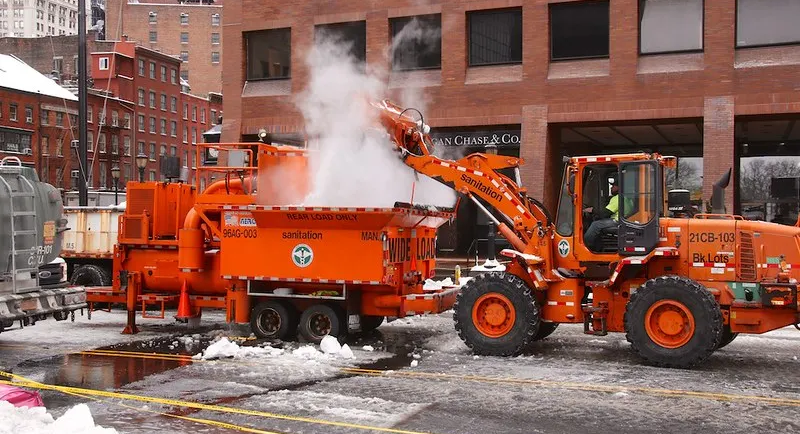
Given the forecast sub-freezing temperatures, city workers are also planning to use snow-melting “hot tub” trucks for the first time since 2022 to help move snow into the sewers quickly.
But all of this preparation doesn’t mean that residential and commercial property owners are off the hook. The NYC Administrative Code requires owners to shovel their own sidewalks when it snows or risk being fined by the Department of Sanitation. Those fines range between $100 for a first time offense and up to $350 for repeat violations.
The city and state are responsible for clearing snow from sidewalks on their own properties — though the city doesn’t fine government agencies if they fall down on the job.
Keeping a sidewalk shoveled and salted might seem trivial, but it can mean the difference between New Yorkers having or not having “access to services, access to food and shelter and the things that you need,” said Marc Fliedner, a director at Disability Rights New York.
“ There’s still some time to get the equipment if you don’t have it to take care of a piece of property that you’re responsible for,” Fliedner added. “It’s the good old-fashioned, you know, salt and then getting out there with a decent shovel and clearing the way.”
Last week’s storm, he said, left behind ice that created issues for older New Yorkers and residents with disabilities, and that was relatively minor compared to the snow and freezing temperatures forecast ahead.
“It really is life or death on the roads as well as the sidewalks,” said Sharon McLennon Wier, executive director of the Center for Independence of the Disabled, New York. It’s important for “all different types of disabilities, plus age-related disabilities,” including those who are blind and who use wheelchairs or canes or crutches, she said.
“There’s over 1.8 million New Yorkers with disabilities that are counting on New Yorkers without disabilities to do right by them by removing the snow,” McLennon Wier said.
The sanitation department has already issued more than 10,000 summonses to private property owners for failure to clear snow and ice this winter, and this weekend’s storm is expected to bring more snow in a single event than the city has seen so far this season.
“Our primary concern here is ensuring the safety of New Yorkers who walk our streets to get to work, medical appointments, grocery shopping and more,” sanitation department spokesperson Vincent Gragnani said in a statement.
Private property owners must clear a path at least 4 feet wide and clear access to crosswalks and pedestrian ramps if they own corner properties — but not shovel snow into the street. They must also ensure bus stops and fire hydrants on their properties are shoveled, and spread salt or sand if the ground is frozen.
There are also rules on how quickly snow must be shoveled — within four hours if snowfall stops between 7 a.m. and 5 p.m., within 14 hours if the snowfall stops between 5 p.m. and 9 p.m, and by 11.m. if it stops between 9 p.m. and 7 a.m.
New Yorkers can file complaints with 311 when sidewalks haven’t been cleared of snow.
