

Nuclear energy was a rare bipartisan issue in this year’s gubernatorial election in New Jersey. Both the victor, Democrat Mikie Sherrill, and the losing Republican candidate, Jack Ciattarelli, came out in favor of expanding the state’s nuclear energy capacity as residents grapple with skyrocketing energy costs.
Yet New Jerseyans may be waiting a long time for a new nuclear power plant.
State Sen. Bob Smith, a Democrat from Piscataway, has sponsored a controversial bill that would result in residents paying for the construction of a new nuclear plant a decade or more before it starts producing energy. But in an interview with Gothamist, he said the legislation is unlikely to pass during this year’s lame-duck session.
The state Senate’s energy committee held a three-hour hearing earlier this month where all but one of the more than 30 witnesses spoke against the bill. The committee voted 4-1 to advance the legislation.
Smith said the bill is unlikely to make it through the rest of the legislative process before the session ends in early January, as the measure still needs to go through the Senate Budget and Appropriations Committee to evaluate the cost before the whole Senate can vote on it. Another version would also need to pass through the state Assembly and multiple committees.
”It is very expensive, which is why I wanted to start the discussion,” Smith said, estimating a new plant would cost at least $20 billion to build.
The state senator said he’ll “absolutely” reintroduce the bill next year after Sherrill and the new Legislature are sworn in.
“We have a new governor who is planning to be very aggressive on energy issues,” Smith said. ”One of the things that I did to start the conversation was to put forward this energy bill that provides for a nuclear pathway for New Jersey.”
Brian O. Lipman, director of the New Jersey Division of the Rate Counsel, which advocates for energy consumers, said the decision not to try to pass the legislation during the lame-duck session is a “smart move.”
“This bill needs a lot of work and as drafted it’s not ready for prime time,” he told Gothamist.
At the hearing, Lipman testified it would cost the average New Jersey ratepayer an additional $22 to $55 a month on their electric bill to build the plant, according to research commissioned by the rate counsel division. He told Gothamist the rate counsel’s estimates are based on consumers paying for all the construction of the new plant.
But Justin Kohley, a senior clean energy project finance manager at the state’s Board of Public Utilities, projected different figures. He said the construction cost to consumers would be less than $3 per month, and he pointed to language in the current draft of the bill that states ratepayer subsidies would be capped at 5% of the project cost.
The current draft, however, also says the nuclear plant operator can petition to adjust the ratepayer subsidies if the company determines “the increase is necessary for the project’s continued financial viability and will not impose an unreasonable burden on ratepayers.” Lipman said he was concerned about how this would potentially affect consumers.
Lipman said his organization can’t support nuclear legislation requiring consumers to pay for a new plant’s construction costs.
“The idea of subsidizing nuclear is not something that I think ratepayers should be doing,” he said.
Christine Guhl-Sadovy, president of the state’s Board of Public Utilities, was the sole witness to testify in favor of the bill at the December hearing. She said New Jersey needs to take on big projects that substantially increase the state’s energy production in order to solve the problem of rising rates.
“If the state does not invest in new generation, electricity will continue on the path of being unaffordable,” Guhl-Sadovy said.
But Abe Silverman, a research scholar at Johns Hopkins University, said the bill is risky in its current form because it puts ratepayers on the hook for potentially large cost overruns if the construction goes over budget.
He said he’d like to see a security-deposit requirement in the bill that would protect ratepayers, as well as a requirement for the operator to cover a percentage of any overruns, to incentivize the company to stay on budget.
Still, Silverman said it’s good that lawmakers are talking about “big, bold” projects.
“It’s really exciting to see states trying to build big, clean energy infrastructure,” he said.
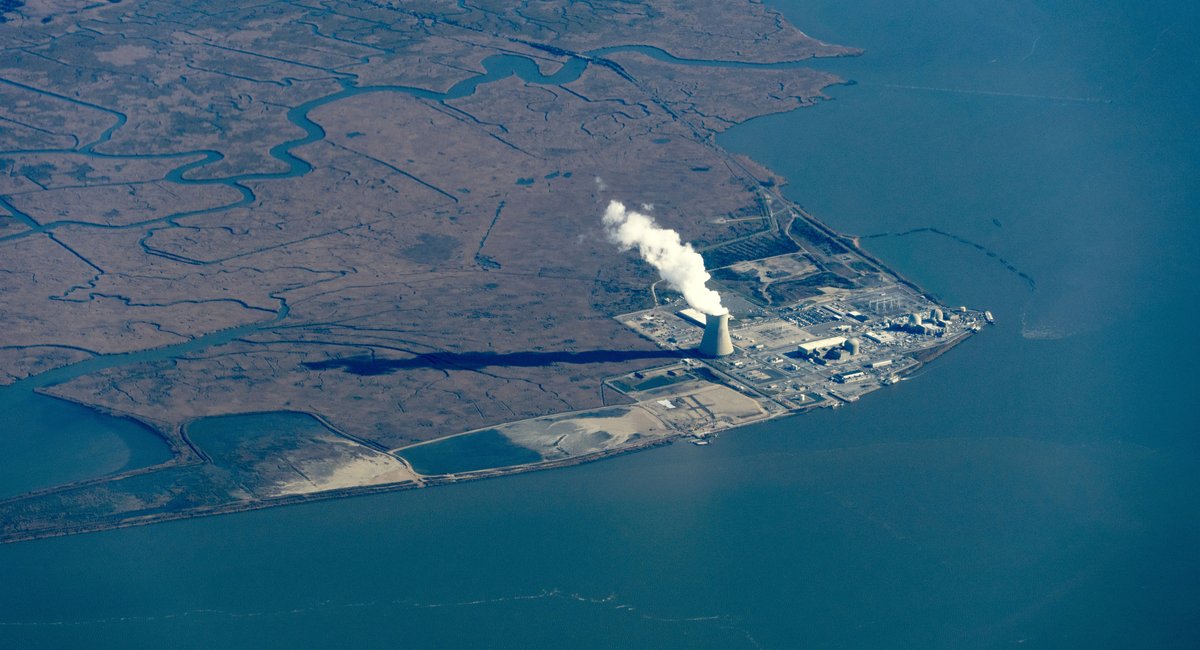
New Jersey currently has three remaining nuclear reactors, all in Salem County on the Delaware River, that produce 40% of the state’s electricity, according to the plants’ operator, PSEG. Another plant closed in 2018 after operating for nearly a half-century.
Most of the country’s nuclear power reactors are decades old, and few new facilities have been built after several high-profile accidents, including a partial meltdown at Three Mile Island in Pennsylvania in 1979. There are also concerns over how and where to store nuclear waste over the long term.
But rising energy costs and mandates to reduce fossil-fuel emissions have renewed interest in nuclear energy.
New Jersey energy rates spiked 20% this past summer due largely to rising energy demand and a lack of new supply coming online in the region.
“If we had a new nuclear plant that we could magically bring into being today, we would’ve avoided a lot of these price spikes that we’ve seen in the last six months,” Silverman said.
Sherrill, the incoming governor, campaigned on expanding energy production in New Jersey, including nuclear. When asked about Smith’s bill, Sherrill spokesperson Rajan Srinivasan said Sherrill could not comment on the pending legislation.
“Governor-elect Sherrill was elected with a mandate to lower costs and on day one will declare a state of emergency on utility costs to freeze rate hikes for families,” he said. “She is also focused on significantly expanding power generation in [the] state to lower electric bills.”
